

 amanda cohen
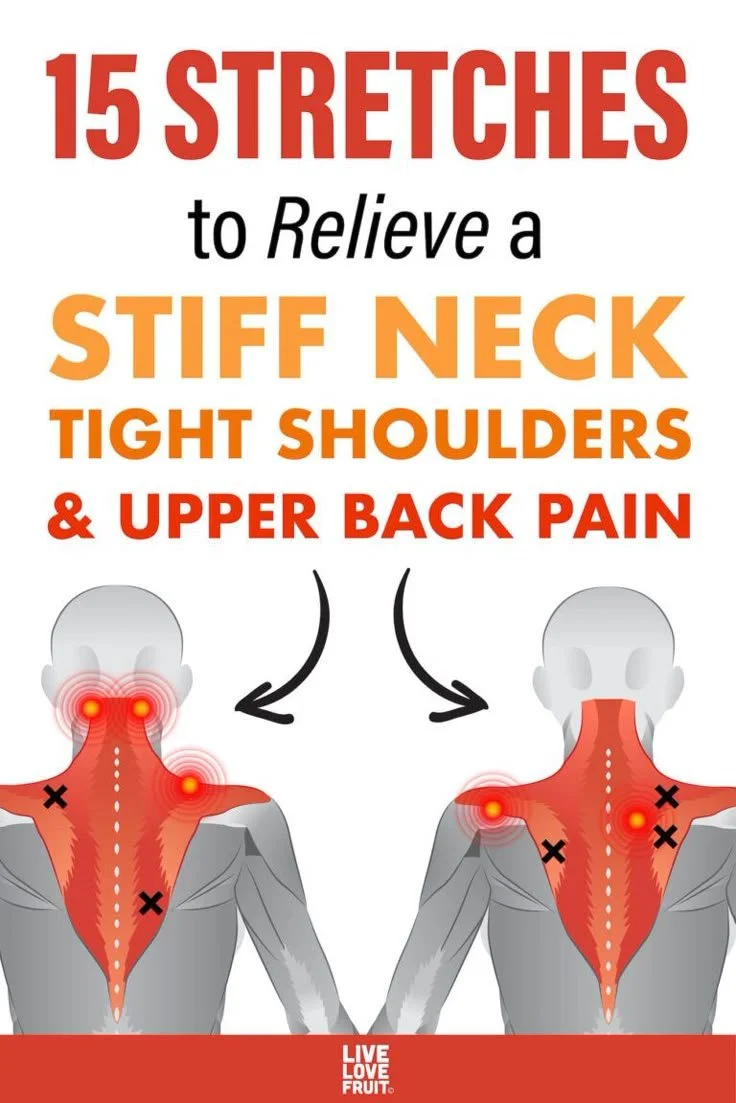
15 Stretches to Relieve a Stiff Neck, Tight Shoulders, and Upper Back Pain
A stiff neck, tight shoulders, and upper back pain are common for people who work at desks, carry heavy bags, or spend long hours on screens. Regularly doing targeted stretches can reduce tension, improve posture, and prevent recurring discomfort. If you’re interested in how movement and mindset interact when building long-term habits, this reflection on fitness and life can be a helpful companion: A Letter to My Younger Self on Bodybuilding and Life.
Below are 15 effective stretches you can do almost anywhere. Hold each stretch for 20–45 seconds, breathe slowly and deeply, and repeat 2–3 times per side where applicable. Move gently into each position — you should feel tension release, not sharp pain. If you have a diagnosed injury or severe pain, check with a healthcare professional first.
- Chin Tucks
- How: Sit tall. Gently draw your chin straight back (making a “double chin”), keeping eyes level. Hold and relax.
- Benefits: Strengthens deep neck muscles and reduces forward-head posture.
- Upper Trapezius Stretch
- How: Sit or stand. Tilt your head to one side as if bringing your ear to your shoulder. For a deeper stretch, place the same-side hand on top of your head and apply light pressure.
- Benefits: Releases tension along the side of the neck.
- Levator Scapulae Stretch
- How: Rotate head 45 degrees to the side, then tuck your chin and look down toward your armpit. Use your hand to gently increase the stretch.
- Benefits: Targets the muscle that runs from the neck to the shoulder blade.
- Scalene Stretch
- How: Sit tall. Grip the bottom of your chair with one hand to anchor your shoulder, tilt your head to the opposite side and slightly backward to feel a stretch in the front/side of the neck.
- Benefits: Helps with neck stiffness often caused by poor posture.
- Doorway Pec Stretch
- How: Stand in a doorway, place forearms on the door frame at shoulder height, and gently lean forward until you feel a stretch across your chest.
- Benefits: Opens tight chest muscles that pull shoulders forward.
- Cross-Body Shoulder Stretch
- How: Bring one arm across your chest and use the opposite arm to press it closer to your body.
- Benefits: Stretches the rear deltoid and upper shoulder area.
- Shoulder Rolls
- How: Slowly roll both shoulders up, back, and down in a circular motion; reverse the direction after several repetitions.
- Benefits: Improves movement in the shoulder girdle and encourages mobility.
- Neck Rotation
- How: Slowly turn your head to look over one shoulder, hold, then return to center and repeat the other side.
- Benefits: Relieves stiffness and maintains neck mobility.
- Cat-Cow (for upper back mobility)
- How: On hands and knees, alternate arching the back up (cat) and sinking the chest forward (cow), moving smoothly with your breath.
- Benefits: Mobilizes the entire spine and releases upper back stiffness.
- Thread-the-Needle
- How: From hands and knees, slide one arm underneath the body and rest your shoulder and head on the floor, twisting the thoracic spine. Return and repeat on the other side.
- Benefits: Excellent for thoracic rotation and upper-back tension.
- Eagle Arms (Garudasana arms)
- How: Wrap one arm under the other at the elbows and bring palms together if possible; lift elbows and lengthen the spine.
- Benefits: Targets the upper back between the shoulder blades.
- Wall Angels
- How: Stand with your back against a wall. With elbows and wrists touching the wall, slide arms up and down like making a snow angel.
- Benefits: Strengthens scapular stabilizers and improves posture.
- Foam Roller Thoracic Extension
- How: Place a foam roller horizontally under the upper back, support your head, and gently extend over the roller. Move it slightly up and down to target different segments.
- Benefits: Opens the chest and decompresses the thoracic spine.
- Seated Thoracic Twist
- How: Sit tall, cross arms over chest, rotate your torso to look over one shoulder, using gentle force from your core. Repeat each side.
- Benefits: Improves mid-back mobility and eases stiffness.
- Corner Lat Stretch
- How: Stand facing a corner, place forearms on each wall, and lean your chest toward the corner while keeping the pelvis neutral.
- Benefits: Stretches the lats and side of the upper back that can contribute to shoulder tightness.
Quick routine sample (10–15 minutes)
- Warm-up: Shoulder rolls and neck rotations (1–2 minutes)
- Mobilize: Cat-cow and thread-the-needle (2–3 minutes)
- Stretch sequence: Doorway pecs, cross-body shoulder, levator scapulae, and corner lat stretch (2 sets each, 30–40 seconds)
- Finish: Wall angels and chin tucks to reinforce posture (1–2 minutes)
Tips for better results
- Breathe: Exhale as you move into each stretch and inhale while holding. Controlled breathing facilitates relaxation.
- Consistency: Do these stretches daily or after long periods of sitting. Small, frequent sessions beat rare, long sessions.
- Combine with movement: Pair stretches with strengthening of the upper back and shoulder stabilizers to prevent recurrence. For guidance on calm, structured routines that blend flexibility and mindfulness, you might find this yoga guide useful: Harmony of Body and Mind — The Ultimate Guide to Yoga Routines.
- Ergonomics: Adjust your workspace — monitor at eye level, chair at proper height, and take micro-breaks every 30–60 minutes.
- Progress slowly: Increase stretch intensity gradually. If you feel numbness, tingling, or worsening pain, stop and consult a professional.
When to see a professional
- If pain is severe, persistent, or accompanied by weakness, numbness, radiating pain down the arms, or recent trauma, seek medical attention or physical therapy.
Conclusion
If you want a broader set of exercises that combine stretches, strengthening moves, and mobility drills specifically for the upper back, neck, and shoulders, check out this helpful collection: 19 Exercises for Upper Back Pain, Neck Pain, Tight Shoulders.


GIPHY App Key not set. Please check settings