
Core Stability: What It Is and How to Build It
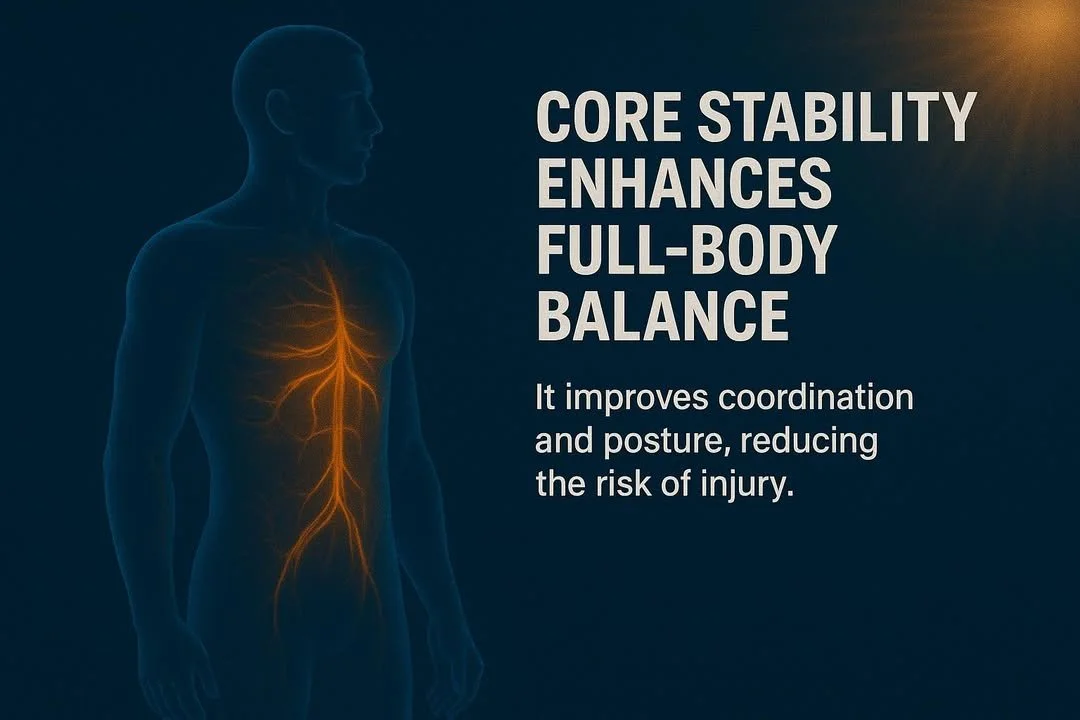
Core stability is more than just having visible abdominal muscles — it’s the ability of the muscles around your trunk and pelvis to support the spine, transfer force between your upper and lower body, and maintain balance during movement. A stable core improves posture, reduces injury risk, and enhances performance in everyday tasks and athletic pursuits.
Introduction
A clear place to start is understanding that "core" refers to a complex system of muscles — not only the rectus abdominis, but also the transverse abdominis, internal and external obliques, erector spinae, pelvic floor, and hip stabilizers. If you want practical movement-based ways to challenge the midsection, consider incorporating focused routines like abs killer exercises into your training to build both strength and endurance from the inside out.
Why core stability matters
- Load transfer and force production: A stable trunk lets your limbs generate power efficiently. Poor control can dissipate force and increase strain on joints.
- Spinal protection: Dynamic stability reduces excessive movement of the vertebrae during lifting, twisting, or impact.
- Functional movement: Activities such as lifting groceries, playing sports, or maintaining balance on uneven ground all rely on coordinated core control.
Key muscles and how they work together
- Transverse abdominis: Acts like an internal corset, increasing intra-abdominal pressure and providing deep stabilization.
- Multifidus and erector spinae: Provide segmental control of the spine and resist unwanted flexion/extension.
- Pelvic floor and diaphragm: Create vertical stability and work with abdominal muscles to regulate pressure during movement and breathing.
- Hip musculature (glutes, adductors): Link the legs to the trunk and contribute to pelvic positioning.
Principles for effective core stability training
- Train for control before load: Master neutral spine and breathing coordination before adding heavy weights.
- Prioritize endurance and motor control: Stability requires sustained low-level contraction and precise timing more than short maximal efforts.
- Include multi-planar and functional movements: The core stabilizes during rotation, lateral shifts, and combined arm-leg actions — so practice varied patterns.
- Integrate breathing: Proper diaphragmatic breathing coordinates with the pelvic floor and deep abdominals to enhance stability.
Sample exercises and progressions
- Dead bug: Great for teaching coordinated limb movement while maintaining a neutral spine. Progress by extending legs further or adding light resistance.
- Pallof press: An anti-rotation drill that trains the core to resist torque. Increase challenge by changing stance or using a band at different heights.
- Bird dog: Improves posterior chain and contralateral coordination; hold longer or add ankle/wrist weights to progress.
- Plank variations: Start with short holds focusing on alignment, then increase duration, add limb lifts, or use instability tools to demand more control.
- Pilates-style movements: For low-impact, control-focused options, routines like the Pilates core burner provide structured progressions that emphasize breath-integrated stability.
Common mistakes to avoid
- Relying solely on maximal, short-duration abdominal workouts (e.g., endless crunches) without training control and endurance.
- Holding the breath or bracing excessively, which can increase intra-abdominal pressure in an uncontrolled way.
- Neglecting the hips and glutes — a weak posterior chain can force the lumbar spine to compensate.
- Progressing intensity (weight, duration, instability) without ensuring consistent form.
Programming tips
- Frequency: Short stability sessions 3–5 times per week yield better neural adaptation than sporadic, intense sessions.
- Volume: Emphasize multiple sets of controlled repetitions or timed holds rather than a single maximal effort.
- Integration: Blend dedicated core work with full-body strength and mobility training to build a resilient, functional midsection.
Conclusion
For a reputable overview of the anatomy, clinical concepts, and research around trunk control, see the resource Core Stability – Physiopedia.



GIPHY App Key not set. Please check settings