
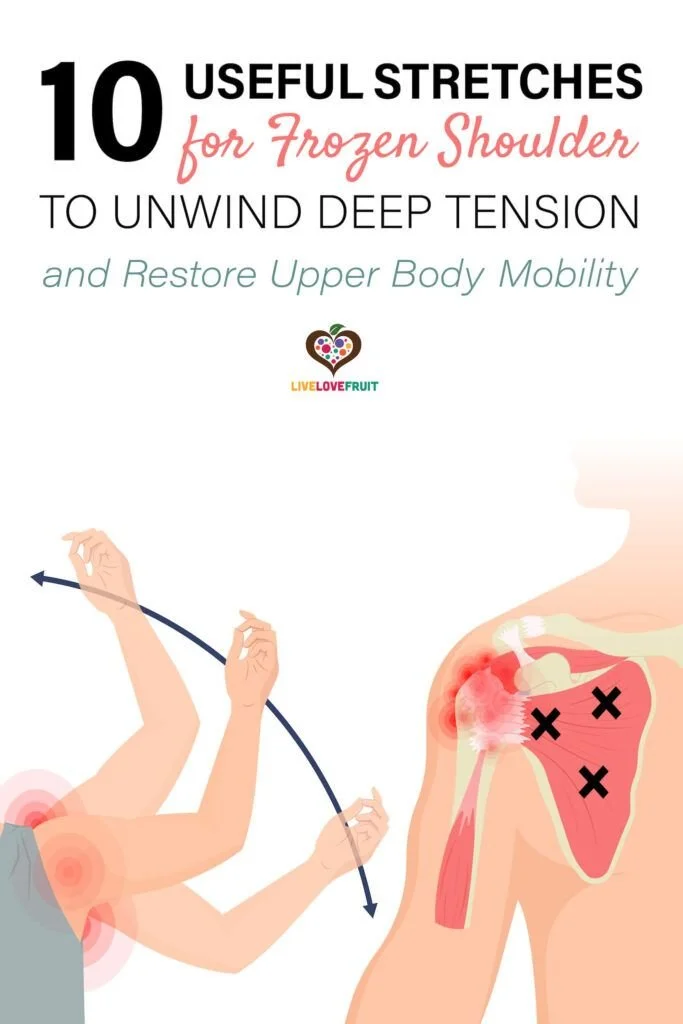
Loosen Frozen Shoulder: 10 Stretches to Restore Mobility
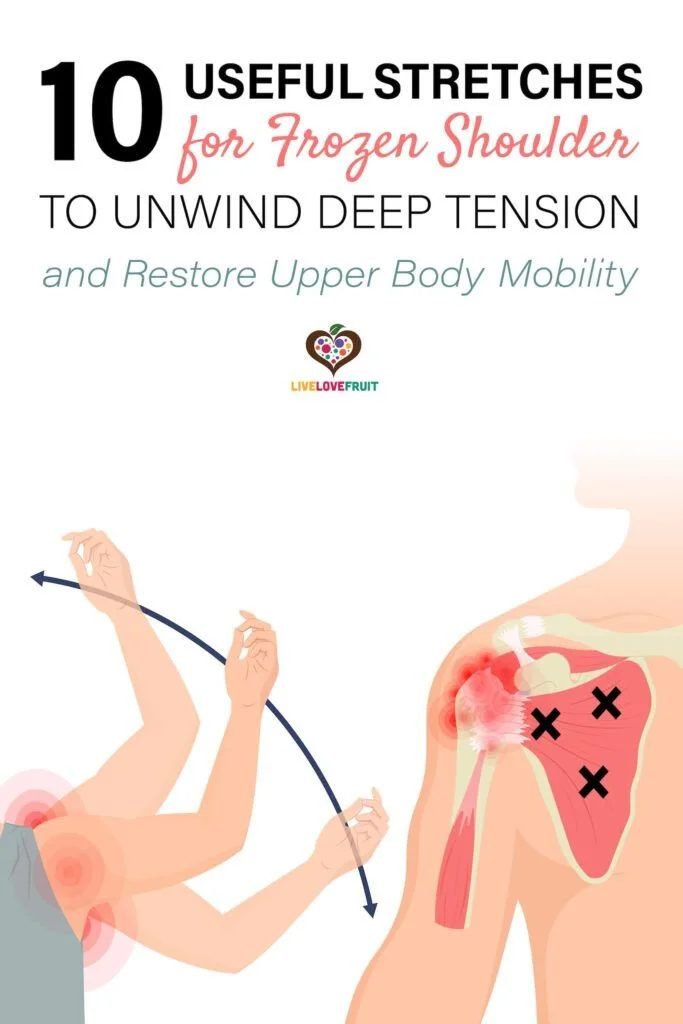
Frozen shoulder (adhesive capsulitis) can quietly steal range of motion and make daily tasks painful. This short, practical guide walks you through 10 gentle, effective stretches to unwind deep tension, improve shoulder mobility, and help you regain comfort. For complementary upper-chest mobility and posture tips that support shoulder rehab, see upper chest growth and mobility solutions for bodybuilders.
How to use these stretches
- Frequency: aim for 2–3 sessions daily when symptoms are active, and once daily as mobility improves.
- Reps: hold each stretch for 20–60 seconds and repeat 2–4 times per side unless otherwise noted.
- Intensity: work to a point of mild to moderate tension — never sharp pain. If pain spikes, stop and consult a clinician.
- Warm-up: 5–10 minutes of light arm swings or walking helps tissues respond better.
The 10 stretches
- Pendulum (gravity) swing
- How: Lean forward, support your good arm on a table, let the affected arm hang relaxed. Gently swing in small circles, then front-to-back and side-to-side.
- Why: Uses gravity to mobilize the joint with minimal muscle activation.
- Towel-assisted passive stretch
- How: Hold a towel behind your back with one hand overhead and the other behind your lower back. Use the top hand to gently pull the affected arm upward or the bottom hand to pull it down.
- Why: Provides passive range-of-motion without straining shoulder muscles.
- Cross-body stretch
- How: Bring the affected arm across your chest and use the opposite hand to gently press the upper arm toward your chest.
- Why: Stretches the posterior capsule and rear shoulder fibers.
- External rotation with cane
- How: Hold a cane or broom handle with both hands in front of you. Keeping elbows at your sides, use the unaffected arm to rotate the affected arm outward.
- Why: Targets external rotators and improves rotational range.
- Tabletop shoulder extension
- How: Place hands on a table behind you with fingers pointing away. Walk hands back and slowly lower your chest to increase shoulder extension.
- Why: Promotes extension and anterior capsule mobility.
- Corner or doorway pec stretch
- How: Place forearms on either side of a doorway or corner, lean forward until you feel a stretch across the front of the chest.
- Why: Opening the chest reduces anterior tightness that limits shoulder extension and upward reach.
- Note: If your shoulder pain radiates into the neck or upper back, consider additional upper-back and neck stretches such as the set found at 15 stretches to relieve stiff neck, tight shoulders and upper back pain.
- Sleeper stretch (modified)
- How: Lying on the affected side with the shoulder and elbow at 90°, use your free hand to gently push the forearm down toward the bed/floor to increase internal rotation. Modify intensity and stop if painful.
- Why: Targets tight posterior capsule fibers that limit internal rotation.
- Scapular retraction holds
- How: Sit or stand tall, squeeze shoulder blades down and together, hold for 5–10 seconds, then relax. Repeat 10–15 times.
- Why: Strengthens scapular stabilizers that support healthy shoulder mechanics.
- Wall walk (finger walk)
- How: Face a wall and "walk" your fingers up the wall as high as comfortable, then slowly walk them back down.
- Why: Progressive pain-free range building for forward flexion.
- Posterior capsule sleeper variant with towel
- How: Lie on the unaffected side, place a rolled towel under the affected upper arm near the armpit to align the shoulder, then gently guide the hand toward the floor using the opposite hand for a controlled internal rotation stretch.
- Why: A gentle way to stretch the posterior capsule while maintaining better joint alignment.
Progressions and tips
- Track small gains: measure reach or how much daily tasks improve (hair brushing, reaching shelf).
- Combine mobility with light strengthening: once pain allows, add rotator cuff and scapular strengthening to maintain gains.
- Be patient: frozen shoulder can take weeks to months to improve. Consistency matters more than intensity.
- When to see a professional: severe, worsening pain, sudden loss of motion, or any signs of infection or neurologic symptoms require medical attention.
Precautions
- Avoid forced stretches or aggressive bouncing.
- If you have an inflammatory condition or recent fracture, consult your doctor before starting.
- Use ice after stretches if they increase soreness, or heat beforehand to loosen tissues if preferred.
Conclusion
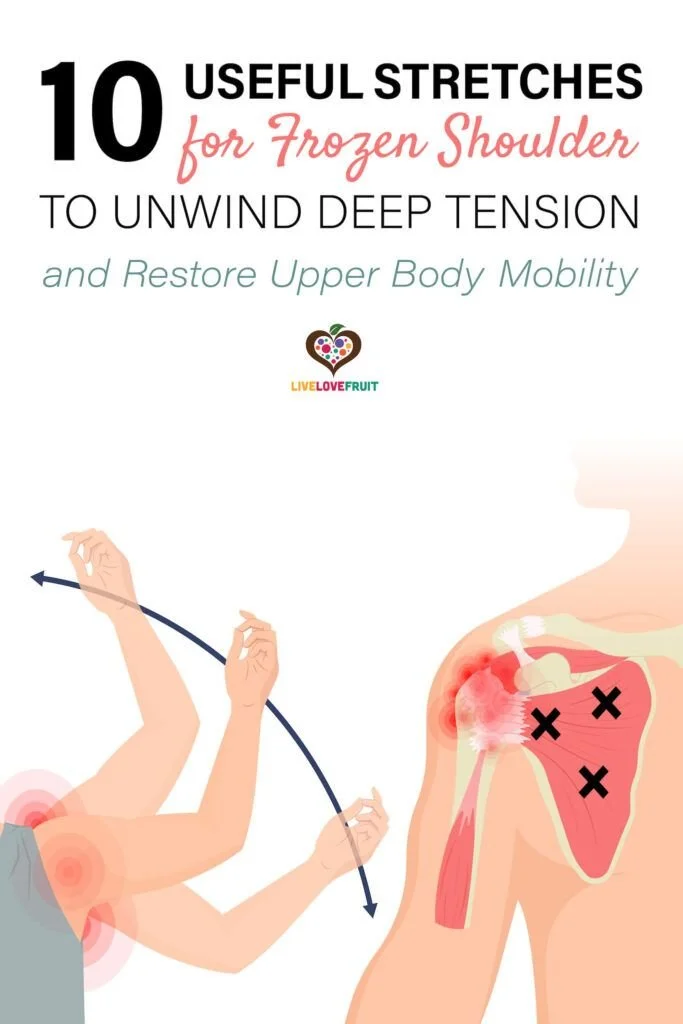
For a broader step-by-step plan and additional self-care strategies to recover from frozen shoulder, consider this comprehensive guide: 10 Ways To Get Rid of Frozen Shoulder: Unwind Deep Tension and …


GIPHY App Key not set. Please check settings