

Unstoppable Mindset: 7 Daily Habits
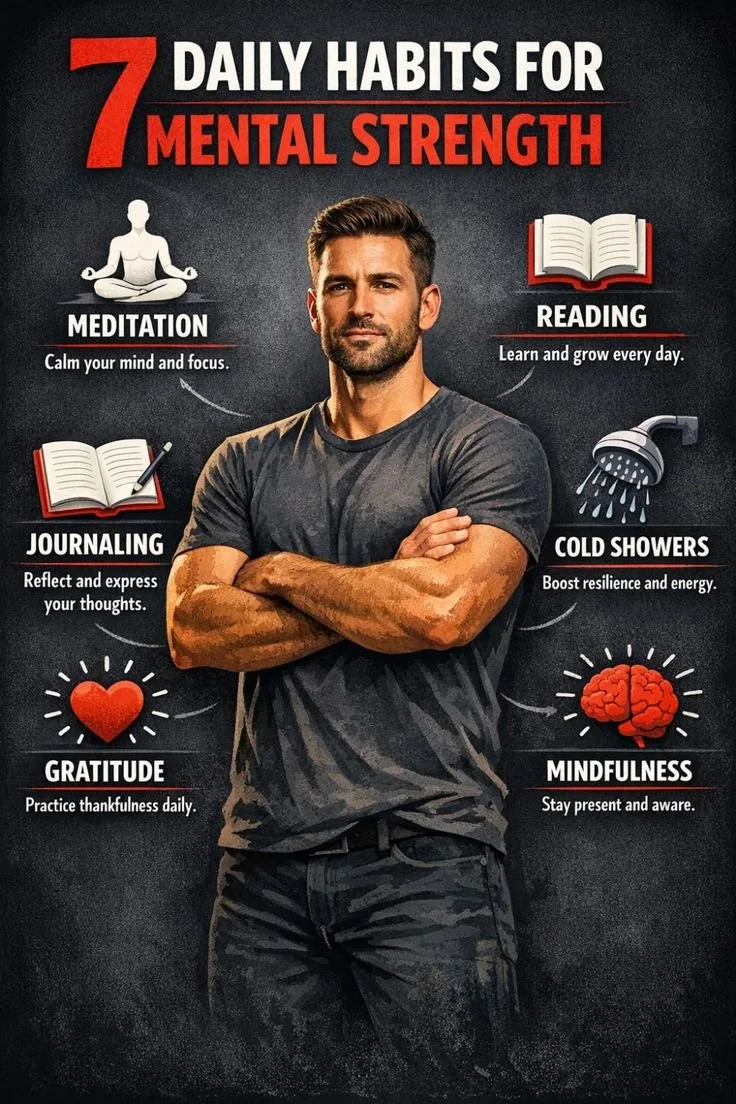
Building mental toughness is less about sudden transformation and more about consistent daily practices that shape how you respond to pressure, setbacks, and opportunity. This guide breaks seven simple, actionable habits into a week’s worth of training for men who want steady, reliable progress toward becoming unstoppable. Learn to manage focus, stress, discipline, and resilience so you can show up stronger every day. Fundamental rules for building muscle

1. Own your morning: routine over reaction
Start each day with a short, repeatable routine—5–10 minutes of mobility, breathing, and a clear intention. The morning sets the tone: consistent small wins early increase your confidence and lower decision fatigue for the rest of the day.
2. Train discomfort intentionally
Expose yourself to manageable stressors—cold showers, interval sprints, or heavy lifts—so your brain learns to stay calm under strain. These micro-challenges expand your capacity for discomfort and make high-pressure moments feel less threatening. For fueling during intense days, consider how day‑round nutrition supports recovery and grit with practical day‑round fueling strategies.
3. Practice focused work blocks
Use timed focus intervals (e.g., 50 minutes on, 10 minutes off). Short, intense concentration sessions build mental stamina and teach the mind to resist distractions. Over weeks, you’ll notice longer, deeper focus becomes the default.
4. Master your fundamentals, not flashy tactics
Don’t chase every new hack—perfect basic movement patterns, sleep hygiene, and disciplined planning. Technical consistency prevents injuries and keeps momentum steady. If you train physically, pay attention to proper form and common pitfalls by reviewing specific exercise technique tips that support longevity.
5. Frame setbacks as data
When things go wrong, strip emotion and ask: What happened? What can I control next? This shifts your brain from rumination to problem-solving, accelerating adaptation and reducing stress.
6. Build a recovery ritual
Mental toughness isn’t endless grinding; it’s strategic recovery. Daily practices—stretching, sleep schedule, breathwork, or journaling—recharge your capacity. Pair strength sessions with deliberate recovery methods and occasional deloads informed by precision strength work principles to stay consistent long term.
7. Socialize strength: accountability and mentors
Surround yourself with peers who raise standards and mentors who offer blunt, useful feedback. Accountability turns vague goals into actionable steps and keeps you honest when motivation dips.

Conclusion
Mental toughness develops through repeated, intentional practice—small daily choices that compound into unshakeable habits. If you want structured programming to pair with mental training and challenge your limits, consider using the America’s Heros training plan by Troy Shallow as a disciplined physical complement to your mental work.



GIPHY App Key not set. Please check settings