Riri

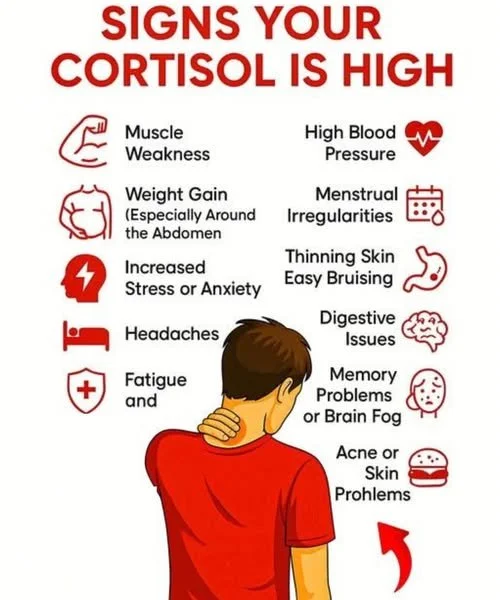
High cortisol levels signs and symptoms infographic

10 Signs That Your Cortisol Levels are Way Too High (more in comments)

10 Signs That Your Cortisol Levels Are Way Too High

Cortisol, often referred to as the "stress hormone," plays a crucial role in various bodily functions, including metabolism, immune response, and stress management. While it’s essential for our survival, consistently elevated cortisol levels can lead to a range of health issues. If you’re feeling off balance, it might be time to consider whether your stress levels are pushing your cortisol production into overdrive. Here are ten signs that your cortisol levels might be too high.

1. Persistent Fatigue

If you find yourself feeling drained despite getting enough sleep, high cortisol levels might be to blame. Elevated cortisol can disrupt your sleep patterns and lead to chronic fatigue, making it difficult to feel energized or motivated throughout the day.

2. Increased Hunger and Weight Gain

Heightened cortisol levels often lead to an increase in appetite, particularly for sugary and fatty foods. This hormone can trigger cravings and promote weight gain, especially around the abdomen, as your body retains fat in response to chronic stress.

3. Mood Swings and Anxiety

Cortisol has a profound impact on your mood. When levels are high, you may experience heightened anxiety, irritability, or mood swings. These changes can affect your overall emotional well-being and disrupt your daily life.

4. Difficulty Concentrating

High cortisol can impair cognitive functions such as memory and concentration. If you frequently find it challenging to focus or remember details, it could be a sign that your cortisol levels are affecting your brain health.

5. Digestive Issues

Elevated cortisol can disrupt your digestive process, leading to symptoms such as bloating, stomach pain, or irregular bowel movements. Your body’s stress response can impact gut health, resulting in discomfort and digestive disorders.

6. High Blood Pressure

Cortisol is known to raise blood pressure, which can increase the risk of developing cardiovascular diseases. If you’ve been diagnosed with hypertension or have been experiencing elevated blood pressure readings, consider evaluating your stress levels.

7. Frequent Illness

Chronic high cortisol can weaken your immune system, making you more susceptible to infections and illnesses. If you find yourself getting sick more often than usual, your cortisol levels could be interfering with your body’s ability to fight off pathogens.

8. Skin Changes

Cortisol can affect skin health, leading to issues such as acne, eczema, and other skin conditions. If you notice sudden changes in your skin, it could be a response to increased stress and elevated cortisol.

9. Sleep Disturbances

High cortisol levels can disrupt your sleep cycle, making it difficult to fall or stay asleep. If you’re struggling with insomnia or frequently waking in the middle of the night, stress might be playing a role in your sleeplessness.

10. Decreased Libido

Chronic stress and elevated cortisol can lead to decreased sexual desire and performance. If you’ve noticed a drop in your libido, it may be related to your body’s stress response and hormonal imbalances.

Conclusion

If you’re experiencing several of these symptoms, it may be beneficial to consult with a healthcare professional. Incorporating stress management techniques such as exercise, mindfulness, and a balanced diet can help lower cortisol levels and improve your overall well-being. Remember, taking steps to manage stress isn’t just about feeling better mentally—it’s essential for maintaining your physical health as well.

Listen to your body; high cortisol may be a signal that you need to make some lifestyle adjustments.


Further Reading

For those looking to dive deeper into the effects of cortisol and stress management techniques, consider exploring additional resources on nutrition, mindfulness practices, or stress-reducing exercises. Your health journey is unique, and understanding the signs your body gives you is key to achieving balance.

10 Signs That Your Cortisol Levels are Way Too High (more in comments) Read More »

Inspiring motivational quotes to enhance gym sessions and boost workout motivation.

10 Motivational Quotes to Ignite Your Gym Sessions

10 Motivational Quotes to Ignite Your Gym Sessions

Getting to the gym is half the battle; staying fired up while you train is the other half. Below are ten inspirational quotes to sharpen your focus, lift your mood, and push your limits — each with a quick interpretation and a short action you can take the next time you’re lacing up. Before we start, if you ever wonder how gym time stacks up against other parts of life, check out this take on why the gym matters: 10 Reasons the Gym is Better Than a Girlfriend.

How to use these quotes

Read one at the start of each workout, pin a favorite to your water bottle, or use one as a mantram between sets. The goal is to pair thought with action so motivation turns into momentum.

  1. "No pain, no gain."
  • What it means: Growth requires effort — discomfort is often the signal you’re improving.
  • Try this: Add one extra rep or 5% more weight to one set this session.
  1. "Sore today, strong tomorrow."
  • What it means: Short-term discomfort leads to long-term resilience.
  • Try this: Schedule a mobility routine for the next day to help recovery.
  1. "Progress, not perfection."
  • What it means: Small, consistent wins beat occasional bursts of intensity.
  • Try this: Track one measurable metric for a month (e.g., reps, distance, minutes).
  1. "Don’t count the days — make the days count."
  • What it means: Quality of effort matters more than simply showing up.
  • Try this: Set a clear aim for today’s workout (strength, speed, endurance, form).
  1. "The body achieves what the mind believes."
  • What it means: Mindset shapes performance; confidence fuels attempts.
  • Try this: Visualize finishing your workout strongly for 30 seconds before you begin. Also consider a deeper read on boosting strength routines in this guide: Mastering Strength Training.
  1. "You are stronger than your excuses."
  • What it means: Excuses are temporary; progress is lasting.
  • Try this: When you feel like quitting, subtract one set but increase intent—push harder on that final set.
  1. "One more rep."
  • What it means: Small increments compound into major gains.
  • Try this: At the end of each set, force one extra rep with controlled form.
  1. "Consistency beats intensity every time."
  • What it means: Regular training produces better long-term results than sporadic extremes.
  • Try this: Commit to three weekly sessions for the next month and stick to them.
  1. "The only bad workout is the one you didn’t do."
  • What it means: Something is always better than nothing; show up to maintain the habit.
  • Try this: On low-energy days, do 20 minutes of focused work rather than skipping entirely.
  1. "Finish strong."
  • What it means: How you end a session influences both recovery and habit formation.
  • Try this: Close each workout with a brief, high-quality finisher (core, sprint, or mobility).

Quick routine to pair with these quotes

  • Warm-up: 5–10 minutes (mobility + light cardio)
  • Main work: 20–40 minutes focused on strength or conditioning
  • Finisher: 5–10 minutes to burn out with intensity
  • Cool-down: 5–10 minutes of stretching and breathwork

Pair each workout with one quote as a reminder of what you’re building: resilience, consistency, and momentum.

Conclusion

If you want a broader collection of pep-talks and clever trainer lines to rotate into your gym playlist, check out this curated list of motivational sayings: Workout Wisdom: 89 Funny and Thoughtful PT Motivational Quotes. These can give you fresh mantras to keep workouts fun and focused.

10 Motivational Quotes to Ignite Your Gym Sessions Read More »

Seated ab workout for strengthening core muscles without floor exercises

No More Floor! Do Your Entire Ab Routine Right Here ➡️ 🚀 Stop Doing Crunches! Try This 5-Minute SEATED Ab Workout! 🪑 Thi… [Video] in 2025 | Abs workout, Workout routine, Workout

No More Floor! Do Your Entire Ab Routine Right Here

Tired of rolling onto the floor and doing the same old crunches? You can get a complete, effective ab workout without ever leaving your chair. This short, focused routine targets the entire core — upper and lower abs, obliques, and deep stabilizers — in just five minutes. If you want a longer seated program, check out this guided plan for more chair-based progressions.

Why seated training? It’s accessible for busy days, travels, or anyone with limited mobility. Chairs also force better posture and core engagement compared with lying down crunches, so you get safer, more functional strength gains.

Benefits of a Seated Ab Routine

  • Trains the core in a more functional, upright position.
  • Reduces neck and back strain common with crunches.
  • Easy to scale — from beginner to advanced.
  • Can be done anywhere: office, living room, or airplane seat.

5-Minute Seated Ab Workout (No Crunches)

Perform each exercise for 40 seconds with 20 seconds rest. If you have only five minutes, do the first five moves straight through.

  1. Seated Knee Lifts (40s)
    • Sit tall, hands on the chair sides. Exhale as you lift both knees toward your chest, keeping your spine neutral. Lower slowly.
  2. Seated Bicycle Twist (40s)
    • Lean back slightly, hands behind head or beside ears. Bring right elbow toward left knee, then alternate. Move with control.
  3. Isometric Tall-Seat Hold with March (40s)
    • Sit at the edge, core braced, arms forward. Hold tall posture and march each leg up and down slowly.
  4. Seated Oblique Reach (40s)
    • Reach right hand to right knee as you lift and twist slightly; alternate. Keep movement controlled to feel the obliques.
  5. Chair Plank Lean-Ins (40s)
    • Place forearms on chair seat (or the back if sturdy), walk feet back until body is a straight line, then lean hips forward slightly and return.

Advanced option: when you’re ready to progress beyond seated moves, try integrating more challenging core lifts like laying hip raises and controlled negatives — learn a solid progression here: advanced core progressions and hip raises.

Modifications

  • Beginner: Reduce working time to 30s / rest 30s. Keep feet on floor for stability.
  • Intermediate: Increase to 45–50s work intervals or add light ankle weights.
  • Advanced: Slow the eccentric (lowering) phase or combine moves for continuous tension.

Form Tips & Common Mistakes

  • Breathe: exhale on effort (lifting or twisting), inhale on return.
  • Avoid tucking chin; keep gaze forward and neck neutral.
  • Don’t let the lower back collapse — imagine zipping up your core to protect the lumbar spine.
  • Quality beats quantity: controlled reps and full range of motion are what build a strong core.

Sample Quick Sequence (5 minutes)

  • 40s Seated Knee Lifts / 20s rest
  • 40s Seated Bicycle Twist / 20s rest
  • 40s Tall-Seat Hold with March / 20s rest
  • 40s Oblique Reach / 20s rest
  • 40s Chair Plank Lean-Ins / 20s rest

Do this 3–4 times per week and combine with walking or light cardio on alternate days for best results.

Equipment & Safety

  • Use a sturdy, non-rolling chair.
  • If you have back or hip issues, check with a healthcare professional before starting.
  • Stop if you feel sharp pain; mild muscle burn and fatigue are normal.

Conclusion

If you want more chair-friendly movements to mix into your routine, this list of 8 Effective Chair Exercises You Can Do at Home offers additional options to keep workouts varied and challenging.

No More Floor! Do Your Entire Ab Routine Right Here ➡️ 🚀 Stop Doing Crunches! Try This 5-Minute SEATED Ab Workout! 🪑 Thi… [Video] in 2025 | Abs workout, Workout routine, Workout Read More »

Person demonstrating correct triceps pushdown technique at the gym

Triceps Pushdown Technique

Triceps Pushdown Technique: Mastering Form for Bigger, Stronger Arms

The triceps pushdown is a staple for anyone wanting to develop the back of the upper arm. Done correctly, it isolates the triceps, minimizes shoulder involvement, and allows for progressive overload with a lower risk of injury. If you want a quick overview of complementary moves to pair with pushdowns, check out this list of 5 best exercises to build triceps.

This guide breaks the movement down into setup, execution, common mistakes, useful variations, and programming tips so you can get the most from every set.

Setup: Equipment and Starting Position

  • Use a cable machine with a straight bar, rope, or V-bar attachment. Cables keep constant tension throughout the range of motion.
  • Stand with feet hip-width apart, knees slightly bent for stability.
  • Grip the attachment with a neutral or pronated grip depending on the bar. Keep your hands shoulder-width or slightly narrower.
  • Tuck your elbows to your sides. This fixed elbow position is key — the triceps do the work when the upper arm remains stationary.

Execution: Step-by-Step Technique

  1. Begin with your forearms bent and the bar near chest level (or hands at chest if using a rope).
  2. Inhale, brace your core, and keep your upper arms vertical and pinned to your sides.
  3. Exhale and extend your elbows until your arms are fully straightened, pushing the attachment down using only the forearms. Avoid flaring the elbows forward.
  4. Squeeze the triceps at full extension for a brief pause — this enhances muscle activation.
  5. Inhale and slowly allow the bar to rise back to the start under control. A slow eccentric phase (2–3 seconds) increases time under tension and stimulates growth.

Tempo suggestion: 2 seconds down (concentric), hold 0.5–1 second, 3 seconds up (eccentric).

Grip, Attachments, and Variations

  • Rope: Allows full external rotation at the bottom, hitting the lateral head and giving a deeper contraction.
  • Straight bar: Emphasizes the medial head; good for lifting heavier loads.
  • V-bar: A middle ground between rope and straight bar.
  • Reverse-grip pushdown: With an underhand grip, this targets the long head differently and can add variety.
  • Single-arm pushdown: Addresses imbalances and improves unilateral control.

Rotate attachments across training cycles to hit the triceps from slightly different angles and recruit all heads.

Anatomy & Visualization

Understanding muscle shape helps you cue better form. Visualize the triceps as a three-headed muscle that crosses the elbow — your job is to prevent shoulder movement and let the elbow extend. For those who appreciate visual learning or are artists studying anatomy, resources on figure proportions and muscle sketching can improve your mind-muscle connection; see this guide on human figure drawing essential techniques for artists to better visualize muscle lines and leverage in movement.

Common Mistakes and Fixes

  • Elbow flaring: If elbows move forward, the shoulders take over. Keep elbows pinned and imagine they’re glued to your sides.
  • Using momentum: Swinging the torso or using legs reduces triceps tension. Reduce weight and slow the tempo.
  • Not achieving full extension: Leaving a gap at the bottom limits growth. Use a lighter load to ensure a controlled, complete lockout.
  • Over-gripping: Holding the bar too tight can activate the forearms excessively. Maintain a firm but not crushing grip.

Programming Tips

  • Reps & sets: 3–4 sets of 8–15 reps works well. Lower reps (6–8) for strength with heavier loads; higher reps (12–20) for hypertrophy and metabolic stress.
  • Frequency: 2–3 times per week, depending on recovery and overall volume.
  • Pairing: Use pushdowns as an accessory after primary pressing movements (bench or overhead presses) or as a finisher to fully fatigue the triceps.
  • Progressive overload: Track reps or weight and increase gradually. Small jumps in load or an extra rep per set add up over time.

Warm-up and Safety

  • Warm the elbow joint with 1–2 light sets of pushdowns (15–20 reps) before moving to working weight.
  • Stretch gently after training; gentle triceps stretches can help maintain shoulder mobility.
  • If you feel elbow pain, reduce load, check your technique, and consider swapping to neutral-grip variations or consulting a clinician if pain persists.

Conclusion

For a concise tutorial covering proper form, benefits, and more variations of the movement, see this detailed resource on Tricep Pushdowns: Techniques, Benefits, Variations.

Triceps Pushdown Technique Read More »

Person performing a chest fly exercise for upper body strength training

Chest Fly Workout

Chest Fly Workout: Build a Fuller, Stronger Chest

Introduction
The chest fly is a staple movement for anyone looking to develop the pectoral muscles — adding width, depth, and separation to the chest. Unlike pressing movements that rely heavily on triceps and shoulders, fly variations isolate the pecs through a horizontal adduction pattern, making them ideal for sculpting the chest and improving muscle symmetry. If you’re exploring alternatives and complementary moves, consider how bodyweight options fit into a balanced plan with resources like bodyweight chest alternatives to round out your routine.

Why the Chest Fly Works

  • Isolation focus: Fly movements put the pecs under tension throughout the arc, emphasizing the stretch and contraction of the muscle fibers.
  • Range of motion: Flies provide a greater stretch across the chest compared with presses, which can help with hypertrophy when performed safely.
  • Versatility: Fly patterns transfer to multiple tools (dumbbells, cables, machines) and bench angles (flat, incline, decline), allowing you to target different portions of the chest.

Common Fly Variations

  • Dumbbell Fly: Performed on a flat, incline, or decline bench; traditional and effective for beginners through advanced lifters.
  • Cable Fly: Offers consistent tension throughout the motion and allows for many angle variations (high-to-low, low-to-high, midline).
  • Pec Deck / Machine Fly: Helpful for beginners or as a finisher because of its stable path and controlled range.
  • Standing Single-Arm Cable Fly: Great for correcting imbalances and training unilateral control.

Setup and Proper Form

  1. Choose an appropriate weight — one that allows full control through the eccentric (lowering) phase without shoulder strain.
  2. Lie on a bench (for dumbbell fly): feet flat, spine neutral, shoulders retracted slightly. Slight bend in the elbows should be maintained throughout the movement — think of a soft hinge at the elbow, not locked or flapping.
  3. Lower the weights in a wide arc, feeling a controlled stretch across the chest. Don’t let the elbows drop below shoulder level to avoid undue shoulder stress.
  4. Bring the weights back together using the chest muscles, not the arms. Imagine hugging a large tree: the motion is driven by the pecs closing around the tree.
  5. Breathe: inhale during the lowering phase, exhale during the concentric (bringing the weights together).

Programming: Where Flies Fit in Your Workout

  • As a primary mover: For isolation-focused chest days, include fly variations early in the workout (after warm-up) and pair with pressing movements for strength balance.
  • As an accessory: Use flies after compounds like bench press to increase blood flow to the chest and induce hypertrophy.
  • Sets and reps: For hypertrophy, 3–4 sets of 8–15 reps; lighter weights for higher reps or controlled tempo for increased time under tension.
  • Frequency: 1–3 times per week depending on overall training split and recovery.

Progression and Variations

  • Increase range: Adjust bench angle (incline/decline) to emphasize upper or lower chest fibers.
  • Adjust eccentric tempo: Slow the lowering phase to emphasize the stretch.
  • Add resistance methods: Use drop sets, supersets with presses, or slower eccentrics to push beyond plateaus.
  • Unilateral work: Single-arm flies can correct side-to-side strength differences and force core engagement.

Common Mistakes to Avoid

  • Going too heavy: The chest fly is not a press; excessive weight causes shoulder compensation and risks injury.
  • Excessive elbow lock: Locking or straightening the elbows puts stress on the joints; maintain a slight bend.
  • Overstretching: Letting the arms drop too low behind the plane of the shoulders can strain the rotator cuff.
  • Using momentum: Avoid bouncing the weights together — control both phases.

Safety and Shoulder Health

  • Warm up thoroughly with rotator cuff activation and light band work.
  • Prioritize technique over load. If you have existing shoulder issues, prefer cables or machine versions where the motion can be better controlled.
  • Incorporate posterior chain work and scapular stabilizers to maintain shoulder balance.

Sample Chest Fly Workout (Intermediate)

  1. Warm-up: light band pull-aparts, push-ups — 5–10 minutes.
  2. Incline Dumbbell Press: 3 sets x 6–8 reps (compound)
  3. Flat Dumbbell Fly: 4 sets x 10–12 reps (focus on stretch and control)
  4. Cable High-to-Low Fly: 3 sets x 12–15 reps (finisher)
  5. Chest-focused cooldown: light mobility and stretching

Pairing Flies with a Plan
Flies are most effective when they live within a structured training plan that balances volume, intensity, and recovery. If you’re new to systematic programming, exploring the advantages of a planned approach can accelerate results; for more on that philosophy, read about the broader benefits of a consistent routine like in this article on structured workout programs.

Troubleshooting Gains

  • Stalled growth? Try increasing time under tension by slowing the eccentric and adding a 1–2 second pause at the bottom of each rep.
  • Pain during movement? Reduce range, switch to cables or machine, and re-evaluate shoulder warm-up and mobility.

Conclusion

To master the chest fly, prioritize control, a full but safe range of motion, and consistent progressive overload. If you want a step-by-step visual and expert tips for the dumbbell fly specifically, check out this helpful guide: Dumbbell Flys: Video Exercise Guide & Tips.

Chest Fly Workout Read More »

Person demonstrating Smith Machine Row techniques for back strength.

Smith Machine Row Techniques

Smith Machine Row Techniques

The Smith machine row is a versatile back exercise that offers stability and control while targeting the lats, rhomboids, traps and posterior deltoids. Whether you’re new to resistance training or refining advanced technique, mastering setup, grip and movement patterns is essential for safe, effective lifts. Just as artists refine fundamentals to improve their work, athletes benefit from structured practice and attention to form — a concept similar to human figure drawing techniques that emphasize posture and mechanics.

Setup & Positioning

  • Rack height: Set the bar so it sits just below waist level when the bar is unloaded — you want a starting point that lets you hinge at the hips without rounding your lower back.
  • Foot placement: Stand with feet about hip-width apart. Slightly bend the knees to create stability and a neutral spine.
  • Hip hinge: Push your hips back until your torso is roughly 30–45 degrees from vertical (upright rows to dead-stop row variations may use different angles). A controlled hip hinge reduces lumbar stress and places emphasis on the mid-back.
  • Chest up, shoulders back: Keep the chest proud and shoulders retracted before initiating the pull to pre-load the scapular muscles.

Grip Variations & Hand Placement

  • Overhand (pronated): Emphasizes upper back and rear delts; slightly wider than shoulder-width for more rhomboid and trap activation.
  • Underhand (supinated): Shifts some emphasis to the lats and biceps; generally allows for a longer range of motion.
  • Neutral (using a V-bar or parallel grip if available): Comfortable for many lifters and often easier on the wrists.
  • Narrow vs. wide: Narrow grips bias the lower lats; wider grips emphasize the upper back and rear delts.

Execution Techniques

  • Initiation: Start the pull by retracting the shoulder blades (scapular retraction) — think of pulling your elbows toward your hips rather than just pulling with the hands.
  • Elbow path: Keep elbows tracking close to the body for lat focus; flare them slightly for more upper-back engagement.
  • Range of motion: Pull the bar to the lower ribcage or belly button area for a full contraction, then control the descent to full arm extension without locking out aggressively.
  • Avoid excessive torso sway: The Smith machine stabilizes the bar path, but you still should avoid using momentum. A slight torso lean is fine, but core bracing prevents cheating.
  • Mind-muscle connection: Slow, deliberate reps with focus on feeling the target muscles improves activation. For help with mental strategies that complement technique work, consider reading about scientifically proven techniques to boost self-confidence — confidence often translates to better training consistency.

Tempo, Sets & Reps

  • Strength: 4–6 reps, heavier load, 3–4 sets, 2–3 second concentric, controlled eccentric.
  • Hypertrophy: 8–12 reps, moderate load, 3–5 sets, 1–2 second concentric, 2–3 second eccentric.
  • Endurance/conditioning: 15–20+ reps, lighter load, 2–4 sets, steady controlled tempo.
  • Time under tension: Emphasizing a controlled eccentric (lowering) phase promotes muscle damage and growth — aim to resist the bar on the descent.

Common Mistakes & Corrections

  • Rounded lower back: Fix by reducing the load, re-hinging at the hips, and bracing the core. If mobility is limited, raise the bar or reduce range of motion.
  • Using momentum: Eliminate jerking by lowering weight and slowing tempo. Keep scapular movement intentional.
  • Too upright or too flat torso: Adjust torso angle to target desired muscle groups. More horizontal increases posterior chain demand; more upright isolates the lats.
  • Bar path errors: With the fixed bar path of the Smith machine, set up so the bar travels naturally along your desired trajectory — adjust foot position rather than forcing the body into the bar.

Programming & Progressions

  • Start with technique: Begin light to learn the path and muscle engagement.
  • Progressive overload: Gradually increase load, volume, or improve tempo. Prioritize form over numbers.
  • Variations for progression: Change grip width, add paused reps at peak contraction, use slow eccentrics, or perform drop sets.
  • Integration: Use Smith machine rows as a primary horizontal pull in your back training or as an accessory on heavy pull days.

Safety Tips

  • Warm-up: Activate the scapular retractors and lats with band pull-aparts, face pulls, or light single-arm rows.
  • Spotting mechanism: Even though the Smith machine has safety catches, ensure they’re set to a safe height before loading heavy weight.
  • Breathing: Exhale on the concentric (pull) and inhale on the eccentric (lower).
  • Listen to your body: If you feel persistent joint pain (especially in shoulders or lower back), regress to lighter weight and examine setup or consult a professional.

Conclusion

For a practical, step-by-step guide that complements these technique pointers, see How to Do Smith Machine Rows (Form and Benefits) for additional form cues and benefits.

Smith Machine Row Techniques Read More »

Person performing an abs workout on a gym mat

Abs Workout

Abs Workout: Build Strength, Stability, and Definition

Developing a strong midsection does more than improve how your clothes fit — it enhances posture, reduces injury risk, and increases performance in everyday movements and sports. This guide covers practical principles, effective exercises, programming ideas, and common mistakes so you can structure efficient abs workouts and make consistent progress.

Why Train Your Abs

  • Core strength stabilizes the spine and pelvis during movement.
  • A conditioned midsection transfers force between upper and lower body, improving lifts and athletic performance.
  • Targeted abs work helps improve muscle endurance and can reveal definition when combined with proper nutrition and fat-loss strategies.

Quick Anatomy Overview

The "abs" are a group of muscles that work together:

  • Rectus abdominis: the vertical "six-pack" muscle responsible for trunk flexion.
  • External and internal obliques: rotate and laterally flex the trunk; they also resist rotation and help stabilize the spine.
  • Transverse abdominis: the deep stabilizer that compresses the abdomen and supports intra-abdominal pressure.

Understanding these roles helps you pick exercises that train both movement (dynamic control) and stabilization.

Core Training Principles

  • Train the core with a mix of anti-flexion (e.g., crunches), anti-rotation (e.g., Pallof press), anti-extension (e.g., plank variations), and dynamic movement exercises (e.g., leg raises).
  • Focus on quality over quantity: controlled reps with full range and proper breathing beat high-rep sloppy sets.
  • Progressive overload applies to abs too — increase difficulty by adding weight, changing leverage, slowing tempo, or increasing time under tension.
  • Frequency: 2–4 focused core sessions per week is sufficient for most people when paired with compound lifts that engage the core (squats, deadlifts, overhead presses).

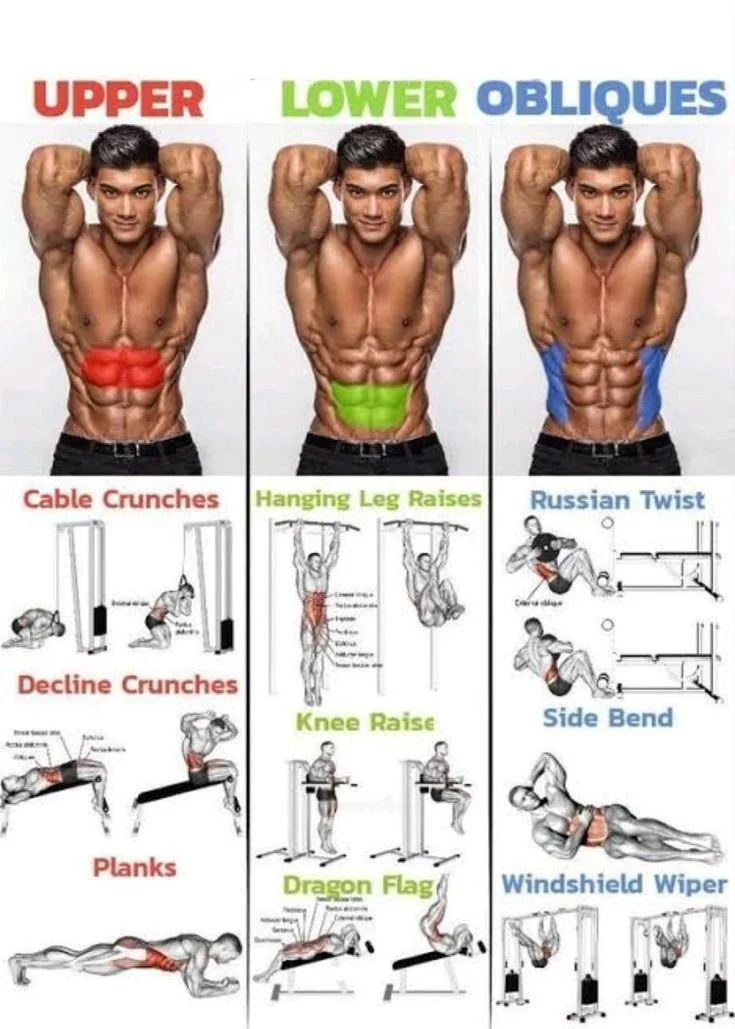
Incorporate a mix of stability and dynamic exercises rather than only doing crunches or machines. For ideas on advanced bodyweight builds and at-home moves, try this practical routine: dragon flag and laying hip raise at-home abs workout.

Sample Abs Workouts

Pick one of these depending on your goal and available time.

  • Beginner — 12–15 minutes

    • Dead bug: 3 x 8–10 per side
    • Knee tucks on floor: 3 x 12
    • Forearm plank: 3 x 30–45 seconds
  • Intermediate — 20–25 minutes

    • Hanging knee raises or lying leg raises: 4 x 12–15
    • Russian twists (weighted if possible): 3 x 20 total
    • Side plank with hip dip: 3 x 10–12 per side
  • Advanced — 25–30 minutes

    • Hanging leg raises to toes or toes-to-bar: 5 x 8–12
    • Dragon flags or slow negatives: 4 x 6–8
    • Cable or band anti-rotation chops: 4 x 8–10 per side

Pair abs sessions with compound lifts or cardio sessions, not necessarily on the same day as heavy deadlifts or squats when you need full grip and core recovery.

Progressions and Variations

To keep progressing, adjust one variable at a time:

  • Increase range of motion (progress from knee tucks to straight-leg raises).
  • Add load (hold a dumbbell between feet or wear ankle weights).
  • Alter tempo (longer eccentric phase for more tension).
  • Move to more challenging variations (plank to single-arm plank, hanging leg raise to toes-to-bar).

If you enjoy progressive at-home challenges that combine oblique emphasis and leg-raise development, this training challenge offers structured variations: leg raise and oblique crunch training challenge.

Nutrition and Recovery

Visible abs require a combination of muscle development and body-fat reduction. Prioritize:

  • A modest calorie deficit with adequate protein (0.7–1.0 g per lb bodyweight) to preserve muscle.
  • Sufficient sleep and stress management to regulate hormones.
  • Recovery between hard core sessions; ab muscles are small but need time to adapt.

Common Mistakes to Avoid

  • Doing endless reps without progression.
  • Relying solely on crunches or machines.
  • Neglecting breathing and bracing — exhale on exertion and brace the core during loaded movements.
  • Overtraining abs every day without recovery.

Conclusion

A balanced abs program combines core stability, anti-rotation work, and progressive dynamic movements while supporting nutrition and recovery. For a large library of movements and video demonstrations to expand your exercise toolbox, see this comprehensive resource: Abs Exercises: 150+ Free Video Exercise Guides | Muscle & Strength

Abs Workout Read More »

Grade 4-6 students participating in engaging online exercise activities.

Daily routine online exercise for Grade4-6

Daily Online Exercise Routine for Grade 4–6

Introduction
Children in grades 4–6 are growing fast — their bodies and brains both benefit from short, daily movement breaks. An online exercise routine can be simple, fun, and safe when it follows a predictable structure: warm-up, active play, focused strength or balance work, and cool-down. For teachers and parents setting up sessions, include clear visuals and short cues so kids know what to do. Try including a few posture-friendly moves — for example, some shoulder and upper-back drills that are easy to teach and help kids sit taller (shoulder-friendly warm-ups).

Why a daily routine helps

  • Improves attention and mood: Short activity breaks help kids return to schoolwork refreshed.
  • Builds basic fitness: Daily practice develops coordination, strength, and flexibility gradually.
  • Creates healthy habits: Repeating the same routine each weekday makes exercise feel normal and doable.

Quick 15–20 minute online routine (ideal for at-home or classroom Zooms)

  1. Warm-up (3–4 minutes)

    • March or light jog in place for 60 seconds.
    • Arm circles, shoulder rolls, and gentle side bends (30–40 seconds each).
    • Dynamic stretches: leg swings, ankle rolls, and fingertip reaches.
  2. Cardio burst (3 minutes)

    • Choose one: jumping jacks, star hops, or pretend jump-rope. Do 3 rounds of 30 seconds on, 20 seconds rest.
  3. Focused strength and balance (6–8 minutes)

    • Bodyweight squats: 2 sets of 8–12.
    • Wall push-ups or incline push-ups: 2 sets of 6–10.
    • Core game: hold a modified plank for 15–30 seconds, repeat twice. Pair core holds with fun challenges (e.g., count aloud or balance a soft toy).
    • Simple guided core-strength activities can be adapted for kids with progressions and easier variations (kid-safe core-strength activities).
  4. Balance and coordination (2 minutes)

    • Single-leg stands (20 seconds each leg), then heel-to-toe walking across the room.
    • Add a catching game or gentle toss to increase coordination.
  5. Cool-down and breathing (2–3 minutes)

    • Slow walking in place, deep belly breaths, and gentle stretches for calves, quads, shoulders, and neck.
    • Finish with a positive affirmation or group high-five to close on an upbeat note.

Modifications and safety

  • Space: Ensure a clear area free of sharp corners or fragile objects.
  • Pace: Let kids work at their own intensity. Offer easier and harder options.
  • Supervision: A teacher, parent, or older student should model and watch for safe form.
  • Medical needs: Check for any health concerns (asthma, heart conditions, or joint problems) and modify accordingly.

Engaging kids online

  • Use upbeat music and visuals: short exercise videos, timers, and on-screen cues keep attention.
  • Keep it consistent: same start signal, same warm-up, and a predictable cool-down help kids settle in.
  • Make it playful: name moves creatively (e.g., “rocket jumps” or “starfish stretch”) and add short challenges or points.
  • Invite short reports: each child shares one thing they liked about the session to build routine and accountability.

Tracking progress and motivation

  • Simple sticker charts, digital badges, or a weekly “move log” encourage consistency.
  • Celebrate improvements in balance, number of repetitions, or how long a child can hold a plank.
  • Rotate the focus weekly (endurance week, balance week, strength week) to keep things fresh.

Tips for teachers and parents

  • Keep sessions brief and frequent: 10–20 minutes is ideal for attention spans in this age group.
  • Incorporate cross-curricular links: count reps for math practice, describe movements for language development, or time circuits for basic data skills.
  • Model enthusiasm: kids mimic energy and tone. A positive leader makes all the difference.

Conclusion

For educators planning online activity programs, pairing movement routines with age-appropriate digital literacy helps students navigate guided sessions safely and responsibly. See the Digital Media Literacy Framework for Grades 4–6 for useful guidance on teaching students how to engage with digital content and online lessons.

Daily routine online exercise for Grade4-6 Read More »

Creamy beef pasta dish served in a bowl, garnished with fresh herbs.

High Protein Creamy Beef Pasta Recipe for Quick Weeknight Dinners

High Protein Creamy Beef Pasta for Quick Weeknight Dinners

A comforting, protein-rich pasta can be the perfect weeknight rescue: fast to make, satisfying, and easy to customize. This creamy beef pasta combines lean ground beef with tender pasta and a savory sauce that comes together in about 30 minutes. If you want a slightly different take or an alternate ingredient list, check the detailed recipe reference for inspiration.

Why this dish works for weeknights

  • Protein-packed: Ground beef provides a solid dose of protein to keep you full.
  • Fast build: One-pan techniques and short-cooking pastas keep total time low.
  • Flexible: Swap in vegetables, whole-grain pasta, or extra legumes to match dietary needs.
  • Comfort without complication: The creamy sauce tastes indulgent but uses pantry-friendly ingredients.

Ingredients (serves 4)

  • 12 oz (340 g) pasta (penne, rigatoni, or shells)
  • 1 lb (450 g) lean ground beef (90/10 or 93/7)
  • 1 small onion, diced
  • 2 cloves garlic, minced
  • 1 cup low-sodium beef or chicken broth
  • 1 cup milk (or unsweetened almond milk)
  • 1/2 cup plain Greek yogurt or light sour cream (for extra protein)
  • 1/2 cup grated Parmesan cheese
  • 1 tbsp tomato paste (optional, for depth)
  • 1 tbsp olive oil
  • 1 tsp dried oregano or Italian seasoning
  • Salt and black pepper to taste
  • Fresh parsley or basil for garnish
    Optional add-ins: spinach, peas, mushrooms, red pepper flakes

Step-by-step instructions

  1. Bring a large pot of salted water to a boil and cook pasta until 1–2 minutes shy of al dente. Reserve 1 cup of pasta water, drain, and set aside.
  2. While pasta cooks, heat olive oil in a large skillet over medium-high heat. Add diced onion and cook until translucent (3–4 minutes).
  3. Add ground beef, breaking it up with a spatula. Cook until browned and no longer pink (5–7 minutes). Drain excess fat if needed.
  4. Stir in garlic and tomato paste; cook 30 seconds until fragrant.
  5. Pour in broth and milk, scraping up any browned bits. Bring to a gentle simmer.
  6. Reduce heat, whisk in Greek yogurt (or sour cream) and Parmesan until the sauce is smooth. Add dried oregano, salt, and pepper.
  7. Add the nearly-cooked pasta to the skillet. Toss to coat, adding reserved pasta water a little at a time to loosen the sauce until you reach desired creaminess.
  8. Stir in any quick add-ins (baby spinach wilts in 1–2 minutes; peas just need a minute).
  9. Taste and adjust seasoning. Garnish with fresh parsley or basil and a sprinkle of cheese. Serve immediately.

Total time: ~25–35 minutes depending on pasta type.

Time-saving tips and protein boosters

  • Use quick-cooking pastas (e.g., penne or small shells) to shave minutes off the timer.
  • Swap some ground beef for cooked shredded rotisserie chicken to speed protein prep.
  • Stir in a scoop of unflavored protein powder (especially savory-style collagen peptides) into the sauce for an extra protein hit—start with 1 tablespoon and adjust.
  • Make it a one-pan meal by cooking pasta directly in the sauce if your skillet is large enough; start with extra liquid and watch consistency.

If you’re compiling quick dinners for the week, you might also like curated high-protein meal lists like the high-protein low-calorie meals collection for additional ideas.

Variations and pairings

  • Mexican twist: Add cumin, chili powder, corn, and top with cilantro and lime.
  • Mediterranean: Swap beef for lamb, add olives and sun-dried tomatoes.
  • Low-carb: Serve over spiralized zucchini or cauliflower rice.
  • Side ideas: A crisp green salad or roasted broccoli complements the creamy sauce and adds fiber.

Meal prep and storage

  • Refrigerate leftovers in an airtight container for up to 3–4 days. Reheat gently on the stove with a splash of milk or broth to restore creaminess.
  • Freeze portions (without fresh herbs) for up to 2 months. Thaw overnight before reheating.
  • For make-ahead dinners, undercook the pasta by 2 minutes; finish cooking in the sauce when reheating to keep texture ideal.

Nutrition snapshot (approximate per serving)

  • Calories: 450–550 (depends on pasta and full-fat vs low-fat dairy)
  • Protein: 30–40 g
  • Fat: 12–20 g
  • Carbs: 40–55 g

Adjust portions, lean protein selection, or swap in whole-grain pasta to meet your nutrition goals.

Conclusion

For a quick, satisfying weeknight meal that still packs protein, this creamy beef pasta hits the mark. If you want another tested version or inspiration for tweaks, see the High Protein Creamy Beef Pasta – Skinny Spatula recipe for more ideas and variations.

High Protein Creamy Beef Pasta Recipe for Quick Weeknight Dinners Read More »

High-protein creamy garlic cheesy chicken with potatoes on a plate

???????? High-Protein Creamy Garlic Cheesy Chicken & Potatoes! Only 502 Calories!

High-Protein Creamy Garlic Cheesy Chicken & Potatoes — Only 502 Calories!

A cozy, protein-packed dinner that feels indulgent but stays within a sensible calorie target. This creamy garlic cheesy chicken and potatoes dish delivers bold flavor from roasted garlic, melted cheese, and a rich herb-infused cream sauce, while keeping the portion at about 502 calories. It’s perfect for weeknight family dinners or meal prep when you want comfort food that supports muscle-building goals. If you like one-skillet comfort meals, try a related twist like these creamy cajun chicken rice bowls for another high-protein option.

Ingredients (serves 4)

  • 1.5 lb (700 g) boneless skinless chicken breasts, cut into 1–1.5 inch pieces
  • 1 lb (450 g) small Yukon Gold or baby potatoes, halved
  • 1 tbsp olive oil
  • 1 tsp smoked paprika
  • Salt and black pepper, to taste
  • 3 cloves garlic, minced + 2 whole cloves roasted or thinly sliced
  • 1 cup low-sodium chicken broth
  • 3/4 cup light cream or half-and-half
  • 1 cup shredded reduced-fat cheddar (or a blend of cheddar + mozzarella)
  • 2 tbsp Greek yogurt (optional, for extra protein and tang)
  • 1 tbsp Dijon mustard
  • 1 tbsp chopped fresh parsley or chives, for garnish
  • 1 tsp dried oregano or thyme

Equipment

  • Large ovenproof skillet or sauté pan + baking sheet (if roasting potatoes separately)

Preparation overview

  1. Pre-roast the potatoes until golden to develop texture.
  2. Sear seasoned chicken until lightly browned; remove.
  3. Build a garlic cream sauce in the skillet, return chicken and potatoes, melt cheese until creamy and bubbly.
  4. Finish with herbs and rest briefly before serving.

Step-by-step directions

  1. Preheat oven to 425°F (220°C). Toss halved potatoes with 1/2 tbsp olive oil, a pinch of salt, pepper, and half the smoked paprika. Roast on a baking sheet for 20–25 minutes until tender and golden.
  2. While potatoes roast, season chicken with the remaining paprika, salt, and pepper. Heat remaining olive oil in a large ovenproof skillet over medium-high heat. Sear chicken pieces 2–3 minutes per side until golden but not fully cooked. Remove chicken to a plate.
  3. Reduce heat to medium. Add minced garlic and roasted garlic slices; sauté 30–45 seconds until fragrant. Pour in chicken broth, scraping up browned bits. Stir in cream, Dijon mustard, oregano/thyme, and Greek yogurt (if using). Simmer 2–3 minutes to thicken slightly.
  4. Stir in half the cheese until melted, then return chicken and roasted potatoes to the skillet. Sprinkle remaining cheese evenly on top. Transfer skillet to the oven (or place under the broiler briefly) for 5–7 minutes, until cheese is bubbly and chicken reaches 165°F (74°C).
  5. Garnish with chopped parsley or chives and let rest 3–4 minutes before serving.

Portion, nutrition, and protein

  • Estimated calories per serving: ~502 kcal (based on ingredients above and 4 servings).
  • Protein: high — roughly 35–50 g per serving depending on exact chicken and cheese used.
  • To increase protein further: use higher-protein Greek yogurt, add a scoop of unflavored protein powder into the warm sauce (whisk well), or increase chicken by 4–6 oz per recipe.

Variations and swaps

  • Lighter: use fat-free Greek yogurt and reduced-fat cheese.
  • Veg-forward: swap half the potatoes for cauliflower florets to cut carbs.
  • Spice it up: add red pepper flakes or a teaspoon of chipotle in adobo for smoky heat.
  • Want a different creamy chicken meal? Try this high-protein twist on soup with the best high-protein white chicken chili for cozy, spoonable comfort.

Meal prep and storage

  • Store leftover portions in airtight containers for up to 3–4 days in the refrigerator. Reheat gently in a skillet or microwave to preserve creaminess.
  • For freezing: assemble and freeze before baking; thaw overnight in the fridge and bake per directions, adding extra 5–10 minutes if needed.

Cooking tips

  • Browning chicken adds flavor — don’t overcrowd the pan.
  • Roasting potatoes first ensures they stay crispy beneath the sauce.
  • If sauce separates, whisk in a splash of warm chicken broth and a teaspoon of cornstarch slurry over low heat.

Conclusion

For the full visual recipe and step-by-step guide, check out the Easy Creamy Garlic Cheesy Chicken and Potatoes Recipe.

???????? High-Protein Creamy Garlic Cheesy Chicken & Potatoes! Only 502 Calories! Read More »

Selection of high-protein foods suitable for women over 50

Top High-Protein Foods for Women Over 50 – The Fibro Warriors

Top High-Protein Foods for Women Over 50 – The Fibro Warriors

Aging brings many changes to muscle mass, metabolism, and recovery. For women over 50—especially those managing chronic pain or conditions like fibromyalgia—prioritizing protein can help preserve strength, support bone health, and improve overall energy. If you want a quick primer on nutrient-dense choices beyond protein, check out this guide to top superfoods for ideas that complement a protein-forward plate.

This article highlights practical, taste-friendly high-protein foods and simple ways to add them into daily meals without overwhelming prep—because sustainability matters more than perfection.

Why protein matters after 50

  • Muscle mass naturally declines with age (sarcopenia). Adequate protein slows this loss, helping maintain balance, mobility, and independence.
  • Protein supports bone health and wound repair and plays a role in immune function.
  • For those with chronic pain or fatigue, protein-rich meals can improve satiety and stabilize blood sugar, reducing energy crashes.

Aim for a high-quality protein source at each main meal and include protein-rich snacks when needed. Recent recommendations often suggest 1.0–1.2 g/kg body weight daily for older adults, but individual needs vary—check with your healthcare provider.

Top high-protein foods (easy to shop and prepare)

  1. Greek yogurt (plain, full-fat or low-fat)

    • Protein-packed and versatile: breakfast bowls, smoothies, or savory dips.
    • Look for unsweetened varieties and add fruit or nuts for flavor and fiber.
  2. Cottage cheese

    • High in casein protein (slow-digesting), great before bed to support overnight muscle repair.
    • Enjoy with sliced tomatoes, herbs, or a small amount of honey and fruit.
  3. Eggs

    • Whole eggs offer a complete amino acid profile and are quick to prepare—boiled, scrambled, or as an omelet with veggies.
    • If cholesterol is a concern, discuss whole-egg intake with your clinician.
  4. Poultry (chicken, turkey)

    • Lean, adaptable, and easy to portion. Choose skinless cuts or shredded breast for salads, wraps, and stews.
  5. Fish and seafood

    • Salmon, sardines, trout, and mackerel provide protein and anti-inflammatory omega-3 fats that benefit heart and joint health.
    • Canned options are convenient and budget-friendly.
  6. Lean red meat (lean cuts of beef or pork)

    • Rich in iron and B12—helpful for energy. Limit portions and balance with vegetables and whole grains.
  7. Legumes (lentils, chickpeas, black beans)

    • Plant-based proteins with fiber for digestion and blood sugar control. Use in soups, stews, salads, or blended into spreads.
  8. Tofu, tempeh, edamame

    • Soy-based options are complete plant proteins and take on flavors well in stir-fries, salads, and bowls.
  9. Quinoa and whole grains

    • Quinoa is a complete protein among grains; other grains like farro and barley add additional protein when combined with legumes or dairy.
  10. Nuts and seeds (almonds, chia, hemp)

    • Concentrated sources—great in small portions for snacks or sprinkled on yogurt and salads. Hemp seeds are particularly high in protein for a seed.

Practical tips for incorporating protein

  • Portion size: Aim for ~20–30 grams of protein at main meals if possible; adjust based on body size and activity.
  • Combine sources: Pair plant proteins (legumes, grains, seeds) to improve amino acid variety.
  • Snack smart: Cottage cheese, Greek yogurt, a small handful of nuts, or a hard-boiled egg make satisfying, protein-rich snacks.
  • Pre-cook and freeze: Batch-cook shredded chicken, baked tofu, or cooked lentils to reduce decision fatigue on low-energy days.
  • Flavor without fuss: Use herbs, citrus, mustard, and quick marinades to make simple proteins more appealing.

Combining protein with strength work

Pairing protein intake with resistance or functional exercises yields better muscle maintenance than either alone. Short, frequent strength sessions—bodyweight moves, resistance bands, or light weights—are especially effective and gentle on joints.

If you’re focused on upper-body strength or want safe, progressive arm-sculpting routines, see guidance on targeted training and recovery in this resource about sculpting arms for strength and style: empowering arm-strength tips.

Timing matters less than total daily protein, but consuming some protein within 1–2 hours after a workout can support recovery.

Sample protein-rich day (simple, fiber-friendly)

  • Breakfast: Greek yogurt parfait with a tablespoon of hemp seeds and fresh berries (~20 g protein)
  • Mid-morning snack: Small handful of almonds and a piece of fruit (~6–8 g)
  • Lunch: Mixed greens bowl with shredded chicken, quinoa, roasted veg, and olive oil dressing (~30 g)
  • Afternoon snack: Cottage cheese with cucumber and black pepper (~12–15 g)
  • Dinner: Baked salmon, steamed greens, and lentils (~30 g)
  • Optional bedtime snack: Warm milk or yogurt if you need extra calories (~8–10 g)

Adjust portions to your appetite and activity level. Hydration and fiber help with digestion when increasing protein intake.

Shopping and cooking tips for Fibro Warriors

  • Prioritize convenience: canned fish, rotisserie chicken, and pre-washed greens can keep healthy eating achievable on low-energy days.
  • Anti-inflammatory choices: fatty fish, nuts, seeds, and colorful vegetables often help with inflammation and overall well-being.
  • Mindful substitutions: swap processed, low-protein snacks for Greek yogurt, boiled eggs, or hummus with veg.
  • Listen to your body: if certain proteins cause digestive discomfort, try different preparations (steamed, pureed, fermented) or alternative sources.

Conclusion

For women over 50 managing chronic pain or joint hypermobility, a balanced approach that emphasizes protein, gentle strength training, and anti-inflammatory foods can make a meaningful difference. If you’re curious about how diet choices intersect with hypermobility or EDS specifically, this article on Hypermobility and EDS: What is the best diet? offers targeted insights worth exploring.

Top High-Protein Foods for Women Over 50 – The Fibro Warriors Read More »

A variety of protein lunchables for adults, featuring meats, cheeses, and snacks.

21 Best Protein Lunchables for Adults

21 Best Protein Lunchables for Adults

Lunchables don’t have to be child’s play. For busy adults, a compact, protein-forward midday meal can keep energy steady, curb cravings, and support muscle maintenance. Below you’ll find 21 portable, satisfying "adult Lunchable" ideas — a mix of store-bought-ready combos and easy DIY packs that travel well and deliver solid protein.

If you’re curious about pairing higher-protein meals with other healthy recipes, check out this take on high-protein white chicken chili for a warming alternative to boxed lunches.

How to use this list: each item includes a brief description and an approximate protein estimate to help you pick options that match your daily goals.

Criteria for selection

  • Protein-forward: roughly 12–30+ grams of protein per pack.
  • Portable: components travel well in a lunchbox or cooler.
  • Minimal prep: easy assembly or available premade options.
  • Balanced: pairing protein with fats, fiber, or complex carbs for satiety.

The 21 Best Protein Lunchables for Adults

  1. Turkey, Swiss, and Whole-Grain Crackers — lean turkey slices, Swiss cheese, and fiber-rich crackers. Protein: ~20–25 g
  2. Roast Beef & Cheddar with Pickles — robust flavor, filling combo for red-meat lovers. Protein: ~22–28 g
  3. Tuna Salad Cups & Multigrain Crackers — canned tuna (in water) mixed lightly with yogurt or mayo. Protein: ~25–30 g
  4. Grilled Chicken Strips + Quinoa Salad — precooked chicken with a small quinoa-tabouli. Protein: ~28–35 g
  5. Smoked Salmon & Cream Cheese on Rye Crisps — omega-3 rich and luxurious. Protein: ~18–24 g
  6. Hard-Boiled Eggs and Turkey Roll-Ups — simple, fast, and portable. Protein: ~20–26 g
  7. Cottage Cheese, Cherry Tomatoes & Seeds — cottage cheese base adds casein protein. Protein: ~15–20 g
  8. Greek Yogurt Parfait with Granola & Berries — pick a high-protein Greek yogurt. Protein: ~15–22 g
  9. Edamame Pods & Sliced Ham — plant and animal-protein combo for variety. Protein: ~18–24 g
  10. Lentil Salad with Feta & Veggies — hearty vegetarian option with legumes and cheese. Protein: ~14–20 g
  11. Hummus, Grilled Chicken, & Pita Chips — Mediterranean-inspired protein pack. Protein: ~20–28 g
  12. Beef Jerky, Gouda & Apple Slices — shelf-stable jerky plus cheese for convenience. Protein: ~18–25 g
  13. Tofu Cubes, Snap Peas & Sesame Dip — tofu marinated or lightly seasoned for a vegan option. Protein: ~14–20 g
  14. Chickpea Salad & Pita Triangles — masala or lemon-herb chickpea mash. Protein: ~12–18 g
  15. Almond Butter & Banana on Rice Cakes — quick, nutty, and satisfying. Protein: ~10–15 g (add Greek yogurt for extra protein)
  16. Protein Pudding Cup & Mixed Nuts — choose a high-protein pudding or make your own with milk and protein powder. Protein: ~15–25 g
  17. Salmon Salad (canned) with Whole-Wheat Crackers — similar to tuna but with salmon’s fatty acids. Protein: ~22–28 g
  18. Pulled Chicken BBQ Wrap Bites — bite-size wraps with lean pulled chicken. Protein: ~25–30 g
  19. Smoked Trout & Cucumber Slices with Rye Crisps — an upscale pescatarian option. Protein: ~16–22 g
  20. Falafel Bites with Tzatziki and Veggie Sticks — higher-protein veggie option when made from chickpeas. Protein: ~12–18 g
  21. Mini Meatballs, Mozzarella & Marinara for Dipping — warm or cold, very satisfying. Protein: ~24–30 g

Packing and storage tips

  • Use an insulated lunchbox and a small ice pack for dairy, meat, and fish to stay safe for several hours.
  • Place dips in leak-proof containers; prevent soggy crackers by packing them separately.
  • Pre-slice cheese and meats for ease of assembly; use silicone cups to separate components.
  • For vegetarian packs, include a small portion of nuts or a higher-protein yogurt to boost totals.

Portioning and protein goals

  • For muscle maintenance or moderate activity, aim for 20–35 g protein at lunch.
  • If you train intensely, consider 30–40 g per meal or adding a protein-rich snack post-workout.
  • Balance: include fiber (veggies, whole grains) and healthy fats (nuts, avocado, olive oil) to prolong fullness.

Creative swaps and add-ons

  • Swap processed meats for rotisserie chicken or canned fish to reduce nitrates.
  • Add a scoop of powdered protein to Greek yogurt or a pudding cup for easy protein boosts.
  • Use cottage cheese or skyr as a high-protein base for fruit and nut mixes.

For fitness-focused folks who like to align meals with training, combining a protein lunchpack with a targeted workout plan can optimize results. If your training emphasizes lower-body strength, consider pairing a protein-packed lunch with a session from this roundup of upper leg workouts to support recovery and muscle growth.

Quick shopping list for assembling multiple lunchables

  • Sliced deli turkey, roast beef, and smoked salmon
  • Canned tuna/salmon, hummus, cottage cheese, Greek yogurt
  • Whole-grain crackers, pita chips, rice cakes
  • Pre-cooked chicken strips, hard-boiled eggs, tofu
  • Mixed nuts, seeds, fresh fruit, cherry tomatoes

Conclusion

If you want a ready-made round-up to browse specific brands and detailed product picks, see this curated list: 21 Best Protein Lunchables for Adults – Urban Mamaz.

21 Best Protein Lunchables for Adults Read More »

Delicious High Protein Pizza Hot Pockets for guilt-free snacking

High Protein Pizza Hot Pockets – Guilt-Free Flavor Awaits

High Protein Pizza Hot Pockets – Guilt-Free Flavor Awaits

Introduction
These high protein pizza hot pockets deliver the comforting, cheesy pizza experience you crave — without derailing a macro-driven diet. Built with lean protein, whole grains (or low-carb alternatives), and plenty of flavor, they’re portable, freezer-friendly, and simple to customize. If you enjoy pizza-inspired snacks, you might also like this savory High Protein Pepperoni Pizza Rolls for another high-protein twist.

Why choose high-protein hot pockets?

  • Satiety: Protein keeps you full longer, so you’re less likely to reach for extra snacks.
  • Muscle support: A protein-rich snack helps maintain muscle during weight loss or supports gains when paired with resistance training.
  • Flexible macros: The recipe is easy to adapt for lower carbs, higher fiber, or extra calories depending on your goals.

Ingredients (makes 8 hot pockets)

  • 1 lb (450 g) lean ground turkey or chicken (or 1 cup shredded cooked chicken + ½ cup ricotta for a milder flavor)
  • 1 cup part-skim shredded mozzarella
  • ½ cup low-fat cottage cheese or ricotta (adds creaminess and protein)
  • 1 cup whole wheat pizza dough or low-carb dough alternative (store-bought or homemade)
  • ½ cup sugar-free marinara or pizza sauce, plus extra for serving
  • 1 tsp Italian seasoning
  • ½ tsp garlic powder
  • 1 cup finely chopped spinach or pepperoni slices for variety
  • 1 egg beaten (for egg wash)
  • Salt and pepper to taste
    Optional: red pepper flakes, grated Parmesan, chopped basil

Preparation overview

  1. Preheat oven to 400°F (200°C). Line a baking sheet with parchment.
  2. Brown the lean ground meat in a skillet over medium heat. Drain excess fat if needed.
  3. Stir in marinara, Italian seasoning, garlic powder, chopped spinach (or pepperoni), salt and pepper. Cook 1–2 minutes until combined and slightly thickened. Remove from heat and let cool a few minutes.
  4. In a bowl, combine the cooked mixture with cottage cheese/ricotta and half the mozzarella. Taste and adjust seasoning.
  5. Divide the dough into 8 equal pieces. Roll each piece into a small rectangle (~4×6 inches).
  6. Spoon 2–3 tablespoons of filling onto one side of the dough rectangle, leaving edges clear. Sprinkle a bit of the remaining mozzarella on top of the filling.
  7. Fold the dough to enclose filling and pinch or crimp edges with a fork to seal. Brush each pocket with beaten egg.
  8. Place on baking sheet, score the top with a small slit to vent, and bake 12–15 minutes until golden brown. Let cool 3–5 minutes before serving.

Nutrition & macro guidance (approximate per pocket)

  • Calories: 220–300 (varies with dough choice and meat)
  • Protein: 18–28 g
  • Carbs: 15–25 g (lower with low-carb dough)
  • Fat: 6–12 g
    Adjust portions and ingredients to meet your daily targets: use leaner meat or extra cottage cheese to increase protein, choose whole-wheat dough for fiber, or swap for a low-carb dough if you’re tracking carbs.

Make ahead & freezing

  • Assemble and place uncooked hot pockets on a tray, freeze until solid, then transfer to a freezer bag. Bake from frozen at 400°F (200°C) for 18–22 minutes, or until internal temp reaches 165°F (74°C).
  • For quick reheating, microwave frozen pockets for 1–1.5 minutes and finish in a toaster oven for crispiness.

Variations and flavor swaps

  • Pepperoni + extra spices for a classic pizza flavor.
  • BBQ chicken: swap marinara for low-sugar BBQ sauce and add red onion.
  • Veggie-loaded: use mushrooms, bell peppers, zucchini, and skip meat; add extra cottage cheese or tofu for protein.
  • Breakfast pockets: use scrambled egg, ground turkey sausage, and cheddar.

Tips for perfect pockets

  • Don’t overfill — it makes sealing difficult and increases leaking.
  • Egg wash gives a golden crust; brush lightly to avoid sogginess.
  • If dough springs back while rolling, let it rest 5 minutes to relax the gluten.
  • For crisper bottoms, bake on a preheated pizza stone or inverted sheet.

Looking for more high-protein, low-calorie meal ideas to complement these snacks? Explore additional recipes and meal plans to keep your menu exciting and macro-friendly throughout the week: 50 High-Protein Low-Calorie Meals.

Conclusion

If you want a satisfying, portable snack that supports your nutrition goals, these high protein pizza hot pockets are a smart choice — cheesy, customizable, and freezer-friendly. For the full original recipe inspiration and variations, check out this detailed guide: High Protein Pizza Hot Pockets – Guilt-Free Flavor Awaits.

High Protein Pizza Hot Pockets – Guilt-Free Flavor Awaits Read More »

Delicious Cottage Cheese Chicken Parm Bowl with cheese and chicken

Cottage Cheese Chicken Parm Bowl

Cottage Cheese Chicken Parm Bowl

A lighter, high-protein twist on a classic comfort dish — the Cottage Cheese Chicken Parm Bowl combines tender chicken, tangy tomato, melty cheese, and creamy cottage cheese for a satisfying meal that’s great for lunch, dinner, or meal prep. This version aims to boost protein while keeping the familiar flavors of chicken parmesan intact. If you enjoy creative uses for cottage cheese, you might also like this baked cottage cheese eggs idea to expand breakfast options.

Why this bowl works

  • High protein: cottage cheese and chicken provide a strong protein base (this version targets about 46 grams of protein per serving).
  • Balanced: carbs from your choice of base (pasta, rice, or cauliflower rice), fats from cheese and olive oil, and fiber if you add veggies.
  • Versatile: swap cheeses, herbs, or bases to suit dietary needs or what’s in your fridge.
  • Quick: uses pantry staples and can be prepped ahead.

Ingredients (serves 1–2)

  • 8–10 oz (225–285 g) boneless skinless chicken breast or thighs, thinly sliced or pounded
  • 1 cup low-fat cottage cheese
  • 1/2–3/4 cup marinara sauce (choose a no-sugar-added variety if preferred)
  • 1/2 cup shredded part-skim mozzarella
  • 2 tbsp grated Parmesan
  • 1 tsp Italian seasoning
  • 1/2 tsp garlic powder
  • Salt and pepper to taste
  • 1–2 tbsp olive oil for cooking
  • Base: 1–1.5 cups cooked whole-grain pasta, quinoa, rice, or cauliflower rice
  • Optional: fresh basil, red pepper flakes, steamed vegetables (zucchini, broccoli, spinach)

Method

  1. Season the chicken with salt, pepper, garlic powder, and half the Italian seasoning.
  2. Heat olive oil in a skillet over medium-high heat. Cook chicken 3–5 minutes per side (depending on thickness) until golden and cooked through. Remove and slice if needed.
  3. In the same skillet, warm the marinara for 1–2 minutes. Reduce heat to low.
  4. Stir cottage cheese into the marinara to create a creamy tomato sauce. If you prefer it smoother, briefly blitz it in a blender or use an immersion blender.
  5. Return the chicken to the skillet, spoon sauce over, and sprinkle mozzarella and Parmesan on top. Cover and let cheese melt (1–2 minutes).
  6. Serve over your chosen base and garnish with fresh basil and red pepper flakes.

Nutrition notes and tips

  • To reach the targeted ~46 g protein, use a larger chicken portion (8–10 oz) and low-fat cottage cheese; adjust based on your specific product nutrition labels.
  • For a lower-carb bowl, serve over cauliflower rice and add roasted vegetables.
  • If you like extra crunch, add a breadcrumb topping or quick pan-fried panko; for a grain-free crisp, try the technique used in this cottage cheese chips recipe as inspiration for snackable sides.
  • Make ahead: assemble sauce and cooked chicken, store separately from the base, and reheat together for 2–3 days in the fridge.

Variations

  • Italian-style: add sautéed mushrooms and spinach into the sauce.
  • Spicy: stir in red pepper flakes and a pinch of cayenne.
  • Cheesy bake: transfer to a baking dish, top with extra mozzarella, and broil until bubbly and golden.
  • Vegetarian swap: replace chicken with slices of roasted eggplant or baked tofu for a meatless option (protein will vary).

Serving suggestions

  • Side salad with vinaigrette to balance richness.
  • Steamed green beans or roasted asparagus for extra fiber.
  • Garlic-roasted mushrooms for an umami boost.

Conclusion

For the original recipe and detailed nutrition breakdown, see the full Cottage Cheese Chicken Parm Bowl (46 Grams of Protein!) – Fit ….

Cottage Cheese Chicken Parm Bowl Read More »

Delicious Peanut Butter Protein Oatmeal Cups in a wooden bowl

Easy Peanut Butter Protein Oatmeal Cups

Easy Peanut Butter Protein Oatmeal Cups

These Peanut Butter Protein Oatmeal Cups are a quick, satisfying way to start the day or refuel after a workout. They combine oats, peanut butter, and a scoop of protein powder to create portable cups that are soft, chewy, and customizable. If you enjoy oatmeal-based snacks, you might also like this variation on cookies: protein oatmeal cookies.

Why they work

  • Oats provide slow-release carbohydrates and fiber for steady energy.
  • Peanut butter adds healthy fats, flavor, and satiety.
  • Protein powder boosts the overall protein content so these can serve as a mini-meal or recovery snack.

Ingredients (makes about 12 cups)

  • 2 cups rolled oats (not quick oats)
  • 1 cup natural peanut butter (creamy or chunky)
  • 1/2 cup milk (dairy or plant-based)
  • 1/4 cup honey or maple syrup (adjust to taste)
  • 1 scoop (about 25–30 g) vanilla or chocolate protein powder
  • 1 large egg (or flax egg for vegan: 1 tbsp ground flax + 2.5 tbsp water)
  • 1 tsp vanilla extract
  • 1/2 tsp baking powder
  • Pinch of salt
  • Optional mix-ins: 1/3 cup dark chocolate chips, 2 tbsp chia seeds, or 1/4 cup chopped nuts

Directions

  1. Preheat oven to 350°F (175°C). Line a 12-cup muffin tin with liners or spray lightly with oil.
  2. In a large bowl, stir together the peanut butter, milk, honey, egg, and vanilla until smooth.
  3. Add the oats, protein powder, baking powder, and salt. Mix until evenly combined. Fold in any optional mix-ins.
  4. Divide the batter among the muffin cups, pressing down slightly so they hold together. The cups will be dense but should fill the tin about 3/4 full.
  5. Bake 12–16 minutes, until the edges are set and the tops are lightly golden. For softer centers, aim for the lower end of the baking time.
  6. Allow to cool in the tin for 10 minutes, then transfer to a rack to cool completely. They firm up as they cool.

For a no-bake version, press the raw batter into silicone muffin molds and chill for at least 1 hour until firm. (Tip: increasing the oats by 1/4–1/2 cup and adding a tablespoon of melted coconut oil helps binding in no-bake versions.)

Variations and flavor ideas

  • Chocolate peanut butter: use chocolate protein powder and add cocoa powder for a deeper chocolate flavor.
  • Banana peanut butter: mash one ripe banana into the wet ingredients for natural sweetness and moisture.
  • Almond butter swap: replace peanut butter with almond butter for a different nutty profile.
  • PB&J cups: press a small spoonful of your favorite jam into the center of each cup before baking.

Nutrition & make-ahead tips

  • Each cup typically contains around 8–12 g protein (depending on your protein powder), plus fiber and healthy fats. If you want more high-protein meal ideas to pair with these cups, check out this list of high-protein, low-calorie meals.
  • Store cooled cups in an airtight container in the fridge for up to 5 days, or freeze for up to 3 months. Reheat briefly in the microwave or enjoy cold.
  • For a creamier texture, reduce oats by 1/4 cup and add 2 tbsp Greek yogurt to the wet ingredients.

Troubleshooting

  • Too dry? Add a little more milk or a tablespoon of melted coconut oil.
  • Too wet and not setting? Add 2–3 tbsp more oats and bake a few minutes longer.
  • Soggy bottoms after storage? Let them cool completely and store on a paper towel-lined plate to absorb excess moisture.

Serving ideas

  • Top with a smear of extra peanut butter and sliced banana.
  • Crumble over Greek yogurt with fresh berries for a parfait.
  • Pack one or two in a lunchbox with a small piece of fruit for a balanced snack.

Conclusion

If you prefer a fully no-bake option with a similar flavor profile, this recipe for no-bake peanut butter oat cups is a great companion resource with slightly different ratios and finishing ideas.

Easy Peanut Butter Protein Oatmeal Cups Read More »

High protein food list for a balanced diet

High protein food list

High-Protein Food List: What to Eat for Muscle, Satiety, and Health

Protein fuels muscles, supports recovery, keeps you full, and plays roles in hormones and immune function. Whether your goal is muscle gain, weight loss, better recovery, or simply a healthier diet, focusing on protein-rich foods is one of the simplest, most effective strategies. Below is a practical, food-first guide to the highest-protein choices across animal and plant sources, snack ideas, and a sample day to help you apply the list.

Introduction

  • Quick tip: If you want recipe ideas that emphasize lean, filling meals, check out this collection of high-protein low-calorie meals to spark meal planning.

Why protein matters

  • Satiety and weight control: Protein reduces hunger and preserves lean mass during weight loss.
  • Muscle and recovery: Protein provides amino acids needed to repair and build muscle tissue after resistance training.
  • Metabolic and health benefits: Higher protein intakes can support bone health, glucose regulation, and immune function.

Top animal-based protein foods

  • Eggs: A complete protein; one large egg provides about 6–7 g of protein. Versatile and cost-effective.
  • Poultry (chicken, turkey): Boneless skinless breast is lean and dense in protein (~24–31 g per 100 g cooked).
  • Beef and pork: Choose lean cuts for higher protein with moderate fat; ground lean beef or pork and sirloin are good choices.
  • Fish and seafood: Tuna, salmon, cod, shrimp, and scallops are excellent — many fish provide ~20–25 g per 100 g cooked plus healthy fats (omega-3s in fatty fish).
  • Canned options: Tuna, salmon, and light sardines are portable, shelf-stable, and protein-packed.

Dairy, eggs, and fermented options

  • Greek yogurt: Thick, tangy, and often 10–20+ g protein per serving depending on variety.
  • Cottage cheese: High in casein protein — slow-digesting and great for evening snacks.
  • Milk and kefir: Provide complete proteins along with calcium and vitamin D (if fortified).
  • Cheese: Hard cheeses can be protein-dense, though higher in fat — portion control helps.

Plant-based protein sources

  • Legumes: Lentils, chickpeas, black beans, and kidney beans are high in protein and fiber. Combine with grains for a complete amino-acid profile.
  • Soy products: Tofu, tempeh, and edamame are among the most protein-rich plant foods (tempeh is particularly dense).
  • Seitan: Made from wheat gluten, seitan is exceptionally high in protein (not suitable if you’re gluten-sensitive).
  • Quinoa and whole grains: Quinoa is a pseudo-grain with a complete amino-acid profile; other whole grains add protein and satiety.
  • Nuts and seeds: High in protein and healthy fats — great for snacks or added to dishes (watch portions for calories).
  • Plant-based protein powders: Pea, soy, and blended powders can make it easy to meet protein targets.

High-protein snacks & additions

  • Jerky (beef, turkey, or salmon): Portable, high in protein, low in carbs.
  • Hard-boiled eggs: Easy, inexpensive, and filling.
  • Greek yogurt parfaits with nuts or seeds.
  • Cottage cheese with fruit or tomatoes.
  • Nut butters on whole-grain toast or apple slices.
  • Protein smoothies with yogurt or protein powder for quick post-workout recovery.

Simple sample day (approximate protein targets)

  • Breakfast: Veggie omelet (2 eggs + 2 egg whites) with spinach and 1/2 cup cottage cheese — ~30–35 g protein.
  • Snack: Greek yogurt with a tablespoon of chia seeds — ~15–20 g protein.
  • Lunch: Grilled chicken breast salad with quinoa and mixed vegetables — ~35–40 g protein.
  • Snack: A small handful of almonds and a piece of fruit — ~6–8 g protein.
  • Dinner: Baked salmon with steamed broccoli and lentils — ~35–40 g protein.
  • Total: ~120–140 g protein (adjust portions to meet your personal goals based on body weight and activity).

Meal and recipe ideas

  • Hearty chili, stir-fries, and bowls are easy ways to combine protein sources with fiber and vegetables. For a flavorful example centered on lean poultry, consider this best high-protein white chicken chili as a satisfying dinner option that balances protein and comfort.

Practical tips to increase protein intake

  • Aim for regular protein at each meal and after workouts (20–40 g per meal is a common target depending on your size and goals).
  • Prioritize whole-food sources first; use powders to fill gaps or for convenience.
  • Plan protein-rich snacks so you don’t rely on low-protein convenience foods.
  • Prepare batch-cooked proteins (grilled chicken, baked tofu, lentils) to make assembly fast during a busy week.
  • Watch portions of high-fat proteins if calorie control is a goal — choose lean cuts and low-fat dairy when appropriate.

Conclusion

If you want precise protein amounts for common foods to help plan portions and hit daily targets, consult the PROTEIN CONTENT OF COMMON FOODS – Bariatrics for a reliable reference.

High protein food list Read More »

Scroll to Top