

 amanda cohen
Arm Recovery Accelerator
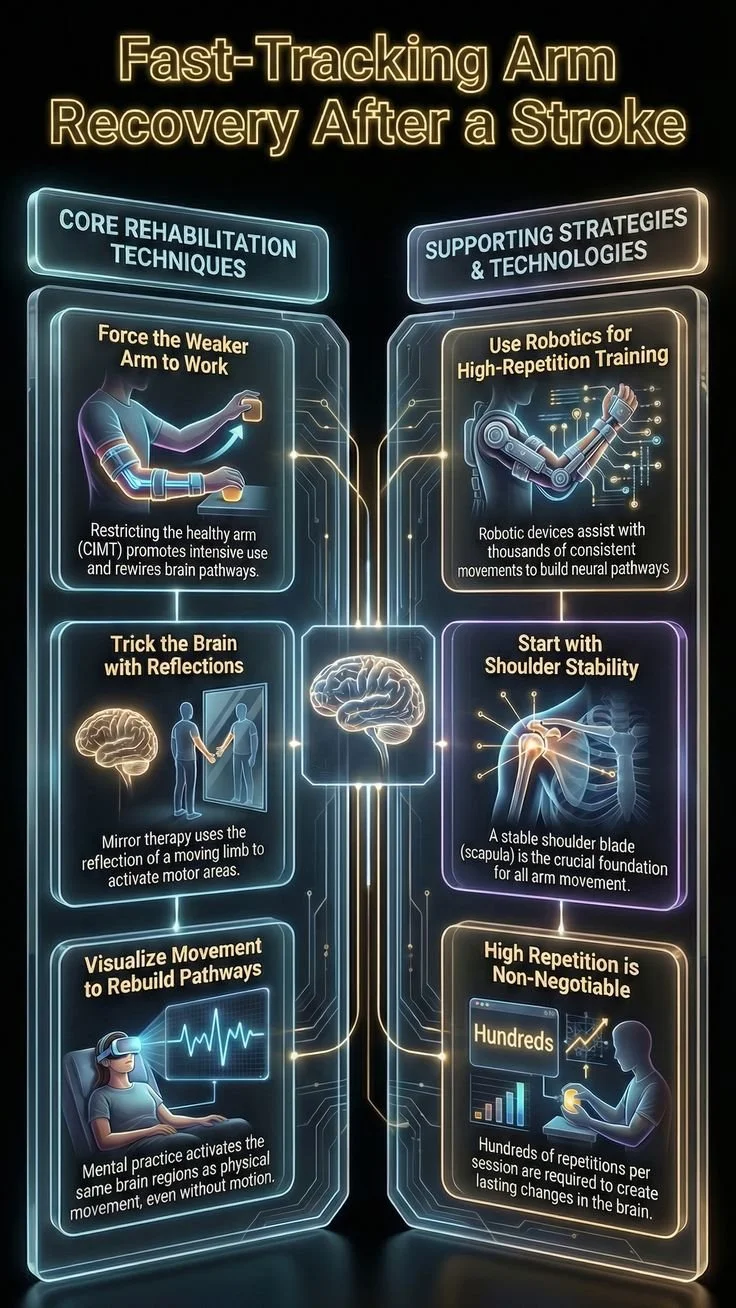
Regaining arm strength and function after a stroke is a marathon of repetition, strategic practice, and smart recovery—not a sprint. This article lays out evidence-informed exercises, neuroplasticity principles, and everyday strategies to speed functional gains while reducing frustration and risk. Try simple neck and shoulder mobility work early to ease compensations and improve reach.
Why neuroplasticity matters
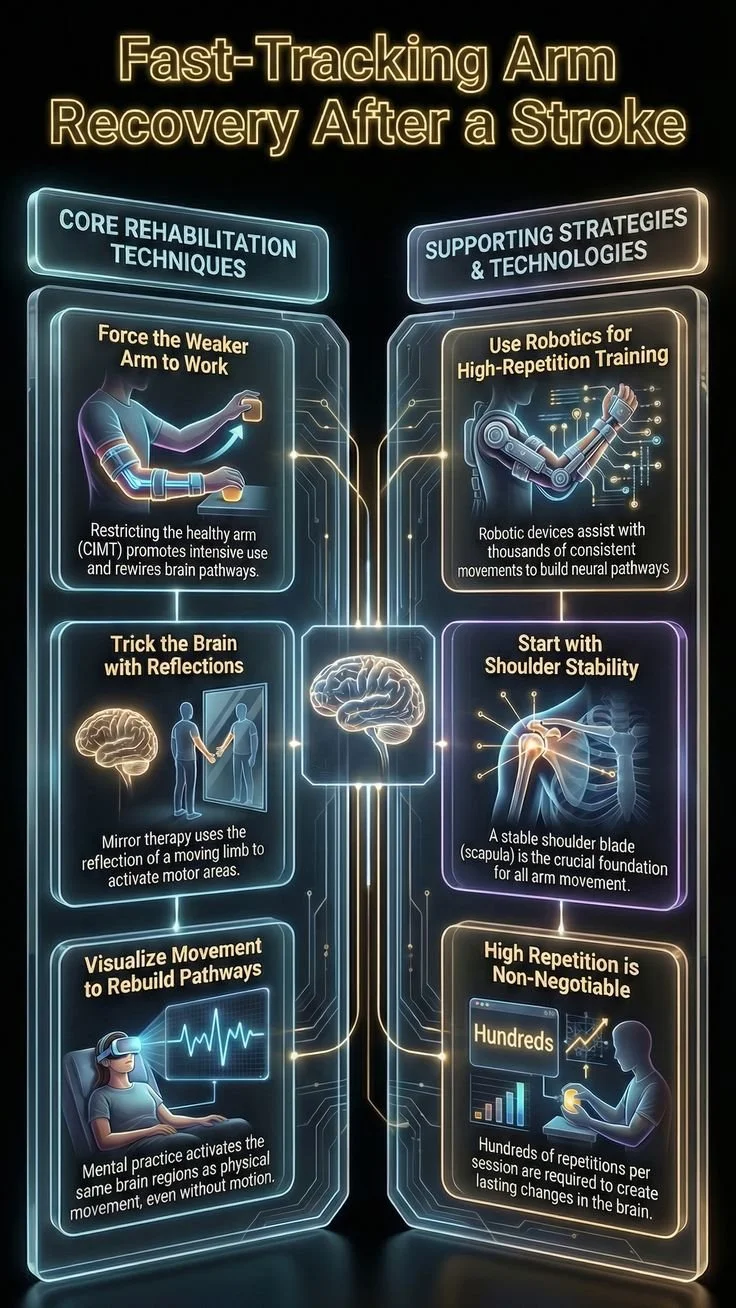
Neuroplasticity—the brain’s ability to reorganize—is the engine behind meaningful arm recovery. Focused, task-specific practice shapes new neural pathways; intensity and frequency matter more than perfection. Pair repetitive practice with rest, varied tasks, and meaningful goals to maximize transfer to daily activities. Good fueling and recovery support this process, so incorporate principles from around-the-clock nutrition and recovery to keep energy and learning capacity high.
Top targeted exercises (guided progression)
Start with gentle, high-repetition movements and advance toward resistance and functional tasks.
- Supported reaching: Sit with forearm supported and practice reaching forward and to the side, increasing distance slowly.
- Active-assisted flexion/extension: Use the unaffected hand or a strap to help guide the affected arm through its range as strength returns.
- Triceps-focused work: Controlled elbow extension is vital for pushing and stabilizing; follow progressive cues and sets like those in this beginner triceps progression adapted for rehabilitation.
- Grip and release drills: Practice picking up varied objects (soft ball, cloth) to retrain grasp patterns.
- Functional lifts: Move a cup from table to mouth or place light objects on a shelf to integrate reach, grip, and coordination.
Balance and posture support
Arm recovery is easier when the core and hips provide a stable base. Strength and motor control in the hips and trunk reduce compensatory shoulder strategies that limit recovery. Include lower-body stability work as described in these hip-strengthening exercises to create a steadier platform for arm tasks.
Daily practice structure
Consistency beats intensity alone. Structure practice into short frequent sessions (3–5 minutes every hour if possible) and include one longer focused session daily. Use tasks that matter—brushing teeth, folding socks, moving dishes—to force problem solving and promote carryover. Gradual increases in complexity and decreased assistance are the keys.
Safety, precautions, and readiness
Before pushing intensity, rule out pain, uncontrolled spasticity, or cardiovascular red flags. Warm up gently and avoid movements that cause sharp pain or new swelling. Follow common-sense warnings like those in guidance on what to avoid before exercise, adapted by your therapist for stroke context.
Combining sensory, visual, and eye strategies
Vision and sensation shape reaching accuracy. Pair arm tasks with visual targets and tactile cues to improve feedback and error correction. If visual tracking or field deficits are present, seek specific vision-focused rehab; coordinated eye-arm training speeds relearning and improves safety.
Tracking progress and adapting
Measure small wins: number of repetitions, reach distance, improved grip strength, or daily tasks completed with less help. If a plateau appears, vary the task, increase challenge, or add dual-task components (e.g., carry and count). When in doubt, consult a therapist to adjust dosage and technique.
Motivation and support
Recovery can be slow; celebrate micro-progress and build social supports. Use timers, checklists, and family-assisted practice sessions to maintain momentum. Tele-rehab or local support groups can provide accountability and new exercise ideas.
Conclusion
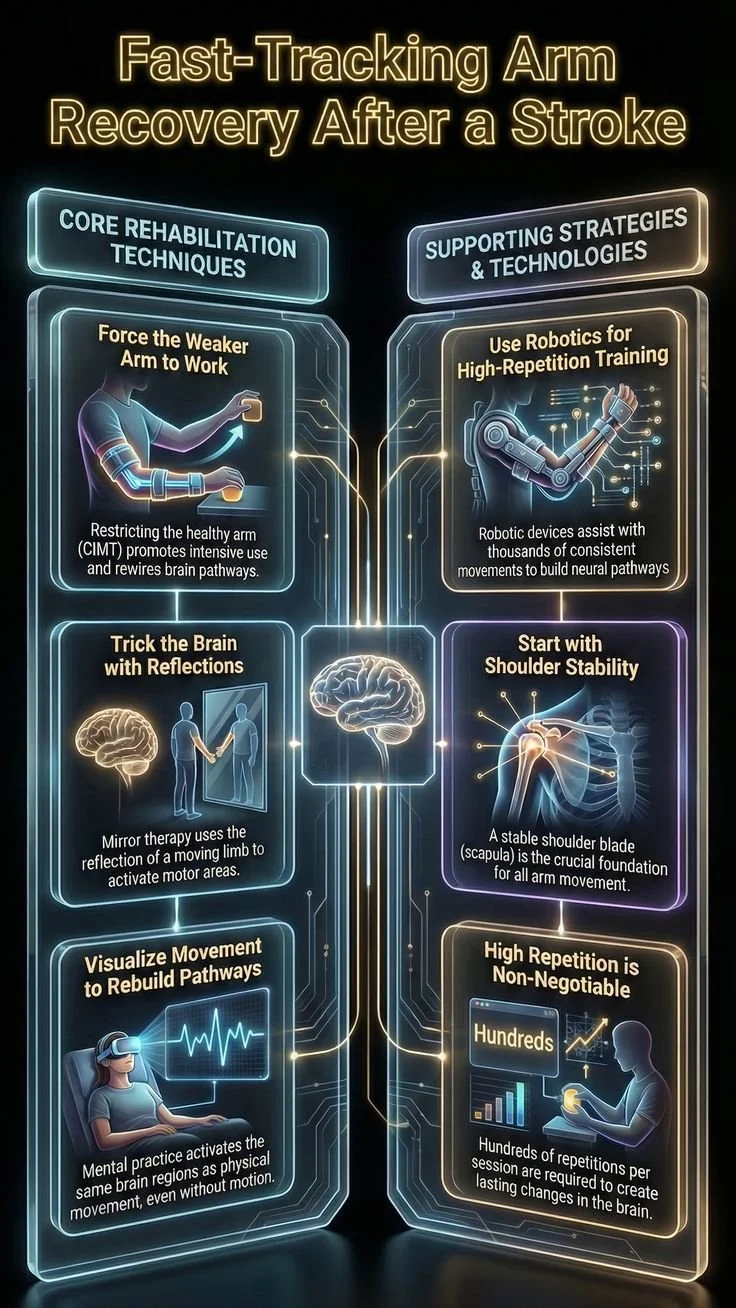
For a focused complement to arm rehabilitation—especially if visual tracking or gaze stability is involved—consult resources like Flint Rehab’s guide to eye exercises after stroke to integrate targeted eye training into your program.



GIPHY App Key not set. Please check settings