

 amanda cohen
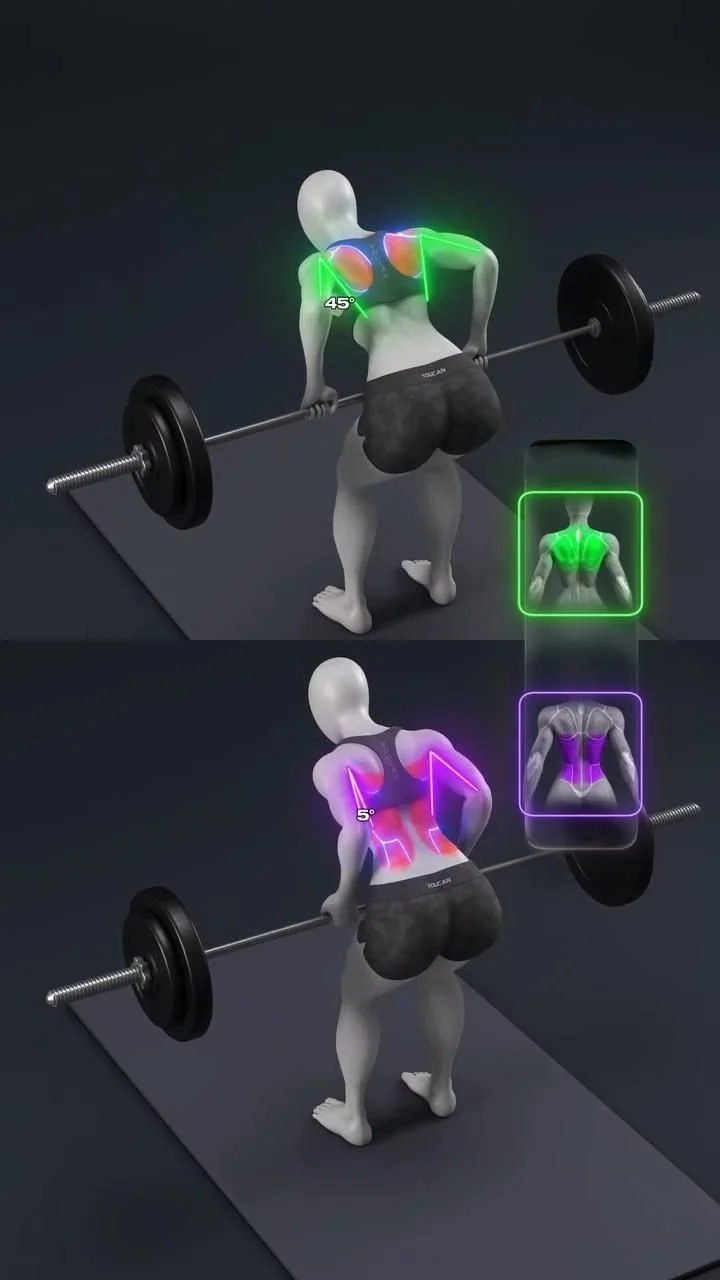
Grip Flip: Width vs Thickness
The little change you make to your barbell row grip can flip how your back develops — widening the lats or building thickness along the spine. Understanding how hand placement shifts muscle emphasis will help you pick the right grip for your goals and avoid wasted reps. For guidance on coordination and intentional training, check out this practical take on the mind-body connection: mastering the mind-body connection.
![Flips The Grip, Flips The Gains: Back Width vs. Back Thickness 🤯
The grip you use on your barbell row is … [Video] in 2025 | Barbell row, Latissimus dorsi, 5 minute crafts videos](https://tavof.com/wp-content/uploads/2026/01/flips-the-grip-flips-the-gains-back-width-vs-ba-2026-01-09-080855.webp "Flips The Grip, Flips The Gains: Back Width vs. Back Thickness 🤯 The grip you use on your barbell row is … [Video] in 2025 | Barbell row, Latissimus dorsi, 5 minute crafts videos 8")
Why a Grip Change Matters
Barbell rows are deceptively simple but mechanically rich. A wider, overhand grip tends to accentuate the latissimus dorsi and the “wing” effect — emphasizing back width. A narrower, underhand or close-grip row shifts load toward the rhomboids, middle traps, and the posterior deltoids, giving more thickness and spinal compression. Small adjustments in wrist angle, elbow flare, and torso angle re-route force and change what “wins” the set.
Grip Options and What They Build
- Wide Overhand Grip — Targets the outer lats and long-lever pulling. Use for building the V-taper and emphasizing width.
- Shoulder-Width Overhand — Balanced stimulus across lats and upper back; great default for general development.
- Underhand (Supinated) Narrow Grip — Pulls elbows closer to the body, stressing the mid-back and biceps; good for adding thickness and spinal stability.
- Neutral or Mixed Grips — Useful for technique or loading variations; combine for volume without overworking one tissue.
Technique Cues for Each Goal
For width: initiate the row by driving the elbows out and back, imagine pulling your elbows to the hips and flaring slightly to recruit more lat fiber. For thickness: think of pinching the shoulder blades together and rowing with a shorter path, pulling the bar toward the lower sternum while keeping elbows tight-ish to the ribs. Keep the torso braced and avoid excessive torso swing — strength should come from the lats and back, not momentum.
Programming Tips
Alternate grips across training blocks. A typical approach: 6–8 weeks prioritizing wide-grip volume for width, then 6–8 weeks focusing on narrow-grip heavy sets for thickness. Include some unilateral work and face pulls for scapular health. And because core bracing affects row quality, don’t forget direct core endurance—this short set of exercises can help you maintain perfect posture under load: work your abs to exhaustion with focused ab exercises.
![Flips The Grip, Flips The Gains: Back Width vs. Back Thickness 🤯
The grip you use on your barbell row is … [Video] in 2025 | Barbell row, Latissimus dorsi, 5 minute crafts videos](https://tavof.com/wp-content/uploads/2026/01/flips-the-grip-flips-the-gains-back-width-vs-ba-2026-01-09-080856-2.webp "Flips The Grip, Flips The Gains: Back Width vs. Back Thickness 🤯 The grip you use on your barbell row is … [Video] in 2025 | Barbell row, Latissimus dorsi, 5 minute crafts videos 9")
Quick Notes on the 2025 Video Trend
Recent short-form videos in 2025 have made “flip your grip” clips viral — useful to spark curiosity but sometimes too condensed for safe learning. Use those clips as a starting point, then drill the cues slowly with light weight until you can feel the intended muscle activation.
Conclusion
Grip matters. If your goal is a wider V-taper, prioritize wider grips and long-lever rows; if you want dense mid-back thickness, go narrow and controlled. Rotate grips across cycles, keep technique tight, and pair rows with solid core and scapular health work for the best, sustainable gains.



GIPHY App Key not set. Please check settings