

 amanda cohen
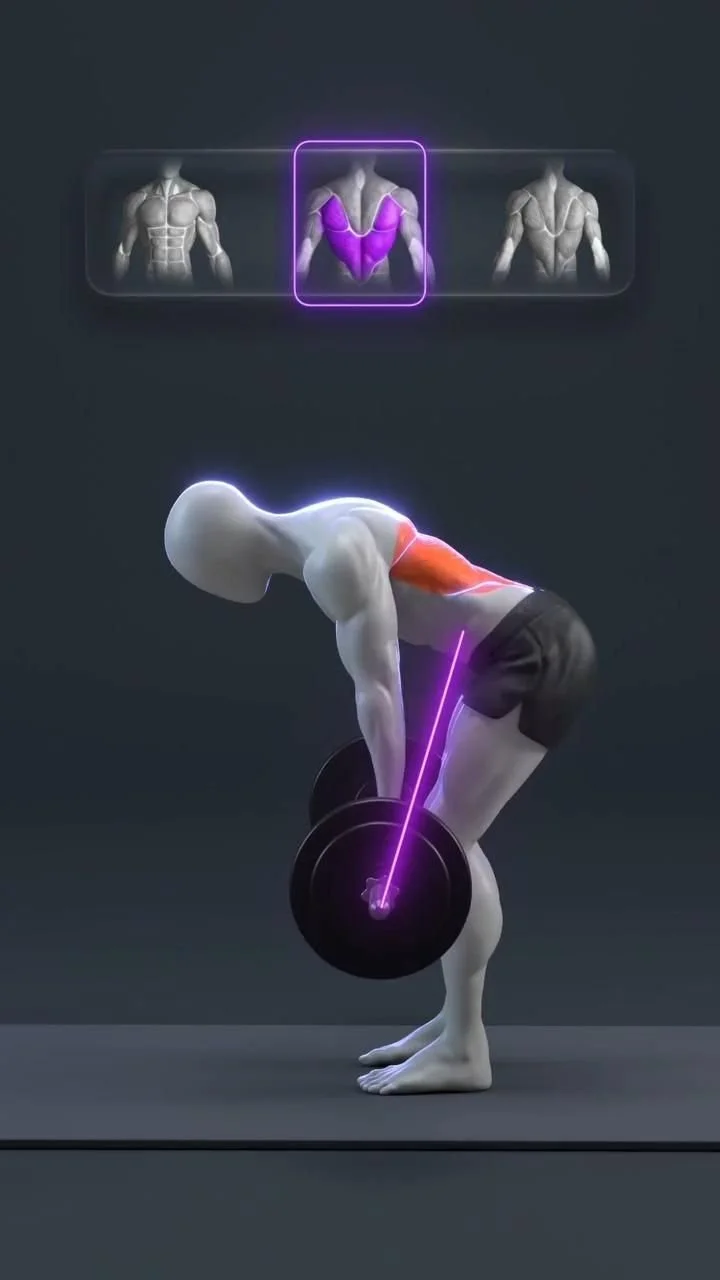
Cobra Back Blueprint
Want that thick, wide Cobra Back? This short guide breaks down the bent-over barbell row grip and angle adjustments you must know to target the latissimus dorsi effectively and build the “cobra” look. If you’re also exploring ways to stay motivated and consistent, consider the benefits of joining group fitness classes to complement your strength routine.
![Grow a Cobra Back! Must-Know Barbell Row Grip and Angle.
Want that thick, wide Cobra Back? 🐍 The Bent-Over Barbell Row i… [Video] in 2025 | Workout, Barbell row, Latissimus dorsi](https://tavof.com/wp-content/uploads/2026/01/grow-a-cobra-back-must-know-barbell-row-grip-and-2026-01-09-080904.webp "Grow a Cobra Back! Must-Know Barbell Row Grip and Angle. Want that thick, wide Cobra Back? 🐍 The Bent-Over Barbell Row i… [Video] in 2025 | Workout, Barbell row, Latissimus dorsi 8")
Why Grip and Angle Matter
The barbell row is a compound movement, but small changes in grip width and torso angle shift emphasis across the lats, upper back, and posterior delts. A slightly wider grip and a higher elbow path favor lat width, while a narrower grip and elbow tuck recruit more mid-back thickness.
Grip Options and Their Effects
- Overhand (pronated) grip: Emphasizes upper back and traps; useful for thickness.
- Underhand (supinated) grip: Increases lat activation and allows a stronger pull for many lifters.
- Neutral/mixed grips: Help when grip strength limits reps; maintain balanced loading.
Experiment with hand spacing:
- Wide (outside shoulder width): Greater stretch and width stimulus.
- Shoulder-width: Balanced development.
- Narrow (inside shoulders): More mid-back engagement and full range contractions.
Optimal Torso Angle and Elbow Path
- 45-degree torso hinge: A sweet spot for combining spinal safety with strong lat recruitment.
- Near-parallel (chest almost to bar): Increases upper-back and rear-delt involvement; heavier loads can be risky for lower back.
- Keep elbows tracking slightly out to the sides (not flared fully) to drive the lats and sculpt that winged, “cobra” appearance.
Rep Schemes and Progression
- Strength focus: 4–6 reps, heavier weight, 3–5 sets.
- Hypertrophy focus: 8–12 reps, moderate weight, 3–4 sets.
- Time under tension: Slow 2–3 second eccentrics to increase muscle stress.
Rotate grip widths and angles every 4–6 weeks to avoid plateaus and emphasize different fibers.
Technique Cues
- Hinge from the hips, neutral spine, chest slightly lifted.
- Initiate the pull with the elbow, driving it toward the hip.
- Squeeze the lats at the top for a full contraction; control the descent.
- Breathe: exhale on the concentric, inhale on the eccentric.
Common Mistakes to Avoid
- Rounding the lower back — shorten range or reduce load.
- Using momentum — strict tempo builds muscle more effectively.
- Ignoring grip variety — sticking to one grip limits overall lat development.
Training Add-Ons
Pair rows with vertical pulls (pull-ups, lat pulldowns) for complete lat development, and mix in single-arm variations to address side-to-side imbalances. For mobility and recovery that support better rowing form, check out this yoga routines guide to improve thoracic extension and hip hinge mechanics.
![Grow a Cobra Back! Must-Know Barbell Row Grip and Angle.
Want that thick, wide Cobra Back? 🐍 The Bent-Over Barbell Row i… [Video] in 2025 | Workout, Barbell row, Latissimus dorsi](https://tavof.com/wp-content/uploads/2026/01/grow-a-cobra-back-must-know-barbell-row-grip-and-2026-01-09-080905-2.webp "Grow a Cobra Back! Must-Know Barbell Row Grip and Angle. Want that thick, wide Cobra Back? 🐍 The Bent-Over Barbell Row i… [Video] in 2025 | Workout, Barbell row, Latissimus dorsi 9")
Conclusion
For a practical deep dive into row variations specifically designed to build a cobra-like back, read this detailed guide on Building the "Cobra Back": 3 Underused Row Variations which outlines specific row tweaks and programming to accelerate lat width and thickness.



GIPHY App Key not set. Please check settings