

 amanda cohen
Human Figure Drawing: Essential Techniques for Artists
Drawing the human figure is one of the most rewarding — and challenging — pursuits for an artist. It requires observation, understanding of structure, and a willingness to practice imperfectly. Whether you’re sketching quick gestures or composing a finished study, these essential techniques will help you build confidence and accuracy in depicting the human body. If you struggle with particular shapes like broad shoulders while translating anatomy to paper, try exploring a targeted exercise for better shoulder structure: basic exercise for wider shoulders.
Introduction: Mindset and Goals
Start with a clear purpose for each session: gesture speed, proportion accuracy, or refined shading. Keep expectations modest and measurable — for example, “30 gesture sketches in 20 minutes” or “one five-minute head study focusing on tilt.” Adopt a sketchbook habit, and remember that progress comes from steady repetition rather than rare bursts of intensity.
Materials and Warm-ups
You don’t need expensive supplies to begin. Basic tools — a pencil (HB–2B), an eraser, a sketchbook, and a blending stump — will let you practice every core technique. Warm up before serious drawing with lines, circles, and quick 30–60 second poses. These loosen the wrist and help you capture motion. Focus on simple rhythm lines that describe the spine and limb flow.
Gesture Drawing: Capture Energy First
Gesture drawing is the foundation of expressive figure work. Aim to capture the action, balance, and main directional forces of the pose in the first few seconds. Use long, confident strokes rather than tiny disconnected marks. Think of gesture as the skeleton of the pose — it should feel alive, even if it’s rough.
Proportions and Simplified Anatomy
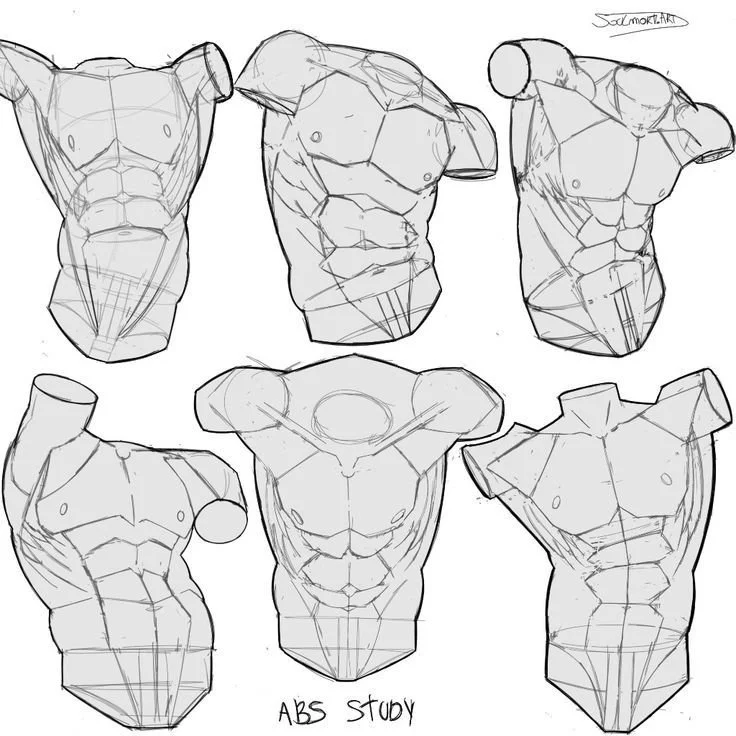
Understand basic proportional relationships: the average adult figure is about 7–8 heads tall; shoulders, ribcage, and pelvis form three core blocks; limb segments have repeating proportions. Learn simplified landmarks (sternum, iliac crest, kneecap) and use them as anchors. Study major muscle groups only enough to explain surface form — you don’t need to memorize every muscle to draw believable figures.
Constructive Drawing: Build Volume
Move from flat shapes to solid forms: translate ovals into cylinders, boxes, and spheres to indicate volume and perspective. This constructive approach helps when the figure twists or foreshortens. Establish the torso as a tilted box or egg and attach limbs as cylinders that twist and taper. This method keeps proportions consistent and simplifies complex poses.
Foreshortening and Perspective
Foreshortening is when parts of the body appear compressed when pointed toward the viewer. Overcome fear of foreshortening by breaking the limb into simple volumes and using overlapping planes to show depth. Use perspective cues like convergence lines and consistent vanishing points when the pose includes strong depth.
Contours, Edges, and Line Quality
Learn to vary line weight: heavier lines can indicate shadow edges or closer planes, while lighter lines suggest distance or less emphasis. Use contour drawing exercises to sharpen your observational skills. Occasionally draw without lifting the pencil for continuous contour practice — it forces you to reconcile hand movement with visual observation.
Lighting and Rendering
Once structure is solid, introduce a simple light model: define a primary light source, identify core shadows, cast shadows, and highlights. Start with broad tonal masses before refining. Keep edges soft where light wraps around forms, and sharpen edges where two planes meet abruptly. Limit your value range early on so you can maintain clarity and avoid muddy tones.
Clothing, Gesture, and Surface Detail
When adding clothing, focus on how fabric follows or reveals underlying structure. Indicate weight and stretch with careful folds and creases. Avoid over-detailing; suggest texture and material with selective lines and values to keep the figure readable.
Common Problems and Quick Fixes
- Stiff poses: loosen with gesture drills and exaggerate the line of action.
- Incorrect proportions: check key head counts and compare limb lengths against head height.
- Flat figures: reapply constructive forms and mark light direction to reveal volume.
- Awkward hands and feet: study them separately with focused, repeated studies.
Practice Strategies and Growth
Deliberate practice beats random drawing. Set focused exercises: timed gestures, proportion drills, blind contour studies, and long studies for rendering. Keep a log of weaknesses and cycle through them regularly. Building performance habits outside drawing helps too — posture, exercise, and confidence training affect your ability to sit and draw for longer periods. If you want methods to strengthen the mental side of practice and boost persistence, look into techniques to boost your drawing confidence.
Study Sources and Reference Use
Work from life as much as possible; live models and friends are invaluable. Supplement life drawing with high-quality photo references and anatomical studies. Use references as guides, not templates — analyze and reinterpret what you see rather than copying pixel-for-pixel.
Keeping Momentum: Challenges and Habits
Set challenges like a 100-figure sketch month or weekly long-figure focus. Review older sketches to measure progress. Create a routine that mixes short, daily gestures with longer weekly studies so you build both speed and depth.
Conclusion
For step-by-step demonstrations and entertaining lessons that cover gesture, anatomy, and constructive figure drawing, explore the comprehensive tutorials at Proko: Proko – Learn How to Draw with Fun Tutorials.


GIPHY App Key not set. Please check settings