

 Riri
Riri
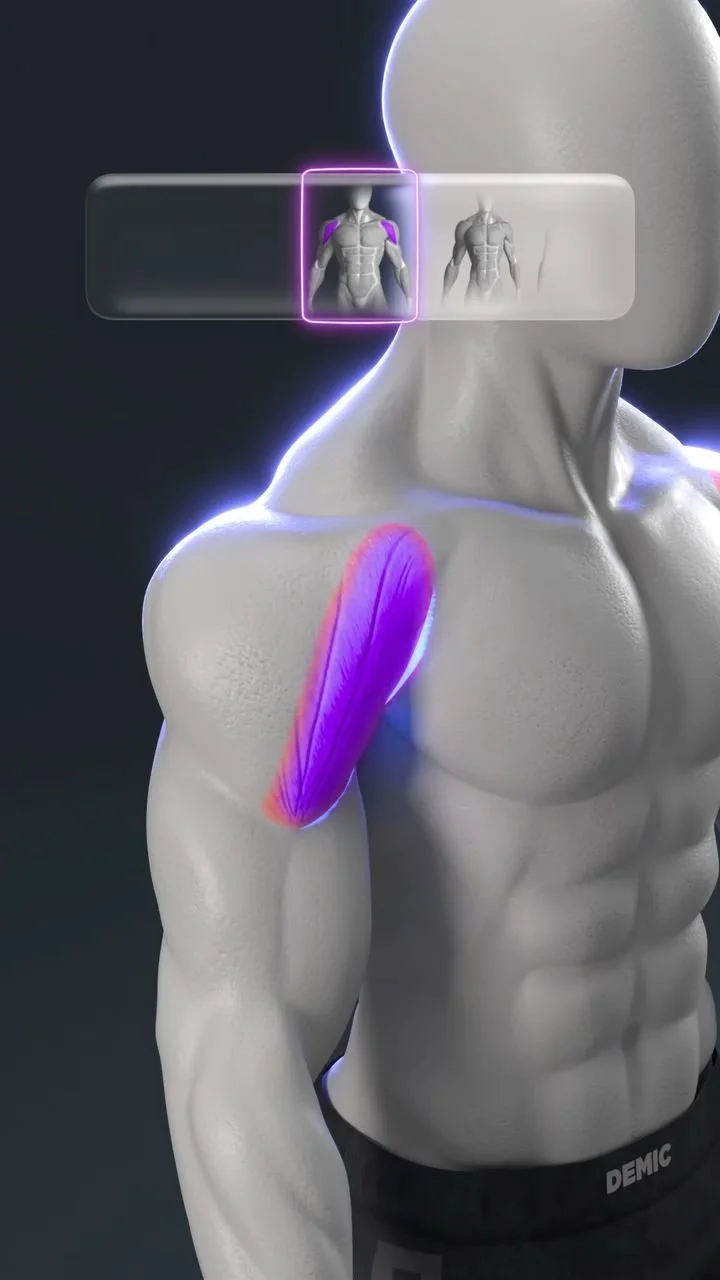
3D Shoulders Workout: Build Width, Roundness, and Strength
Well-developed shoulders have three-dimensional appeal: width from the lateral deltoid, roundness from the anterior deltoid, and depth/definition from the posterior deltoid and surrounding musculature. A 3D shoulders workout targets all deltoid heads and the supporting muscles (rotator cuff, traps, upper back) with intention and balance so your shoulders look full from every angle and move safely under load.
Introduction
- Why a targeted plan matters: random or ego-driven pressing often overdevelops the front delts while neglecting rear delts and rotator cuff stability. For a sustainable, aesthetic shoulder, use balanced volume, varied angles, and progressive overload.
- If you’re new to planning training blocks, consider the benefits of a structured workout program to keep improvements consistent and measurable.
Shoulder anatomy and why 3D training works
- Anterior deltoid: responsible for shoulder flexion and many pressing motions.
- Lateral (middle) deltoid: creates width; emphasizes abduction.
- Posterior deltoid: gives depth and balances posture; often undertrained.
- Supporting muscles: rotator cuff for joint health, upper traps for shrugging power, and scapular stabilizers for efficient movement patterns.
Training principles for true 3D shoulders
- Train all three heads each microcycle: give each head attention across the week rather than one-off workouts.
- Use multi-angle work: overhead presses (vertical), incline/landmine presses (diagonal), lateral raises (isolation), and face pulls or reverse flyes (horizontal posterior emphasis).
- Vary loading schemes: heavy sets for strength, moderate weight for hypertrophy, and light/fast sets for tempo and endurance.
- Prioritize shoulder health: warm up the scapula and rotator cuff, include mobility work, and control volume to prevent overuse injuries.
Warm-up (5–10 minutes)
- Scapular push-ups: 2 sets of 10–12
- Band pull-aparts: 2 sets of 15–20
- External rotation with band: 2 sets of 12–15 per side
- Light kettlebell or dumbbell halos: 1–2 sets of 10
Sample 3D Shoulders Workout (intermediate lifter)
- Overhead Barbell Press (or Dumbbell Seated Press) — 4 sets: 4–6 reps (heavy)
- Primary strength move targeting anterior and lateral heads.
- Single-Arm Landmine Press — 3 sets: 8–10 reps each side
- Diagonal pressing adds thickness and improves scapular mechanics.
- Strict Dumbbell Lateral Raises — 4 sets: 10–15 reps
- Focus on controlled eccentric and peak contraction for lateral head width.
- Rear Delt Face Pulls (or Reverse Pec Deck) — 4 sets: 12–15 reps
- Posterior emphasis to create depth and prevent rounded shoulders.
- Incline Front Raises (plate or dumbbell) — 3 sets: 12–15 reps
- Adds roundness to the anterior delts without heavy barbell strain.
- Shrugs (barbell or dumbbell) — 3 sets: 8–12 reps
- Finish with controlled shrugs for upper trap thickness.
- Optional: Band External Rotations — 2 sets: 15 reps per side (rotator cuff maintenance)
Programming tips
- Frequency: Train shoulders directly 2 times per week (one heavy/strength session + one hypertrophy/volume session) or include moderate shoulder work within upper-body days.
- Rep ranges: 4–6 for strength, 6–12 for primary hypertrophy, 12–20 for isolation and endurance/shape work.
- Rest intervals: 2–3 minutes for heavy sets, 60–90 seconds for hypertrophy sets, 30–60 seconds for burnout/isolation.
- Progressive overload: increase load, reps, or quality of reps (slower eccentrics, fuller ROM) over weeks.
- Recovery: rotate heavier and lighter weeks to manage fatigue; give 48–72 hours between intense shoulder sessions.
Common mistakes and how to avoid them
- Overemphasis on pressing: pair pressing with targeted posterior work each session.
- Using momentum on lateral raises: control tempo; use lighter loads if necessary.
- Ignoring mobility: tight pecs and lats will limit overhead mechanics—stretch and mobilize regularly.
- Skipping rotator cuff work: small stabilizers are essential to lift safely and maintain joint health.
Sample 2-week split (example)
- Day 1 — Heavy Upper (Overhead press focus) + light posterior work
- Day 2 — Lower body
- Day 3 — Hypertrophy Upper (Isolation heavy on lateral + rear delts)
- Day 4 — Rest or active recovery
- Day 5 — Push emphasis (chest + secondary shoulder)
- Day 6 — Pull (back + posterior delts)
- Day 7 — Rest
If your goal is specifically increasing shoulder width, include targeted lateral raise variations and prioritize mid-deltoid volume; for fuller round delts, emphasize compound pressing and front-dominant isolation. For practical guidance on exercises aimed at widening the shoulders, see this primer on basic exercises for wider shoulders.
Quick progression checklist
- Track exercises, sets, reps, and notes each session.
- Aim to add small increments of weight or 1–2 reps every 1–2 weeks.
- Rotate exercises every 6–8 weeks to avoid plateaus while keeping core compound lifts consistent.
Conclusion
For a complete blueprint and additional programming tips that complement what’s outlined here, check out this detailed guide: 3D Shoulders: Develop Your Deltoids’ Strength & Shape | Flex AI.


GIPHY App Key not set. Please check settings