
Shoulder Forge
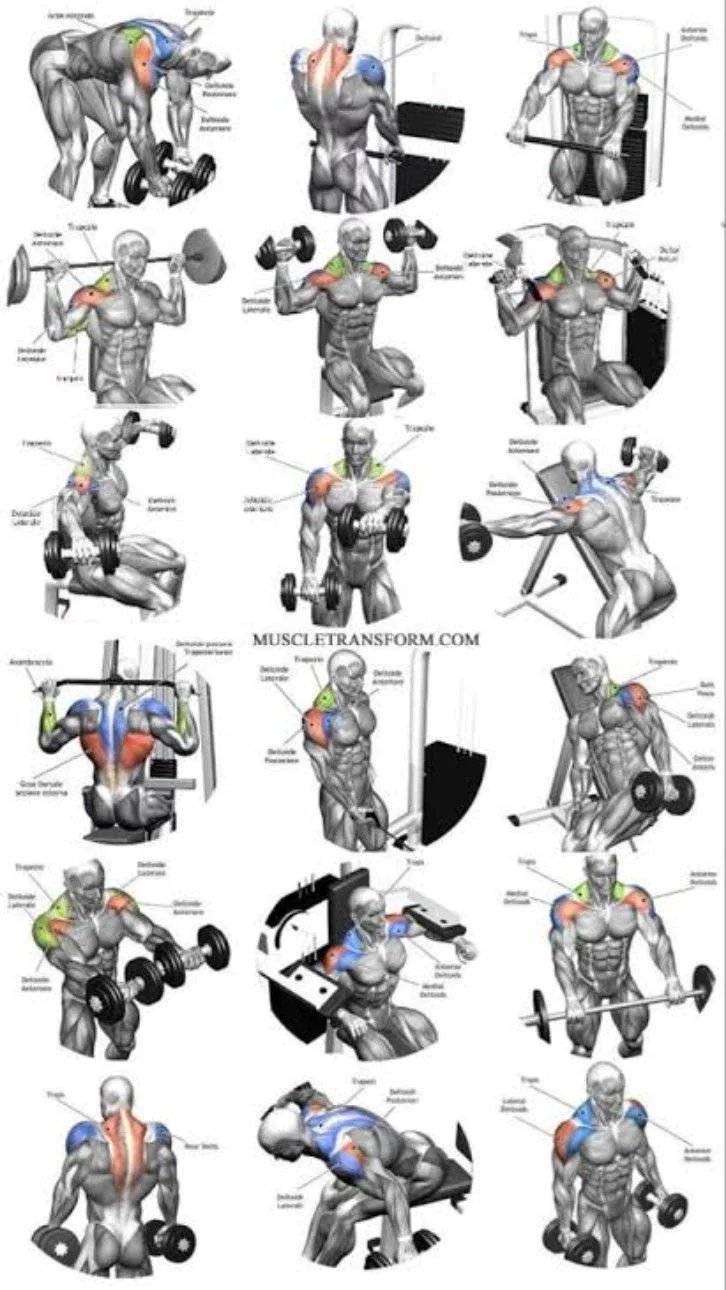
A focused shoulder workout builds strength, stability, and shape while protecting your joints from everyday strain. Whether you’re new to lifting or refining your routine, this plan emphasizes the three deltoid heads and supportive scapular muscles to keep your shoulders strong and balanced. For a compact, structured routine that visualizes each movement, check out the 3D shoulders workout guide for helpful demonstrations and programming tips.

Why a targeted shoulder workout matters
Strong shoulders improve pressing power, posture, and athletic performance. The deltoid has three heads — anterior, medial, and posterior — and neglecting any one of them leads to imbalance and potential injury. A good routine includes compound lifts, targeted isolation, and mobility work to maintain healthy range of motion.
Warm-up (5–10 minutes)
- Arm circles (30 seconds each direction)
- Band pull-aparts (2 sets of 15)
- Scapular wall slides (2 sets of 10)
- Light dumbbell or kettlebell single-arm presses (2 sets of 10 each side)
Core exercises (choose 3–4, 3–4 sets each)
- Overhead press (barbell or dumbbell) — 6–8 reps: Primary mover for overall shoulder strength.
- Seated dumbbell lateral raise — 10–15 reps: Targets the medial deltoid for width.
- Bent-over rear delt fly or face pulls — 12–15 reps: Builds posterior delts and scapular stability.
- Incline front raises or landmine press — 8–12 reps: Emphasizes the anterior head without overloading the shoulder capsule.
Tip: Keep tempo controlled (1–2s concentric, 2–3s eccentric) and avoid using momentum on lateral raises.
Accessory work and balance
- Single-arm cable lateral with partial range (3 sets of 12) to keep tension through the movement.
- External-rotation band work (3 sets of 15) for rotator cuff resilience.
- Farmer carries or suitcase carries (2–3 rounds of 30–60 seconds) to improve scapular control and grip.
Incorporate the dumbbell-focused variations from the dumbbell shoulder workout that hits all three heads when you want a unilateral emphasis or to break through plateaus.
Sample session (intermediate)
- Warm-up sequence (above)
- Barbell overhead press: 4×6–8
- Seated dumbbell lateral raise superset with face pulls: 3×12 / 3×15
- Incline front raise: 3×10
- Band external rotations: 3×15
- Farmer carry: 3 rounds of 45 seconds
Progress by adding reps or small weight increases each week. Pay attention to shoulder pain that feels sharp or pins-and-needles—discomfort is different from safe muscle fatigue.
Programming tips
- Train shoulders directly 1–2 times per week depending on overall volume and recovery.
- If you press heavy in compound lifts (bench or overhead 3x/week), reduce direct shoulder volume to avoid overtraining.
- Swap exercises every 6–8 weeks to target weak points and maintain adaptation.

Conclusion
For an expanded catalog of shoulder movements and variations to include in your routines, consult the Shoulders Exercises – Muscle & Strength resource for demonstrations and alternatives.


GIPHY App Key not set. Please check settings