
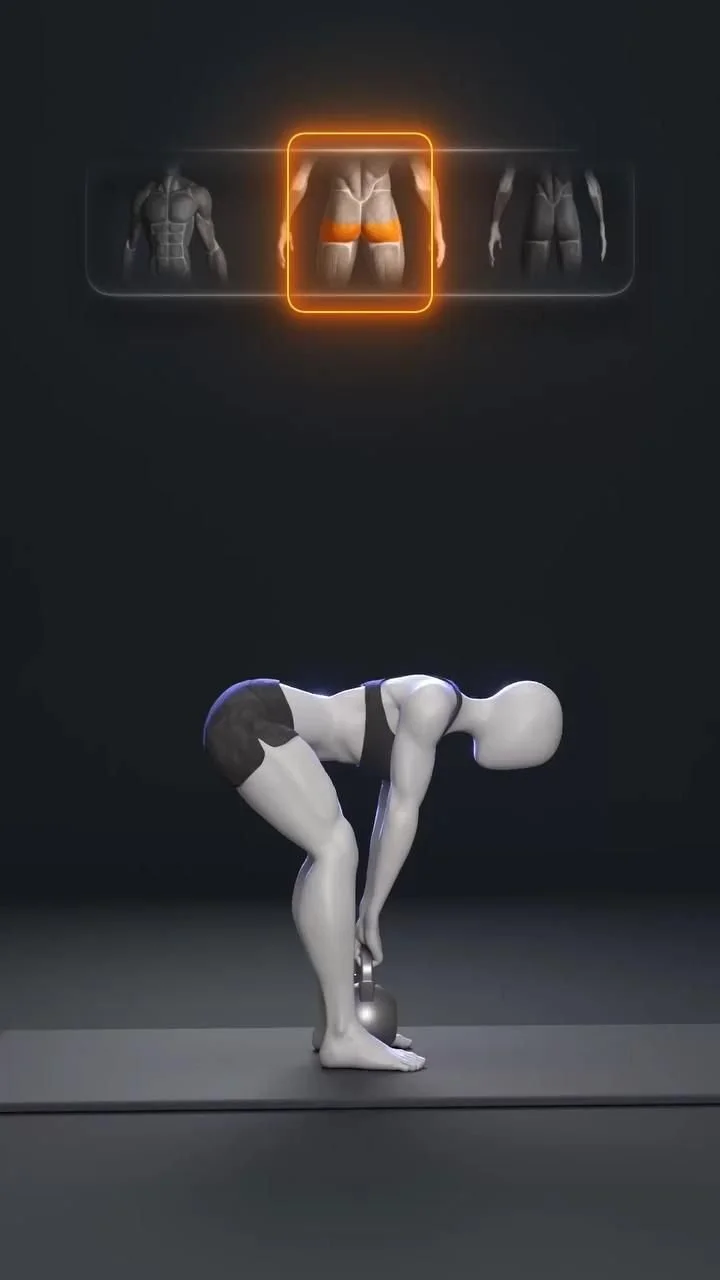
Single-KB RDL: One-Kettlebell Glute Torch
Looking for a compact, high-impact move that lights up your posterior chain with a single piece of equipment? The single-leg kettlebell Romanian deadlift (RDL) is a one-kettlebell variation that targets glutes and hamstrings while challenging balance and stability. If you’re building a program or trying to stick to a consistent plan, this exercise pairs perfectly with a consistent gym routine for optimal fitness.
![Glutes & Hamstrings on Fire with ONE Kettlebell! (Must-Try Exercise)
You need to add this single-leg kettlebell RDL variation to … [Video] in 2025 | Workout, Gym workouts, Fitness](https://tavof.com/wp-content/uploads/2026/01/glutes-hamstrings-on-fire-with-one-kettlebell-2026-01-09-080705.webp "Glutes & Hamstrings on Fire with ONE Kettlebell! (Must-Try Exercise) You need to add this single-leg kettlebell RDL variation to … [Video] in 2025 | Workout, Gym workouts, Fitness 2")
Why this variation works
- Unilateral loading corrects side-to-side strength imbalances and improves hip hinge mechanics.
- The single-leg stance forces the glute medius and stabilizers to engage, so you get more carryover to running, jumping, and heavy lifts.
- Using one kettlebell lets you load the movement without needing a full barbell setup, making it great for home workouts or small gym spaces.
How to perform the single-leg kettlebell RDL (step-by-step)
- Setup: Stand tall holding one kettlebell in the hand opposite your working leg (e.g., kettlebell in right hand when standing on left leg) or same-side depending on comfort and balance challenge. Keep a slight bend in your standing knee.
- Hinge: Hinge at the hips, pushing your hips back while keeping your spine neutral and chest proud. Let the free leg extend straight back to counterbalance.
- Reach: Lower the kettlebell toward the mid-shin or just below the knee, feeling a stretch in the hamstring of the standing leg. Maintain weight through the heel.
- Drive: Contract the glute of the standing leg and drive your hips forward to return to standing, keeping the kettlebell close to your body.
- Reps and sets: Perform 8–12 controlled reps per leg for hypertrophy, or 4–6 heavier reps for strength work, 3–4 sets.
Programming tips and progressions
- Tempo: Try a 3-second descent with a controlled 1-second pause at the bottom to increase time under tension.
- Loading: Progress by increasing kettlebell weight, adding a pause at the bottom, or performing slow eccentrics.
- Balance: To reduce wobble, lightly touch a wall or use a chair for single-touch support while building stability.
- Variations: Hold the kettlebell at the opposite or same hand to vary rotational demand. You can also add chains or perform slow negatives.
Who benefits most
- Athletes who need single-leg strength and balance (sprinters, soccer players).
- Lifters who want better deadlift carryover by improving hip hinge and posterior chain activation.
- Anyone training at home with limited equipment who still wants an effective posterior-chain builder; in fact, understanding load and effort here complements ideas about why women need to go heavy in the gym to drive strength and muscle growth.
Common mistakes to avoid
- Rounding the spine: Keep a neutral spine; hinge from the hips, not the lower back.
- Letting the knee collapse inward: Keep the standing knee tracking over the toes.
- Using momentum: Move deliberately; the goal is hamstring and glute tension, not swinging weight for reps.
Sample mini-session (build into a full routine)
- Warm-up: 5–8 minutes dynamic mobility (leg swings, hip circles)
- Single-leg KB RDL: 3 sets x 8–10 reps per leg (moderate-heavy)
- Superset: Bulgarian split squats 3 x 8 per leg
- Finish: Glute bridges 3 x 12–15 for metabolic pump
![Glutes & Hamstrings on Fire with ONE Kettlebell! (Must-Try Exercise)
You need to add this single-leg kettlebell RDL variation to … [Video] in 2025 | Workout, Gym workouts, Fitness](https://tavof.com/wp-content/uploads/2026/01/glutes-hamstrings-on-fire-with-one-kettlebell-2026-01-09-080706-2.webp "Glutes & Hamstrings on Fire with ONE Kettlebell! (Must-Try Exercise) You need to add this single-leg kettlebell RDL variation to … [Video] in 2025 | Workout, Gym workouts, Fitness 3")
Conclusion
For additional cues on hip hinge mechanics that transfer to heavier barbell work, see this helpful guide on Mastering barbell deadlifts: top cue for lat engagement.

GIPHY App Key not set. Please check settings