
Title: Row Right — Unlock Bigger Lats
Perfect your bent-over row and watch your back transform. This short guide breaks the movement into simple setup cues and execution tips so you can load the muscle, not the momentum. For a complete approach to core stability that complements row form, check Leila’s protocols in this program: Leila’s at-home abs coaching.
![Maximize Your Back Growth: PERFECT Bent-Over Row Form
Dumbbell Bent-Over Row Form Fix: Engage Your Lats! 💪
Are yo… [Video] in 2025 | Gym workout tips, Arm workout, Grooming hacks](https://tavof.com/wp-content/uploads/2026/01/maximize-your-back-growth-perfect-bent-over-row-f-2026-01-09-080714.webp "Maximize Your Back Growth: PERFECT Bent-Over Row Form Dumbbell Bent-Over Row Form Fix: Engage Your Lats! 💪 Are yo… [Video] in 2025 | Gym workout tips, Arm workout, Grooming hacks 2")
Why the bent-over row matters
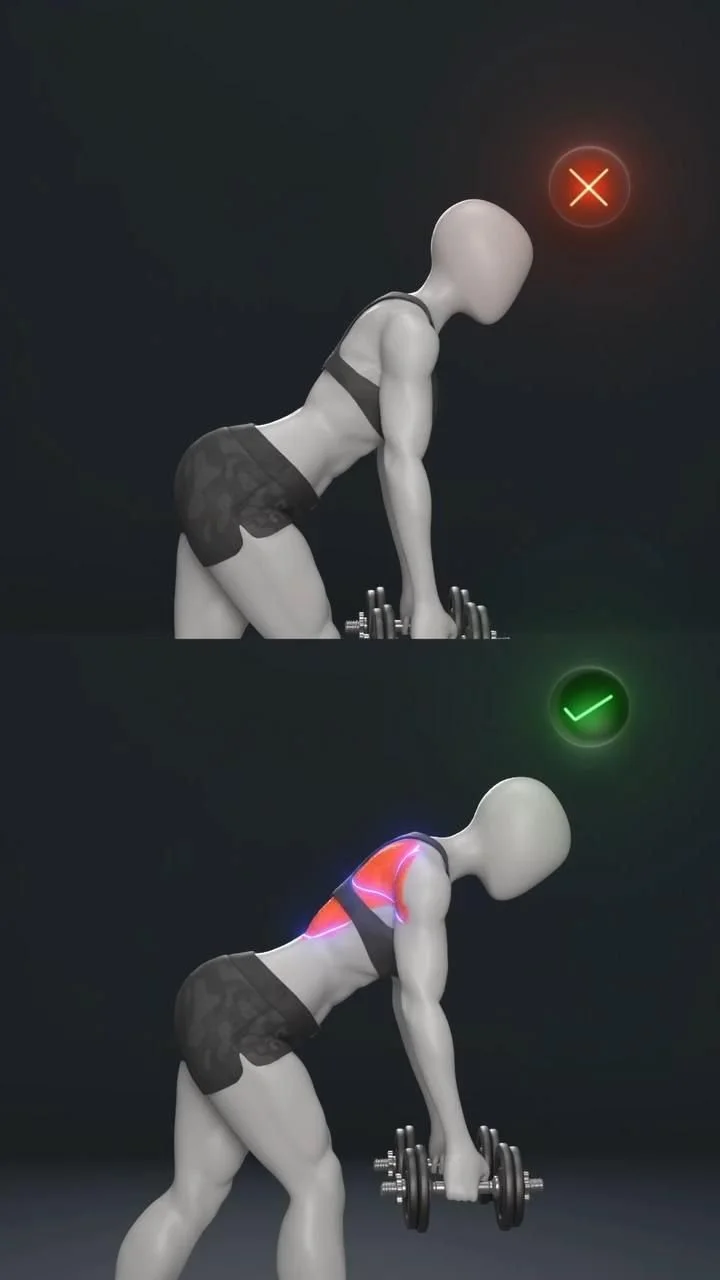
The bent-over row is a powerhouse for posterior development: it targets the lats, rhomboids, traps, and posterior delts while reinforcing posture and spinal stability when done correctly. Done poorly, it becomes a lower-back hinge that hides your lats behind momentum. Focus on position and tension rather than heavy numerical pride.
Setup: posture, grip, and hip hinge
- Start with feet about hip-width, soft knees, and a neutral spine. Hinge at the hips until your torso is roughly 45 degrees (adjust for comfort and limb proportions).
- Use a grip that allows full lat engagement — for dumbbells, a neutral or pronated grip both work; for barbell rows, slightly wider than shoulder width is a good baseline.
- Pull your shoulder blades down and back before the first rep to “set” the lats and protect the cervical and thoracic regions.
Execution: tempo, path, and breathing
- Initiate each rep from the elbows, not from the hands. Think “elbows past the torso” to bias the lats.
- Pull to the lower ribs or waist with a controlled 1–2 second concentric, pause briefly at the top to feel peak contraction, and lower with a 2–3 second eccentric to keep tension on the muscle.
- Breathe out on the pull and brace your core throughout to protect the spine.
Common mistakes and how to fix them
- Rounding the back: regress load, re-establish the hip hinge, and practice with lighter weight until you can hold a neutral spine under tension.
- Using momentum (jerking the torso): reduce weight, slow the tempo, and focus on the elbow-driven pull.
- Overshrugging at the top: instead of elevating the shoulders, retract and depress the scapula to isolate the lats and mid-back.
Progressions and programming tips
- Start with dumbbells to learn unilateral control, then progress to a barbell or heavier dumbbells as your form steadies.
- Include variations: chest-supported rows for technique and fatigue management, single-arm rows for unilateral strength, and paused reps to build time under tension.
- Pair rows with vertical pulls (pull-ups or lat pulldowns) in the same session for complete lat development — alternating horizontal and vertical planes ensures balanced growth.
Accessory cues and troubleshooting
- If you feel the work in your biceps more than your back, lengthen the range slightly and focus on pulling with the elbow; consider a slight pronation to shift emphasis away from the biceps.
- If low back fatigue comes before back fatigue, check hip hinge depth and core brace; practicing the hip-hinge pattern unloaded will help.
- To reinforce the mind-muscle connection, perform a few warm-up sets with a slow tempo and isometric holds at the top.
Transferable help
For tips on pressing mechanics that pair well in a full upper-body program, review this guide on bench pressing to ensure your pushing and pulling balance is optimal: perfect incline bench press form.
![Maximize Your Back Growth: PERFECT Bent-Over Row Form
Dumbbell Bent-Over Row Form Fix: Engage Your Lats! 💪
Are yo… [Video] in 2025 | Gym workout tips, Arm workout, Grooming hacks](https://tavof.com/wp-content/uploads/2026/01/maximize-your-back-growth-perfect-bent-over-row-f-2026-01-09-080715-2.webp "Maximize Your Back Growth: PERFECT Bent-Over Row Form Dumbbell Bent-Over Row Form Fix: Engage Your Lats! 💪 Are yo… [Video] in 2025 | Gym workout tips, Arm workout, Grooming hacks 3")
Conclusion
Consistent attention to setup, elbow-driven pulling, and controlled tempo will make the bent-over row a cornerstone for bigger lats and a stronger back — and if you want supplemental technique tips for barbell rowing, see this resource: Master Your Barbell Row Form with These Tips.


GIPHY App Key not set. Please check settings