
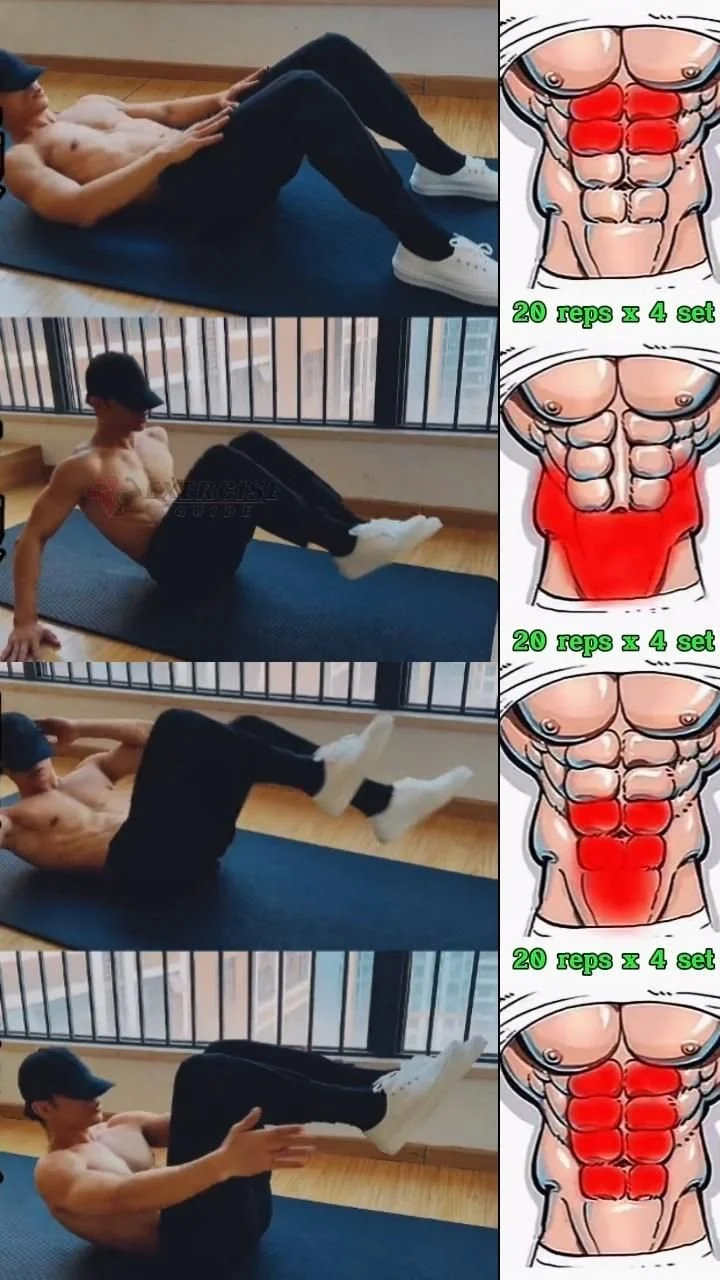
4 Moves for Killer Abs — A Practical Guide (2025 Edition)
Short, focused, and effective: that’s the modern approach to core training. Inspired by quick social reels like “4 Moves For Killer Abs! #reel2025,” this guide breaks down four foundational exercises for the abs and obliques, explains how to do them with clean form, and gives a simple plan to fit them into your week. Before you jump in, spend 3–5 minutes on a gentle warm-up; a few sun salutations or a short sequence from well-designed yoga routines can prime your breath and mobility and make core work safer and more effective.
The four moves (what to do and why)
-
Bicycle Crunch — Targets rectus abdominis and obliques
- How: Lie on your back, hands lightly behind your head. Bring opposite elbow to opposite knee while extending the other leg. Move with control — don’t yank the neck.
- Sets/Reps: 3 sets of 20–30 total alternating reps (10–15 per side).
- Cue: Rotate from the ribs, not just the shoulders. Keep a small gap under your lower back.
-
Plank with Hip Dips — Strengthens transverse abdominis and obliques
- How: From a forearm plank, rotate hips down toward one side, return to center, then dip to the other side. Move slowly to emphasize control.
- Sets/Reps: 3 sets of 8–12 dips per side.
- Cue: Maintain a neutral neck and a straight line from shoulders to heels. Imagine pulling your ribs toward your hips.
-
Hanging Knee Raises or Captains Chair — Focuses on lower abs
- How: Hang from a bar or use a bench-style apparatus. Draw knees up toward chest with control; avoid swinging.
- Sets/Reps: 3 sets of 10–15 reps.
- Cue: Use slow eccentric lowering to maximize muscle engagement. If hanging is too challenging, perform lying leg raises with hands under hips.
-
Russian Twist (weighted or bodyweight) — Oblique mass and rotational control
- How: Sit with knees bent, lean back slightly, and rotate torso left and right. Hold a light weight for more resistance if desired.
- Sets/Reps: 3 sets of 16–30 total twists (8–15 per side).
- Cue: Keep the spine long and rotate from the thoracic region rather than flinging with the arms.
Programming and progressions
- Frequency: 2–4 focused core sessions per week is enough for most people. Core muscles recover quickly but still benefit from rest days.
- Structure: Pair these moves into a circuit (do one set of each, rest 60–90 seconds, repeat) or complete all sets of one exercise before moving to the next—both are effective.
- Progressions:
- Increase reps or add tempo control (e.g., 3-second lowerings).
- Add light resistance (medicine ball or dumbbell) to exercises like the Russian twist.
- Advance to more challenging variations like hanging leg raises to toes, or plank variations with arm/leg lifts.
Form tips and common mistakes
- Breathe. Exhale on the effort (e.g., crunch or twist) and inhale on the return. Proper breathing increases stability and reduces neck tension.
- Avoid momentum. Fast, swinging reps reduce effectiveness and increase injury risk.
- Neutral spine beats maximum range. It’s better to do smaller, controlled reps with no lower-back arch than big sloppy repetitions.
- Quality over quantity: 10 clean reps are better than 50 rushed ones.
Modifications and alternatives
- Beginner: Replace hanging knee raises with bent-knee lying leg raises; do planks on knees.
- Intermediate: Use tempo (slow eccentrics), single-leg variations, and add a light plate for twists.
- Advanced: Weighted planks, hanging toes-to-bar, or slow concentric/eccentric control on bicycle crunches.
Integrating core work into a full routine
Core exercises are most effective when combined with compound lifts (squats, deadlifts, presses) and balanced accessory work. If you like pairing core sessions with upper-body emphasis, consider combining these abs moves with targeted arm and push/pull work — resources on sculpting arms can offer ideas for complementary arm training that enhances posture and performance during core exercises.
Nutrition and recovery basics
- Diet: Visible abs are influenced heavily by body fat levels. A sustainable calorie balance and protein-focused diet will support fat loss and muscle retention.
- Hydration and sleep: Both are critical for recovery and performance. Aim for consistent sleep and adequate water intake.
- Recovery: Foam rolling, mobility work, and occasional low-intensity movement days help keep the core and hips functioning well.
Conclusion
Four focused moves performed with attention to form and steady progression can build a strong, functional midsection without hours in the gym. Combine consistent core sessions with overall strength training, mindful nutrition, and adequate recovery to get the best results.



GIPHY App Key not set. Please check settings