

 Riri
Riri
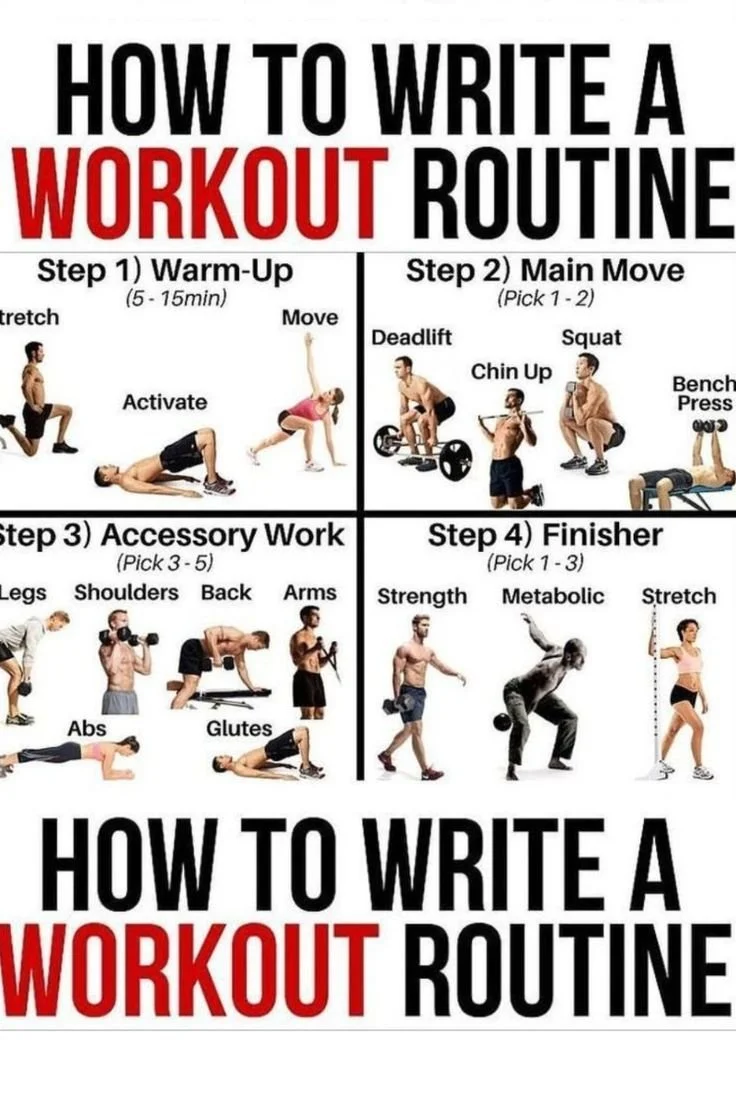
Workout Plan Blueprint
Writing a workout plan doesn’t have to be complicated — with a clear process you can design training that fits your goals, schedule, and level. If you want a ready example to model parts of your plan, review this effective full-body workout for all goals for ideas on exercise selection and structure.
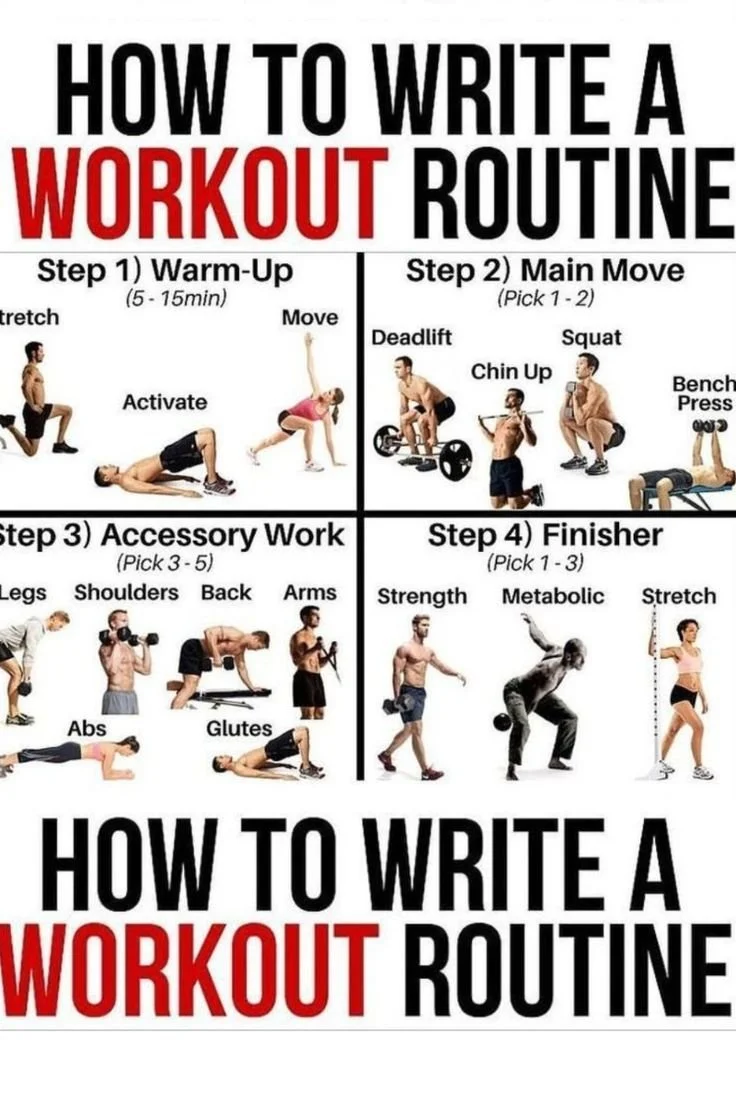
A successful workout plan balances goals, frequency, exercises, progression, and recovery. This guide walks you step-by-step through building a personalized routine, whether you want to build muscle, lose fat, improve endurance, or simply be more consistent.
Step 1 — Define Your Goal and Timeline
Start by writing down a specific goal (e.g., "gain 6–8 lbs of muscle in 6 months" or "lose 10 lbs in 12 weeks"). Set a realistic timeline and choose measurable markers (weight, body measurements, strength numbers). Clear goals help you pick the right mix of resistance training, cardio, and nutrition.
Step 2 — Assess Time and Training Frequency
Decide how many days per week you can train consistently. Beginners do well with 3 full-body sessions; intermediates often prefer 4–6 days with splits (upper/lower or push/pull/legs). Match session length to your availability: 45–75 minutes is typical for resistance training.
Step 3 — Choose Exercises and Prioritize Movements
Base each workout on compound lifts (squat, hinge, push, pull) and add accessory work to fill gaps. When programming accessory moves, include targeted work for lagging areas — for instance, use focused sets and variations when you need to learn how to target all heads of your calves to avoid imbalances. Rotate variations every 4–8 weeks to prevent plateaus.
Step 4 — Plan Sets, Reps, and Progression
Select rep ranges based on goals: strength (3–6 reps), hypertrophy (6–15 reps), endurance (15+ reps). Decide how you’ll progress (add reps, weight, sets, or reduce rest). Include conditioning sessions or HIIT on non-lifting days; brief, focused routines such as a 5-minute belly fat workout for women can be useful for busy days and metabolic conditioning.
Step 5 — Schedule Recovery and Nutrition
Recovery is part of the plan: schedule rest days, prioritize sleep, and periodize intensity to avoid overtraining. Pair your training with a nutrition strategy that supports goals — caloric surplus for muscle gain or a sensible deficit for fat loss. For short-term cleansing or a reset, consider resources like a 7-day detox challenge printable guide as a structured starting point, but ensure calorie and macro targets still match your goals.
Sample 4-Week Microcycle (Example)
Week 1–2: Build skill and base volume
- Day A: Squat focus + upper-body push/pull
- Day B: Hinge focus + upper accessories
- Day C: Full-body conditioning and mobility
Week 3–4: Increase intensity
- Raise loads by 5–10% on main lifts
- Add 1–2 accessory sets for weak points
- Include one higher-intensity interval session
Track workouts in a simple spreadsheet: date, exercises, sets/reps, load, and notes on performance or fatigue.
Programming Tips
- Prioritize compound lifts early in sessions when you’re freshest.
- Use progressive overload but micro-adjust weekly to avoid burnout.
- Deload every 4–8 weeks or when performance stalls.
- Keep technique above ego: form preserves long-term progress.
Conclusion
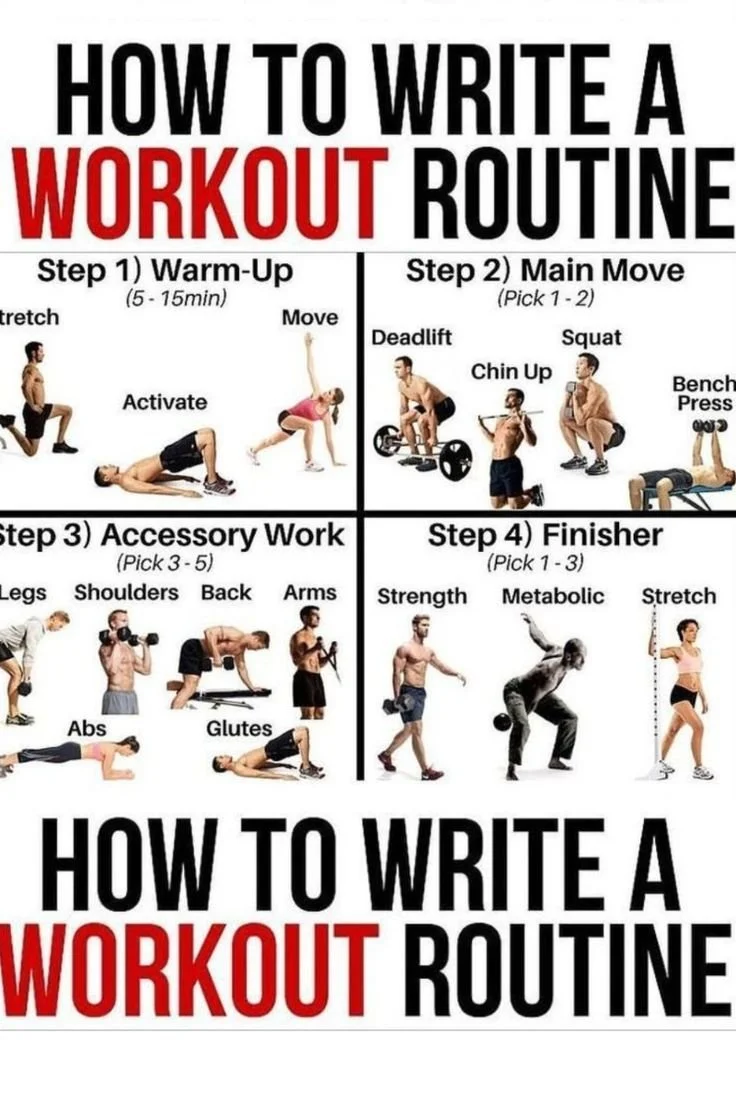
If you want a comprehensive walkthrough to build a routine from scratch, this guide complements the detailed methods found in How To Build Your Own Workout Routine (Plans & Exercises), which offers stepwise templates and explanations for tailoring plans to different goals.



GIPHY App Key not set. Please check settings