

 amanda cohen
Focus Forge
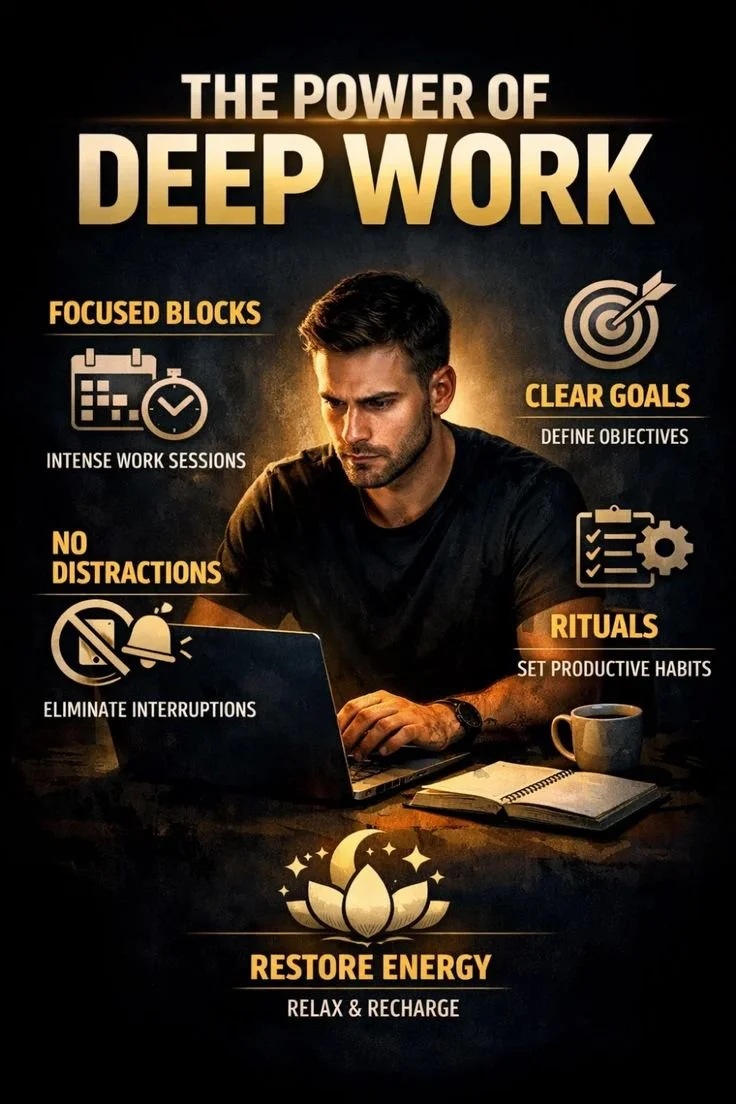
Deep work is the skill of concentrating without distraction on cognitively demanding tasks, and when practiced intentionally it multiplies your productivity and satisfaction. Cultivating deep work means redesigning your environment, schedule, and habits so you can enter longer, uninterrupted stretches of high-quality focus.
Introduction: Why deep work matters
Deep work is rare and valuable in a world full of pings, feeds, and shallow tasks; mastering it delivers clearer thinking, faster learning, and higher-quality output. For many people, pairing mental training with physical routines helps—consider integrating insights from a comprehensive guide to yoga routines to calm your mind before a focused session.
What deep work looks like
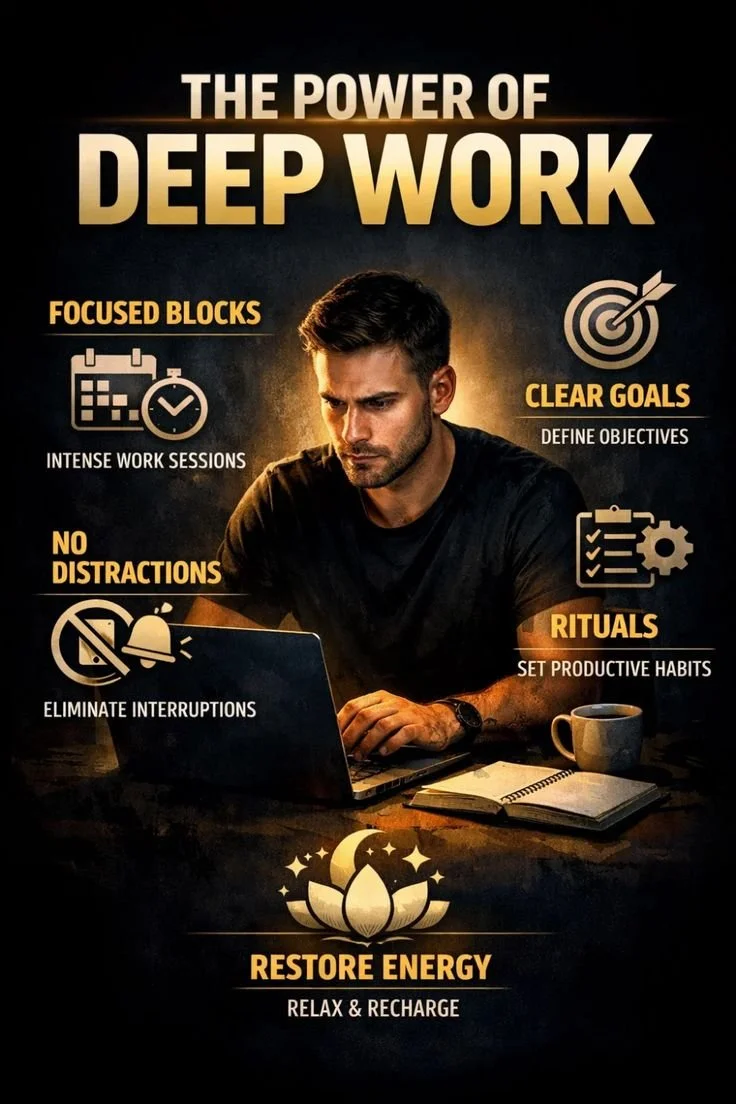
Deep work sessions are defined blocks—usually 60–90 minutes—of sustained, single-task effort. During these sessions you eliminate all interruptions, use a clear goal, and keep a simple metric for progress (pages written, problems solved, or lines of code). The payoff is exponential: the fewer interruptions, the deeper your cognitive groove, and the faster you master complex skills.
Designing a distraction-proof environment
Your workspace must signal a single purpose: focus. Remove social media logins from your browser, close unneeded tabs, and use “do not disturb” modes on devices. Rituals help: a short pre-work routine—stretching, a two-minute breathing exercise, or a brisk walk—creates a psychological cue that it’s time to focus. Many people find community accountability useful; if you’re motivated by peers, research how to join and benefit from a fitness community to translate that accountability into work habits by learning how group expectations support consistency here.
Scheduling strategies that protect focus
Block scheduling is the simplest tool: allocate fixed blocks for deep work on your calendar and treat them like meetings you can’t cancel. Alternate deep work with deliberate rest—short walks, eye breaks, or micro-exercises—which resets attention between sessions. If you struggle with willpower, schedule shallow tasks (email, admin) in dedicated periods and keep the rest of the day sacred.
Techniques to deepen concentration
- Work with a clear, achievable outcome for each session.
- Use the Pomodoro method or longer custom intervals; experiment until you find the rhythm that yields sustained attention.
- Track your time and results so you can iterate: what tasks benefit from more uninterrupted time? Which times of day yield your best focus?
Physical health, rest, and sustained focus
Sleep, movement, and nutrition are the foundation of concentration. Even light exercise boosts blood flow and mental clarity; if your goal includes staying mentally sharp while also pursuing a lean physique, practical fitness guidance can help you tailor movement habits to support extended focus for performance and energy. Regular deliberate rest—complete disconnection from work—replenishes deep cognitive resources and prevents burnout.
Using accountability and social structures
Commitment devices and social structures can be surprisingly effective. Work sprints with a partner, focus groups, or even scheduled co-working sessions enforce a shared norm of deep work. If you enjoy structured classes and peer energy, learn why group fitness classes foster consistency and how similar dynamics can be applied to focus sessions in your schedule in group settings.
Practical starter plan (first 4 weeks)
Week 1: Identify one high-value task and reserve three 60-minute deep sessions.
Week 2: Add a short pre-session ritual (breathing, quick stretch, or a 5-minute walk). Consider pairing mental practice with gentle physical routines like those in yoga to prime calm focus.
Week 3: Introduce accountability—tell a colleague or join a co-working sprint.
Week 4: Review your outcomes, adjust session length, and protect deep blocks on your calendar.
Conclusion
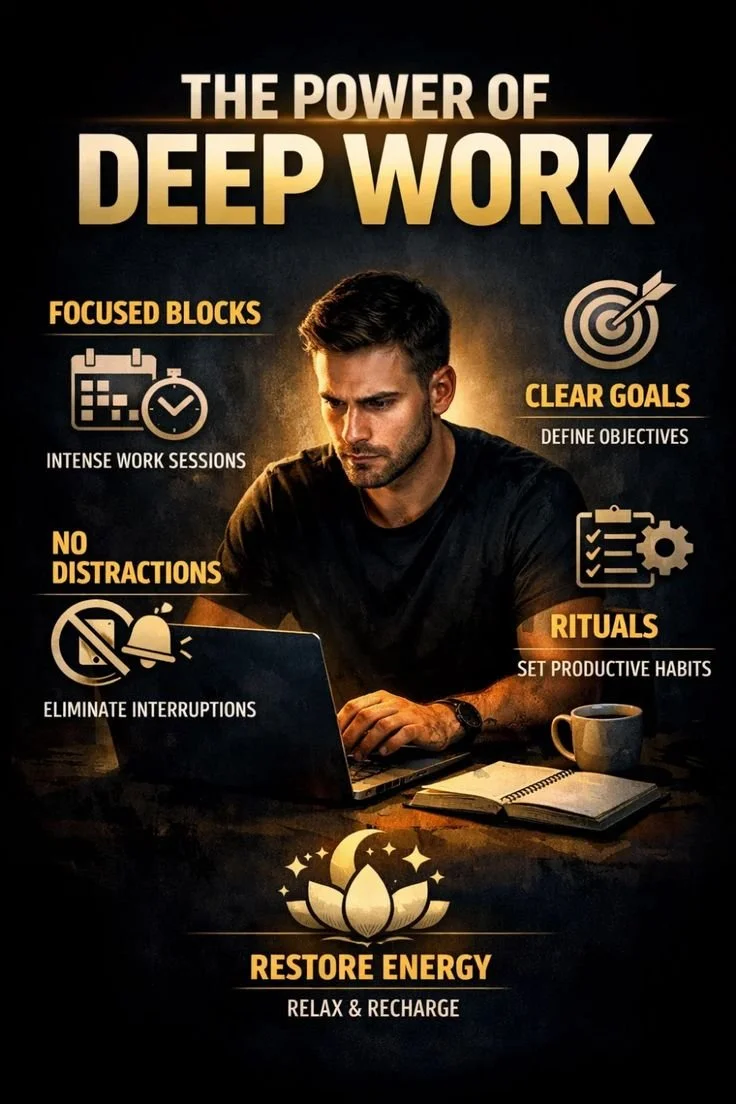
Deep work is a repeatable practice that compounds: fewer distractions, better rituals, and consistent rest produce superior results over time. For a thoughtful reflection on disconnecting and deliberate rest as part of this process, see In Praise of Deep Work, Full Disconnectivity and Deliberate Rest.



GIPHY App Key not set. Please check settings