
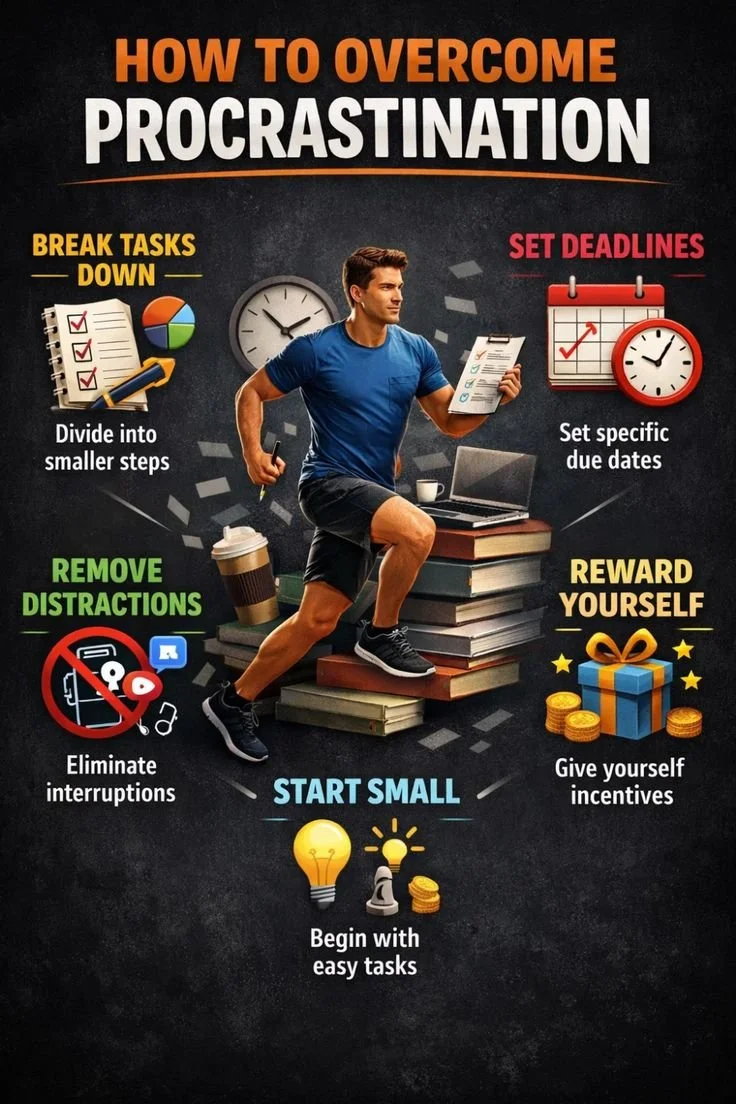
Stop Stalling: 5 Simple Tactics to Beat Procrastination
Procrastination isn’t a character flaw — it’s a habit you can rewire with tiny, practical changes. Start by choosing one small action you can complete in under ten minutes; momentum builds fast once you get moving. For a quick physical reset to clear your head, consider adding a brief upper-body routine like a short triceps routine between work blocks to boost circulation and focus.

Tactic 1 — Break tasks into bite-sized steps
- Big projects feel paralyzing because the brain interprets them as threats. Break work into 10–25 minute chunks and give yourself permission to stop when the timer rings. Start with the smallest meaningful action (open the file, write one sentence, sort three emails). After one small win, keep going or use the built-in stop as a clean milestone.
Tactic 2 — Use deadlines and scheduling, not just willpower
- Replace vague intentions with concrete calendar events. Treat your task like an appointment: block a time, specify the outcome, and protect it. If the block becomes sacred, your brain shifts from “maybe later” to “this is happening now.”
Tactic 3 — Remove friction and build supportive routines
- Make the desired action easier and the undesired one harder. Prepare tools, templates, or snacks in advance so starting requires minimal decision-making. Fuel matters: a protein-focused morning can stabilize energy and improve focus — think of planning something like a protein-packed breakfast the night before to cut morning friction.
Tactic 4 — Use accountability and micro-deadlines
- Tell someone what you’ll do and when you’ll do it. Pair work sessions with quick check-ins, use apps or a buddy system, or post a public goal. Micro-deadlines (finish the outline by 11:00) create urgency without the stress of a far-off due date.
Tactic 5 — Reboot with short movement and posture checks
- When attention wanes, stand up, stretch, or move for 60–90 seconds. A short mobility or posture reset reduces fatigue and resets focus; exercises that open the chest and shoulders help you breathe better and think clearer — try incorporating cues from targeted shoulder work into quick breaks. Even a minute of gentle movement (or a simple glute activation like a donkey-kick) improves blood flow and readiness to return to work — see tips on quick glute activation if you use movement as a reset.

Conclusion
If you want a concise, research-informed list of practical strategies to quit delaying, check out Boise State’s guide to stopping procrastination for additional ideas and examples.



GIPHY App Key not set. Please check settings