

 Riri
Riri
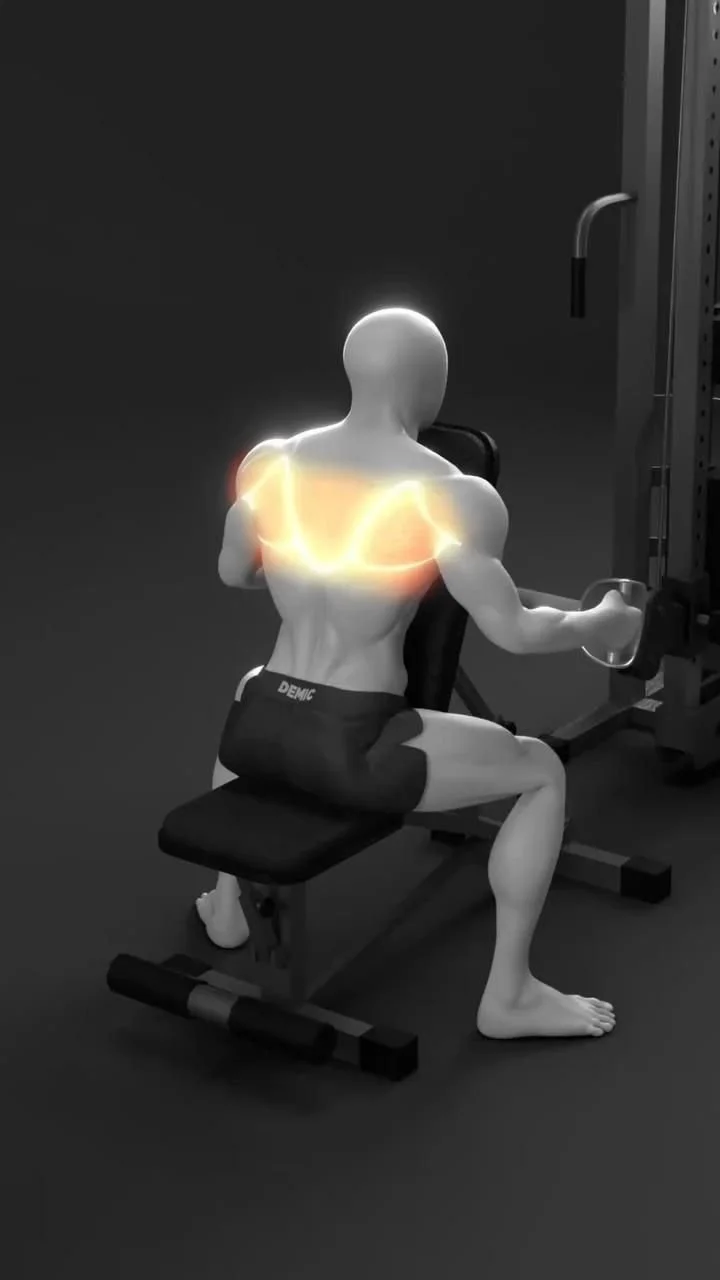
Thick Back Blueprint
Building a truly thick, powerful back comes down to more than heavy weight — it’s about handle choice, grip, and knowing which muscles you’re targeting. Use the right seated row attachment and you can emphasize lats, traps, rhomboids, or rear delts with subtle changes. If you want community support while you train, consider joining a fitness community to stay consistent and motivated.
![The Secret to a THICK Back: Seated Row Handle & Muscle Map
🚨 Are You Using The Right Handle? 🚨… [Video] in 2025 | Workout gym routine, Gym workout chart, Bodyweight back workout](https://tavof.com/wp-content/uploads/2026/01/the-secret-to-a-thick-back-seated-row-handle-mu-2026-01-09-080841.webp "The Secret to a THICK Back: Seated Row Handle & Muscle Map 🚨 Are You Using The Right Handle? 🚨… [Video] in 2025 | Workout gym routine, Gym workout chart, Bodyweight back workout 8")
Why the handle matters
Different seated row handles change your grip, elbow path, and shoulder angle — and that changes which fibers work hardest.
- Narrow neutral grip (V-bar or close handle): Encourages elbow drive back and keeps shoulders more adducted, targeting the mid-back and lats. Great for thickness close to the spine.
- Wide grip (straight bar or long handle): Places more emphasis on the upper back and rear delts; reduces lat involvement and increases scapular retraction.
- Single-arm handles (D-handle or rope single side): Allow unilateral focus to fix imbalances and can emphasize the lats when you pull with a long arc.
- Rope handle: Lets you flare the elbows slightly and squeeze the scapulae at peak contraction to hit the rhomboids and lower traps.
- Overhand vs underhand: Underhand (supinated) can bias the lower lats and biceps, while overhand keeps more tension on upper back muscles.
Muscle map: where you’ll feel it
- Lats (latissimus dorsi): Best hit with a long, straight pull to the torso (close/neutral grips, slight lean forward).
- Middle back (rhomboids, mid traps): Forced by wide grips and deliberate scapular retraction.
- Lower traps: Emphasized when pulling slightly higher with controlled scapular depression and retraction.
- Posterior deltoids: Feel this with wider grips and higher pulls that drive the elbows out.
Technique cues for maximum thickness
- Set your chest up and maintain a neutral spine; avoid excessive torso swing.
- Lead with the elbows — think “elbows to hips” for lat emphasis, “elbows out” for upper back.
- Pause and squeeze at full contraction for 1–2 seconds to build density.
- Control the eccentric (return) phase; slow negatives improve muscle recruitment.
- Use progressive overload: increase reps, sets, weight, or reduce rest over time.
Sample seated-row-focused workout (for thickness)
- Warm-up: 5–10 minutes light cardio + band pull-aparts
- Seated neutral-grip row: 4 sets of 6–10 reps (heavy, focus on elbow drive)
- Wide-grip seated row: 3 sets of 8–12 reps (squeeze the shoulder blades)
- Single-arm cable row: 3 sets of 10–12 reps per side (fix asymmetries)
- Face pulls or rear-delt rows: 3 sets of 12–15 reps (upper back balance)
- Finish: Isometric scapular holds or farmer carries for core and posture
Pairing technique and programming with proper nutrition speeds results; check nutrition guides like the top 10 superfoods for optimal nutrition to support recovery and growth.
![The Secret to a THICK Back: Seated Row Handle & Muscle Map
🚨 Are You Using The Right Handle? 🚨… [Video] in 2025 | Workout gym routine, Gym workout chart, Bodyweight back workout](https://tavof.com/wp-content/uploads/2026/01/the-secret-to-a-thick-back-seated-row-handle-mu-2026-01-09-080842-2.webp "The Secret to a THICK Back: Seated Row Handle & Muscle Map 🚨 Are You Using The Right Handle? 🚨… [Video] in 2025 | Workout gym routine, Gym workout chart, Bodyweight back workout 9")
Conclusion
Consistently choosing the right seated row handle for your goal — whether lats, upper back, or thickness near the spine — and applying strict form will transform your back development; for additional leg and compound exercise context that complements a balanced routine, read this exploration of Bulgarian Split Squats: More Quads or Glutes?


GIPHY App Key not set. Please check settings