

 amanda cohen
Dumbbell Shoulder Workout: Build Strong, Rounded Delts at Home
Shoulders add width, shape, and power to your upper body. Dumbbells are one of the most versatile tools for shoulder development — they allow a full range of motion, help correct imbalances, and can be used for strength, hypertrophy, and endurance work. If you pair shoulder days with arm routines, consider checking this focused plan inspired by classic splits: Arnold’s ultimate shoulder and arms workout for ideas on pairing movements and sequencing.
This guide covers anatomy, warm-up, a complete dumbbell-only shoulder workout, technique cues, progressions, common mistakes, and a short weekly plan so you can train safely and consistently.
Shoulder anatomy quick primer
- Anterior deltoid (front): presses and forward raises.
- Lateral deltoid (side): creates width — targeted by lateral raises.
- Posterior deltoid (rear): shoulder horizontal abduction and posture — targeted by reverse flyes and face pulls.
- Rotator cuff: small stabilizers (supraspinatus, infraspinatus, teres minor, subscapularis) — critical for joint health.
Balanced development means hitting all three heads while protecting the cuff.
Warm-up (5–10 minutes)
- Arm circles (30 sec each direction)
- Band pull-aparts or light reverse flyes: 2 sets of 12–15 reps
- Light dumbbell presses: 2 sets of 8–12 reps with very light weight
- Scapular push-ups or T-spine mobility work for 1–2 minutes
A proper warm-up increases blood flow and primes stabilizers — skip it at your own risk.
Dumbbell Shoulder Workout (All equipment: pair of dumbbells, bench optional)
Goal: hypertrophy and strength. Rest 60–90s between sets unless noted.
-
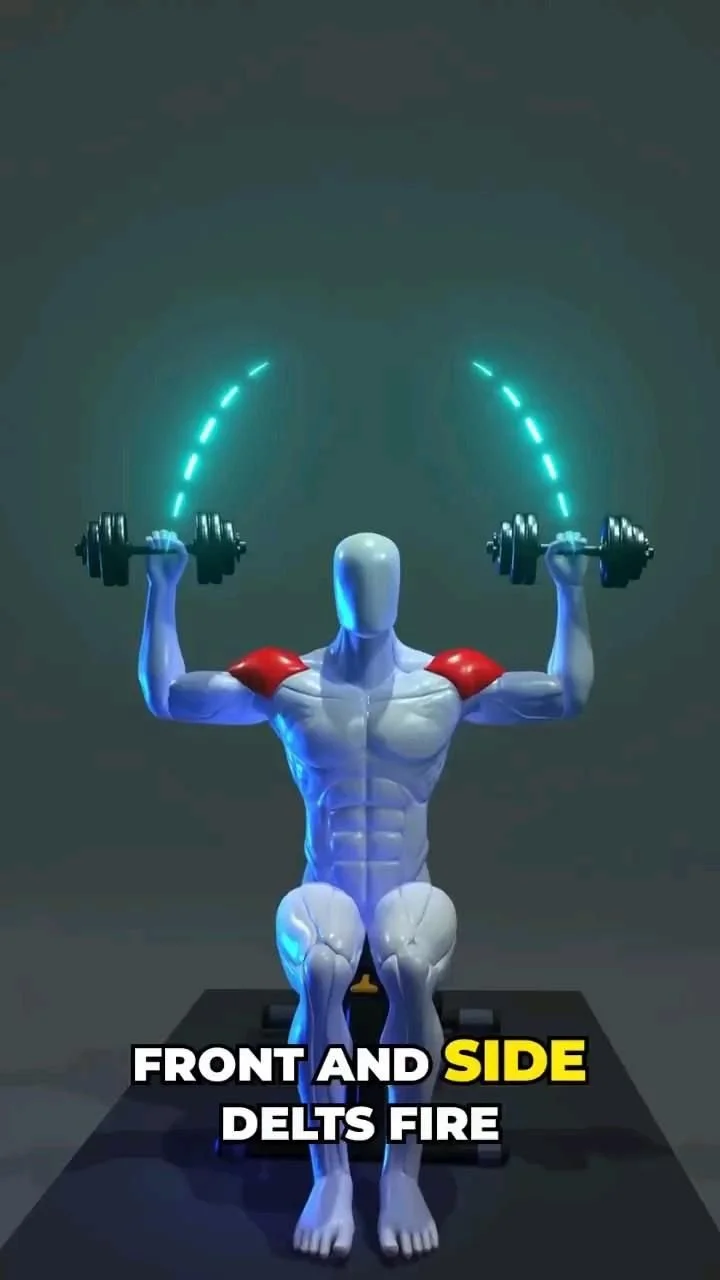
Seated Dumbbell Overhead Press — 4 sets x 6–10 reps
- Strong compound movement that targets anterior and lateral delts. Sit to reduce lower-back compensation. Keep ribs down and press in a slightly arc path.
-
Standing Single-Arm Dumbbell Press — 3 sets x 8–10 reps each arm
- Anti-rotation demand improves core stability and isolates side-to-side imbalances.
-
Dumbbell Lateral Raise (leaning or standing) — 4 sets x 10–15 reps
- Use a slight bend in the elbow. Lead with the elbow, not the hand. For strict form, use lighter weight and controlled tempo.
-
Seated Bent-Over Reverse Fly (rear delt fly) — 3 sets x 10–15 reps
- Hinge at hips, keep chest angled toward floor, pull elbows wide to target posterior delts.
-
Incline Dumbbell Y-Raise — 3 sets x 10–12 reps
- Performed on an incline bench or leaning forward, brilliant for upper traps + rear delt integration and shoulder health.
-
Dumbbell Upright Row (wide grip, high-pull variation) — 3 sets x 8–12 reps
- Use a wider hand path to emphasize delts and reduce impingement risk — stop at chest height.
-
Farmer Carry or Suitcase Carry — 2–3 rounds, 30–60 seconds
- Heavy loaded carry builds trap strength and overhead stability when performed in conjunction with presses.
Finish with light banded external rotations: 2 sets x 15 reps per side to help rotator cuff recovery.
Tip: Prioritize compound pressing early in the workout when fresh, then move to isolation raises.
Technique cues and safety
- Neutral wrist alignment reduces strain — avoid excessive wrist extension.
- Avoid shrugging during presses; keep traps down and initiate movement from the deltoid.
- Control the eccentric (lowering) phase — a 2–3 second descent increases muscle tension.
- If you have any shoulder pain (not just muscle fatigue), reduce range, lower load, or stop and assess.
Progressions and variations
- Increase load slowly (2–5% increments) or add a set each 1–2 weeks.
- Cluster sets (short intra-set rests) can boost strength without increasing absolute load.
- Use tempo variations: slow eccentrics for growth, explosive concentric for power.
- Replace seated presses with dumbbell push presses occasionally to overload.
If you want to balance your upper-body routine with core work for better postural support, consider integrating a concise ab plan like this one: 6 essential ab exercises to maintain a rock-solid midsection that supports heavy pressing.
Common mistakes to avoid
- Using too much weight on lateral raises — swinging reduces delt activation.
- Neglecting the rear delts — leads to postural problems and imbalances.
- Rushing through reps — momentum reduces time under tension.
- Overtraining frequency without adequate recovery — shoulders need care, especially rotator cuffs.
Sample 4-week progression (2 shoulder-focused sessions per week)
Week 1: Moderate weight, focus on form (sets as prescribed).
Week 2: Increase weight on main presses by 2.5–5% or add 1 set to isolation work.
Week 3: Introduce tempo variations (3s eccentrics).
Week 4: Deload week — reduce volume by ~40% to consolidate gains.
Recovery: prioritize sleep, protein intake (~0.7–1.0g/lb bodyweight depending on goals), and a light mobility session mid-week.
Conclusion
For a comprehensive library of exercises to vary your training and keep gains coming, check out this curated list of the 13 Best Dumbbell Shoulder Exercises.


GIPHY App Key not set. Please check settings