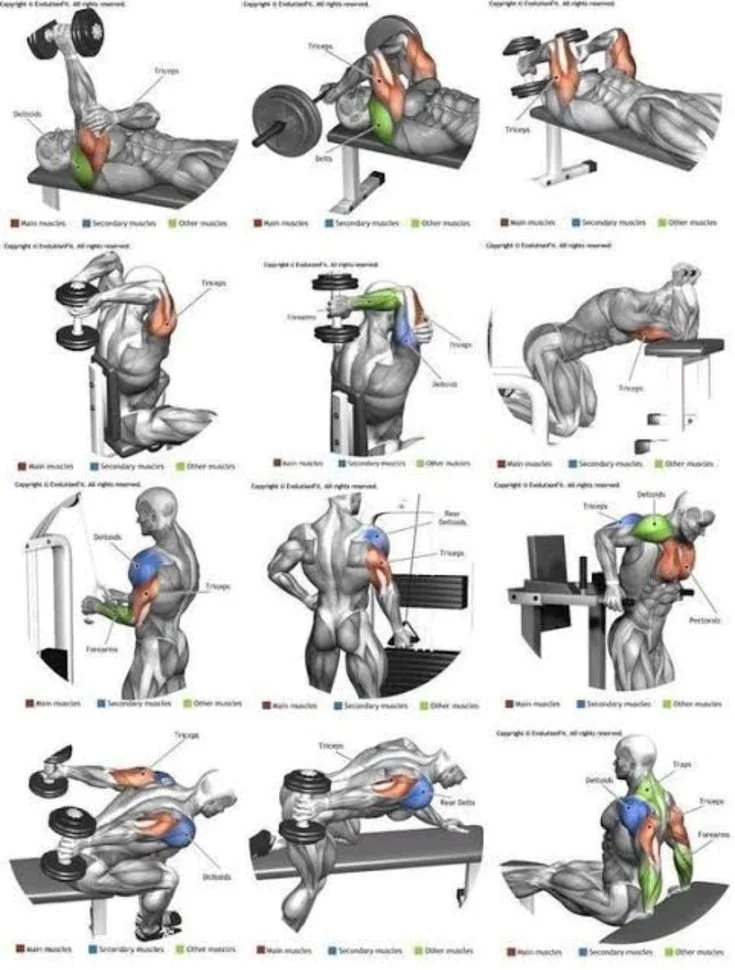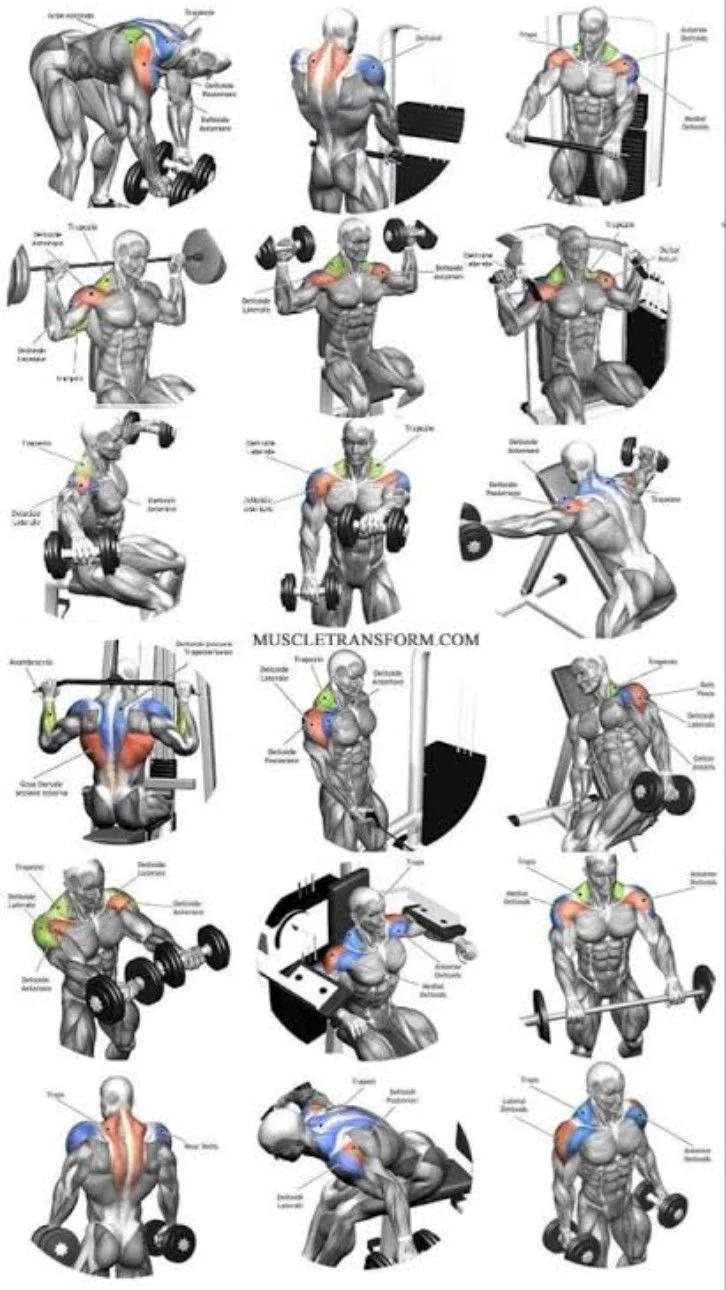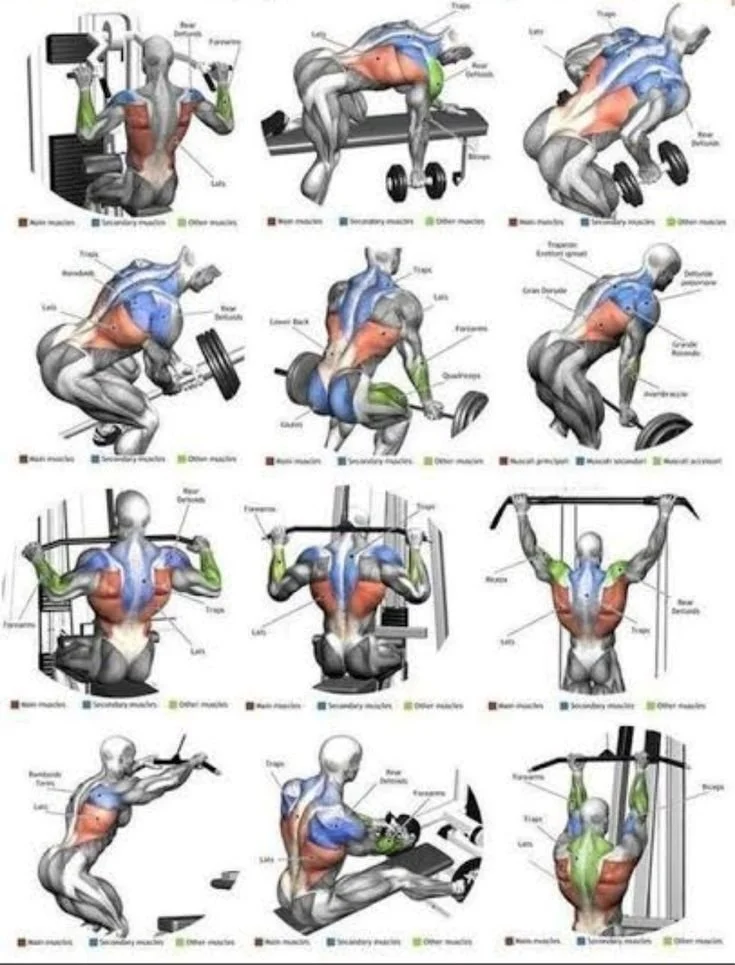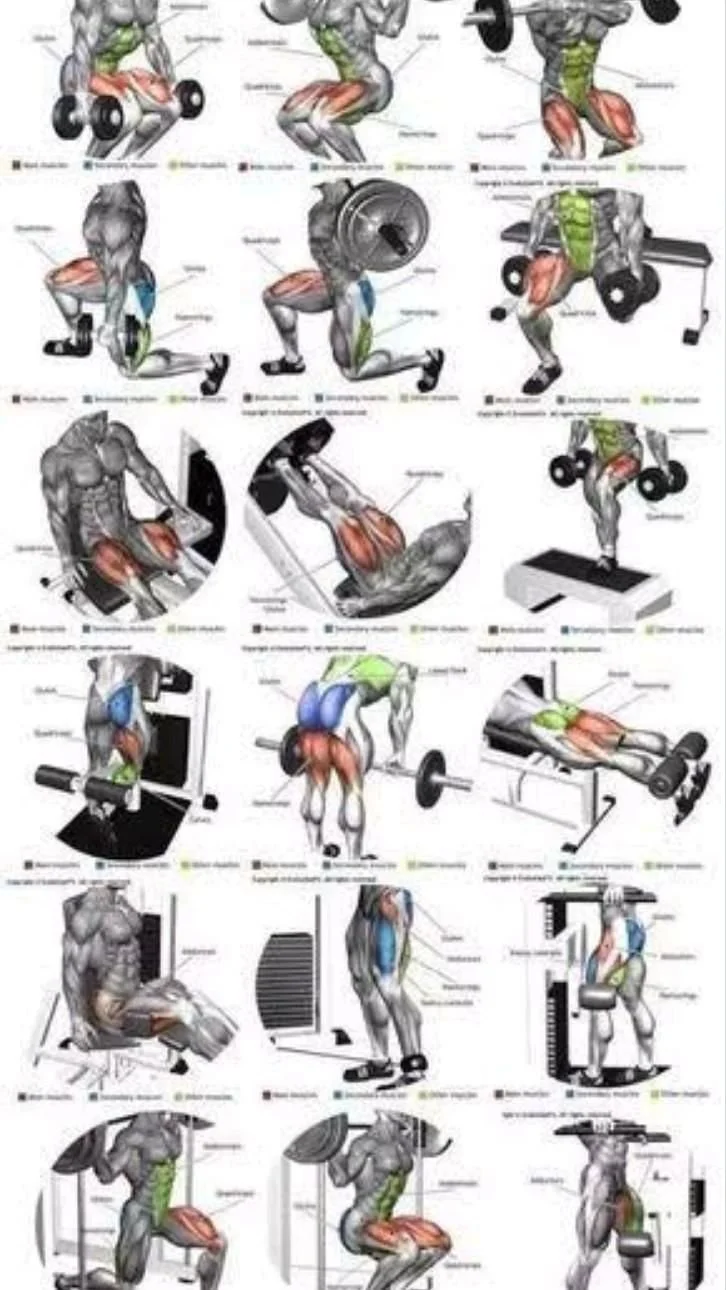
work-out

bodybuilding is about using exercise and nutrition to build and shape muscles. It involves weight training and specific workouts to increase muscle size, strength, and definition. Bodybuilders often follow strict diets and routines to achieve their desired physique. It’s not just about building muscles but also about achieving a balanced and sculpted appearance through dedicated training and nutrition.

Forearm workout video showcasing 4 essential moves for sleeve-busting arms.

Unlock Next-Level Forearms: The 4 Moves You NEED For Sleeve-Busting Arms 💪 You train your biceps, but you’re sk… [Video] in 2025 | Gym workouts, Dumbbell workout, Stomach workout

Unlock Next-Level Forearms: The 4 Moves You NEED For Sleeve-Busting Arms

Strong forearms do more than look impressive — they improve your grip strength, help your deadlift, and keep your wrists healthy during heavy lifts. Too often people train curls and neglect the lower arm work that actually makes sleeves strain. This short guide gives you four high-impact moves, programming tips, and quick troubleshooting to build thick, powerful forearms.

If you’re building a balanced upper body routine, don’t forget to pair forearm work with core stability — for example, include a solid set of the best ab workouts for men to support heavy lifts and posture.

Why forearm training matters

  • Grip = performance: Every pull, row, and carry demands grip strength. Weak forearms will cause earlier failure in compound lifts.
  • Injury prevention: Strong wrist flexors and extensors stabilize joints and reduce strain during pressing and pulling.
  • Aesthetic payoff: Forearm width and definition are visible in sleeves — consistent, focused training produces that “sleeve-busting” look.

The 4 moves that build sleeve-busting forearms

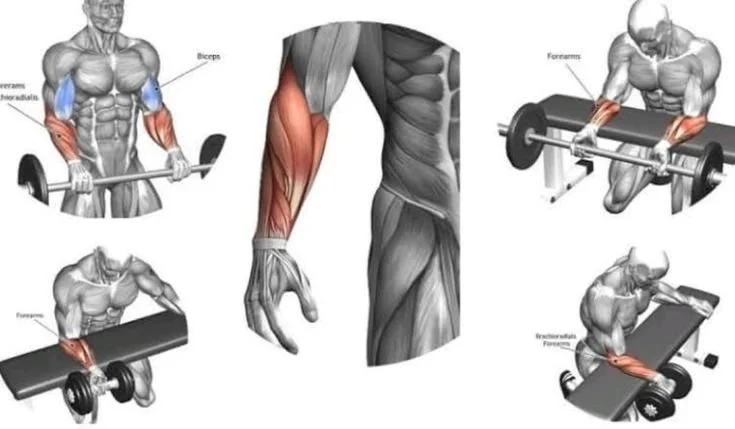
  1. Standing Dumbbell Wrist Curls (palms-up)
  • How: Rest forearms on your thighs or a bench, palms up, letting the dumbbells roll down to the fingers then curl the wrists to lift the weight.
  • Sets/reps: 3–4 sets of 12–20 reps. Use a controlled 2-1-2 tempo (2s lowering, 1s pause, 2s lifting).
  • Tip: Focus on the squeeze at the top; don’t use elbow movement to cheat.
  1. Reverse Wrist Curls (palms-down)
  • How: Same setup as wrist curls but palms facing down to target wrist extensors and forearm outer sweep.
  • Sets/reps: 3 sets of 12–18 reps.
  • Tip: These respond well to slightly lighter weight and strict form; keep movement small and controlled.
  1. Hammer Curls (neutral grip)
  • How: Dumbbells held with thumbs up (neutral grip). Curl while keeping elbows tucked. This hits the brachioradialis — a key forearm muscle that adds thickness.
  • Sets/reps: 3–4 sets of 8–12 reps. Use heavier loads here for carryover to general pulling strength.
  • Progression: Slow negatives or paused reps increase time under tension.
  1. Farmer’s Carries (heavy holds)
  • How: Pick heavy dumbbells/kettlebells, stand tall, and walk for distance or time. Focus on a tight grip and upright posture.
  • Sets/reps: 4 rounds of 30–60 seconds or 20–40 meters.
  • Benefit: Farmer’s carries develop grip endurance and recruits the whole forearm complex under load — one of the most transfer-effective exercises.

Optional add-ons: Plate pinches or towel hangs for pinch/grip endurance, and wrist rotation drills for pronation/supination strength.

Programming and progression

  • Frequency: 2 forearm-focused sessions per week is enough for most people — you can add short grip finisher sets after back or arm days.
  • Volume: Keep overall weekly volume moderate (8–12 total working sets across all forearm exercises) and track progression by reps, load, or time under tension.
  • Progressive overload: Increase weight, reps, or reduce rest between sets. Farmer carries are easy to progress by adding load or distance.

Pairing forearm work with conditioning can help keep recovery and overall fitness balanced; try combining short forearm routines with low-impact conditioning and read about the benefits of cardio workouts to plan recovery-friendly sessions.

Warm-up, mobility, and recovery

  • Warm-up: Wrist circles, light reverse wrist curls, and banded wrist extensions for 5–8 minutes before heavy sets.
  • Mobility: Gently stretch wrist flexors and extensors after training — 30–60 seconds per side.
  • Recovery: Forearm muscles recover quickly but are used in many lifts; manage frequency and prioritize sleep, nutrition, and grip-rest days if you do high-volume pulling.

Common mistakes and how to fix them

  • Cheating with the elbows: Keep forearms supported and isolate wrist movement on wrist curls.
  • Using too heavy a load on reverse curls: Choose form over ego to avoid tendon soreness.
  • Ignoring grip variety: Use pinches, thick-handle implements, and carries to hit different grip pathways.

Sample 8-week mini-cycle

Weeks 1–4 (build base)

  • Wrist curls: 3×15
  • Reverse wrist curls: 3×12
  • Hammer curls: 3×10
  • Farmer’s carries: 3x40m

Weeks 5–8 (intensity)

  • Wrist curls: 4×12 with slow negatives
  • Reverse wrist curls: 3×15 (lighter, strict)
  • Hammer curls (heavy): 4×8
  • Farmer’s carries: 4×50–60m or timed 60s holds

Track load and reps weekly; add 2.5–5% weight or an extra rep once you can perform the top-end of the rep range with good form.

Troubleshooting soreness and tendon pain

  • If you experience tendon pain (not typical muscle soreness), reduce volume, use lighter loads, and increase eccentric control. Ice after training and consult a professional if pain persists beyond a week.

Conclusion

If you ever need alternatives or adaptations — for example, training arms when grip or hand use is limited — check this resource on How to build up my biceps without the use of my hands – Quora for creative workarounds and community-sourced ideas.

Start with the four pillars above, be consistent, and your sleeves will thank you.

Unlock Next-Level Forearms: The 4 Moves You NEED For Sleeve-Busting Arms 💪 You train your biceps, but you’re sk… [Video] in 2025 | Gym workouts, Dumbbell workout, Stomach workout Read More »

Seated ab workout for strengthening core muscles without floor exercises

No More Floor! Do Your Entire Ab Routine Right Here ➡️ 🚀 Stop Doing Crunches! Try This 5-Minute SEATED Ab Workout! 🪑 Thi… [Video] in 2025 | Abs workout, Workout routine, Workout

No More Floor! Do Your Entire Ab Routine Right Here

Tired of rolling onto the floor and doing the same old crunches? You can get a complete, effective ab workout without ever leaving your chair. This short, focused routine targets the entire core — upper and lower abs, obliques, and deep stabilizers — in just five minutes. If you want a longer seated program, check out this guided plan for more chair-based progressions.

Why seated training? It’s accessible for busy days, travels, or anyone with limited mobility. Chairs also force better posture and core engagement compared with lying down crunches, so you get safer, more functional strength gains.

Benefits of a Seated Ab Routine

  • Trains the core in a more functional, upright position.
  • Reduces neck and back strain common with crunches.
  • Easy to scale — from beginner to advanced.
  • Can be done anywhere: office, living room, or airplane seat.

5-Minute Seated Ab Workout (No Crunches)

Perform each exercise for 40 seconds with 20 seconds rest. If you have only five minutes, do the first five moves straight through.

  1. Seated Knee Lifts (40s)
    • Sit tall, hands on the chair sides. Exhale as you lift both knees toward your chest, keeping your spine neutral. Lower slowly.
  2. Seated Bicycle Twist (40s)
    • Lean back slightly, hands behind head or beside ears. Bring right elbow toward left knee, then alternate. Move with control.
  3. Isometric Tall-Seat Hold with March (40s)
    • Sit at the edge, core braced, arms forward. Hold tall posture and march each leg up and down slowly.
  4. Seated Oblique Reach (40s)
    • Reach right hand to right knee as you lift and twist slightly; alternate. Keep movement controlled to feel the obliques.
  5. Chair Plank Lean-Ins (40s)
    • Place forearms on chair seat (or the back if sturdy), walk feet back until body is a straight line, then lean hips forward slightly and return.

Advanced option: when you’re ready to progress beyond seated moves, try integrating more challenging core lifts like laying hip raises and controlled negatives — learn a solid progression here: advanced core progressions and hip raises.

Modifications

  • Beginner: Reduce working time to 30s / rest 30s. Keep feet on floor for stability.
  • Intermediate: Increase to 45–50s work intervals or add light ankle weights.
  • Advanced: Slow the eccentric (lowering) phase or combine moves for continuous tension.

Form Tips & Common Mistakes

  • Breathe: exhale on effort (lifting or twisting), inhale on return.
  • Avoid tucking chin; keep gaze forward and neck neutral.
  • Don’t let the lower back collapse — imagine zipping up your core to protect the lumbar spine.
  • Quality beats quantity: controlled reps and full range of motion are what build a strong core.

Sample Quick Sequence (5 minutes)

  • 40s Seated Knee Lifts / 20s rest
  • 40s Seated Bicycle Twist / 20s rest
  • 40s Tall-Seat Hold with March / 20s rest
  • 40s Oblique Reach / 20s rest
  • 40s Chair Plank Lean-Ins / 20s rest

Do this 3–4 times per week and combine with walking or light cardio on alternate days for best results.

Equipment & Safety

  • Use a sturdy, non-rolling chair.
  • If you have back or hip issues, check with a healthcare professional before starting.
  • Stop if you feel sharp pain; mild muscle burn and fatigue are normal.

Conclusion

If you want more chair-friendly movements to mix into your routine, this list of 8 Effective Chair Exercises You Can Do at Home offers additional options to keep workouts varied and challenging.

No More Floor! Do Your Entire Ab Routine Right Here ➡️ 🚀 Stop Doing Crunches! Try This 5-Minute SEATED Ab Workout! 🪑 Thi… [Video] in 2025 | Abs workout, Workout routine, Workout Read More »

Person performing a Lat Pulldown exercise at the gym for back strength

Lat Pulldown Workout

Lat Pulldown Workout: Build a Strong, Wide Back

The lat pulldown is a cornerstone back exercise for anyone aiming to develop a wider, more powerful upper body. It targets the latissimus dorsi (lats) while involving secondary muscles like the rhomboids, trapezius, and biceps. Whether you’re new to strength training or refining your routine, a well-executed lat pulldown plan will improve posture, pulling strength, and the coveted V-taper. For extra emphasis on core engagement during pulling movements, you might also explore related core-focused routines like this flat belly workout.

Why It Works: Muscles and Benefits

  • Primary target: latissimus dorsi — the broad muscles that create width across the back.
  • Secondary muscles: teres major, rhomboids, middle and lower traps, posterior deltoids, and biceps.
  • Benefits:
    • Increased pulling strength for rows, deadlifts, and functional tasks.
    • Improved upper-body aesthetics via greater back width and posture correction.
    • Versatility — many grip and attachment variations allow tailored stimulus.

Proper Technique: Setup and Execution

  1. Adjust the knee pad so your thighs are secured under the lateral pads and your feet are flat.
  2. Choose a grip width that matches your goal: wider grips emphasize outer lats, while narrow or neutral grips shift emphasis inward and to the biceps.
  3. Start with arms fully extended and chest lifted. Pull the bar down in a smooth arc toward your upper chest.
  4. Cue your elbows down and back rather than thinking of pulling with your hands — lead with the elbows to engage lats.
  5. Pause briefly at the bottom to feel a full contraction, then control the eccentric (return) to full extension.

Common tempo: 1–2 seconds concentric, 1–3 seconds eccentric. Avoid yanking the weight or leaning excessively backward.

Variations to Add Variety

  • Wide-grip lat pulldown: maximizes width.
  • Reverse (underhand) grip pulldown: increases biceps involvement and can allow a deeper contraction.
  • Neutral-grip pulldown (V-bar or parallel handles): balanced lat and arm engagement, often easier on shoulders.
  • Single-arm pulldown with cable attachment: fixes asymmetries and improves mind-muscle connection.
  • Behind-the-neck pulldowns: generally not recommended due to shoulder strain unless performed only by experienced lifters with excellent shoulder mobility.

Programming: Sets, Reps, and Progression

  • Strength focus: 3–5 sets of 3–6 reps with heavier weight and longer rests (2–3 minutes).
  • Hypertrophy focus: 3–4 sets of 8–12 reps with moderate weight and 60–90 seconds rest.
  • Endurance or conditioning: 2–3 sets of 12–20 reps with lighter weight and shorter rests.

Progress by increasing weight, improving form, adding reps, or trying a slower eccentric. For consistent gains, incorporate lat pulldowns 1–3 times per week within a balanced upper-body plan — pairing this exercise with rows and pressing movements works well. If you want help structuring your routine long-term, consider following a proven structured workout program to track progress and recovery.

Common Mistakes and How to Fix Them

  • Using momentum: Stop swinging or excessive torso lean; reduce weight to regain strict form.
  • Pulling behind the neck: Prefer front pulldowns to protect the shoulders unless you have mobility and experience.
  • Letting the shoulders shrug: Retract and depress the scapula before pulling.
  • Short range of motion: Fully extend the arms on the return and feel the stretch in the lats.

Sample Lat Pulldown Workouts

  • Beginner (hypertrophy): 3 sets x 10–12 reps, moderate weight, 90s rest.
  • Intermediate (strength + size): 4 sets — 6 reps heavy, 10 reps moderate, 12 reps drop set on final set.
  • Accessory finisher: 3 sets x 15–20 reps using a neutral grip focusing on slow eccentrics.

Pairing lat pulldowns with compound horizontal pulls (like seated rows) creates a balanced stimulus across the back.

Conclusion

For detailed instruction on form, variations, and safety tips, review this comprehensive guide on Lat Pulldowns: Techniques, Benefits, Variations.

Lat Pulldown Workout Read More »

Person demonstrating correct triceps pushdown technique at the gym

Triceps Pushdown Technique

Triceps Pushdown Technique: Mastering Form for Bigger, Stronger Arms

The triceps pushdown is a staple for anyone wanting to develop the back of the upper arm. Done correctly, it isolates the triceps, minimizes shoulder involvement, and allows for progressive overload with a lower risk of injury. If you want a quick overview of complementary moves to pair with pushdowns, check out this list of 5 best exercises to build triceps.

This guide breaks the movement down into setup, execution, common mistakes, useful variations, and programming tips so you can get the most from every set.

Setup: Equipment and Starting Position

  • Use a cable machine with a straight bar, rope, or V-bar attachment. Cables keep constant tension throughout the range of motion.
  • Stand with feet hip-width apart, knees slightly bent for stability.
  • Grip the attachment with a neutral or pronated grip depending on the bar. Keep your hands shoulder-width or slightly narrower.
  • Tuck your elbows to your sides. This fixed elbow position is key — the triceps do the work when the upper arm remains stationary.

Execution: Step-by-Step Technique

  1. Begin with your forearms bent and the bar near chest level (or hands at chest if using a rope).
  2. Inhale, brace your core, and keep your upper arms vertical and pinned to your sides.
  3. Exhale and extend your elbows until your arms are fully straightened, pushing the attachment down using only the forearms. Avoid flaring the elbows forward.
  4. Squeeze the triceps at full extension for a brief pause — this enhances muscle activation.
  5. Inhale and slowly allow the bar to rise back to the start under control. A slow eccentric phase (2–3 seconds) increases time under tension and stimulates growth.

Tempo suggestion: 2 seconds down (concentric), hold 0.5–1 second, 3 seconds up (eccentric).

Grip, Attachments, and Variations

  • Rope: Allows full external rotation at the bottom, hitting the lateral head and giving a deeper contraction.
  • Straight bar: Emphasizes the medial head; good for lifting heavier loads.
  • V-bar: A middle ground between rope and straight bar.
  • Reverse-grip pushdown: With an underhand grip, this targets the long head differently and can add variety.
  • Single-arm pushdown: Addresses imbalances and improves unilateral control.

Rotate attachments across training cycles to hit the triceps from slightly different angles and recruit all heads.

Anatomy & Visualization

Understanding muscle shape helps you cue better form. Visualize the triceps as a three-headed muscle that crosses the elbow — your job is to prevent shoulder movement and let the elbow extend. For those who appreciate visual learning or are artists studying anatomy, resources on figure proportions and muscle sketching can improve your mind-muscle connection; see this guide on human figure drawing essential techniques for artists to better visualize muscle lines and leverage in movement.

Common Mistakes and Fixes

  • Elbow flaring: If elbows move forward, the shoulders take over. Keep elbows pinned and imagine they’re glued to your sides.
  • Using momentum: Swinging the torso or using legs reduces triceps tension. Reduce weight and slow the tempo.
  • Not achieving full extension: Leaving a gap at the bottom limits growth. Use a lighter load to ensure a controlled, complete lockout.
  • Over-gripping: Holding the bar too tight can activate the forearms excessively. Maintain a firm but not crushing grip.

Programming Tips

  • Reps & sets: 3–4 sets of 8–15 reps works well. Lower reps (6–8) for strength with heavier loads; higher reps (12–20) for hypertrophy and metabolic stress.
  • Frequency: 2–3 times per week, depending on recovery and overall volume.
  • Pairing: Use pushdowns as an accessory after primary pressing movements (bench or overhead presses) or as a finisher to fully fatigue the triceps.
  • Progressive overload: Track reps or weight and increase gradually. Small jumps in load or an extra rep per set add up over time.

Warm-up and Safety

  • Warm the elbow joint with 1–2 light sets of pushdowns (15–20 reps) before moving to working weight.
  • Stretch gently after training; gentle triceps stretches can help maintain shoulder mobility.
  • If you feel elbow pain, reduce load, check your technique, and consider swapping to neutral-grip variations or consulting a clinician if pain persists.

Conclusion

For a concise tutorial covering proper form, benefits, and more variations of the movement, see this detailed resource on Tricep Pushdowns: Techniques, Benefits, Variations.

Triceps Pushdown Technique Read More »

Person demonstrating perfect incline bench press form in a gym

Perfect Incline Bench Press Form

Perfect Incline Bench Press Form

The incline bench press is a staple for building upper-chest width, shoulder stability, and pressing power. Done correctly, it targets the clavicular head of the pectoralis major while reducing stress on the lower chest and shoulders. Before you start loading weight, prioritize technique, bracing, and a setup that lets you press safely and effectively. If you struggle with stability or underactive posterior chain muscles that affect your setup, check how to improve dormant glutes for better full-body tension.

This guide breaks down precise setup, execution, and troubleshooting cues so you can get the most from every rep.

Setup & Positioning

  • Bench angle: 30–45 degrees. Lower angles (~30°) emphasize the upper chest without overworking the shoulders; higher angles (~45°) shift load toward the anterior deltoids.
  • Foot placement: Feet flat on the floor, slightly wider than hip-width for stability. Drive your feet into the floor to create leg tension.
  • Upper-back tightness: Retract and depress your shoulder blades so your upper back forms a stable base. This shortens the range of motion and protects the shoulder joint.
  • Head and neck: Keep your head on the bench, neutral neck length. Avoid tucking or overextending the chin.
  • Grip: Grip width should allow your forearms to be vertical at the bottom of the press. For most lifters this is slightly wider than shoulder width. Use a full grip (thumb wrapped around bar) for safety.

Bracing & Full-Body Tension

  • Take a deep diaphragmatic breath and brace your core before unracking. Maintain that intra-abdominal pressure for the entire set.
  • “Leg drive” matters: Think about pushing your feet through the floor and squeezing your glutes to transfer force into the bench. If your glutes aren’t contributing, your press will feel unstable—practicing glute activation drills can help. See practical drills to improve dormant glutes.
  • Maintain a consistent arch in the thoracic spine—enough to engage the lats and upper back but not so much that your shoulders curl forward.

Bar Path & Range of Motion

  • Unrack with controlled tension, moving the bar over your shoulders. Lower the bar to the upper chest/clavicle area—not to the sternum or lower ribs.
  • Bar path: A slight arc is natural — from overhead at lockout, down and slightly toward the top of the chest, then back up. The bar should travel in a plane that keeps the forearms vertical at the bottom.
  • Depth: Touch the bar lightly to the chest while maintaining tension; don’t bounce. Stopping short of the chest reduces range of motion and muscle stimulation.

Tempo & Breathing

  • Recommended tempo for most sets: 2–3 seconds down (eccentric), brief pause/tension at the bottom, then a controlled but powerful concentric (1 second up).
  • Exhale through the sticking point or as you press up to help maintain stability and help with force production.

Common Mistakes & Fixes

  • Elbows flared at 90 degrees: This increases shoulder strain. Tuck elbows to about 45 degrees relative to your torso.
  • Overgripping or wrist collapse: Keep wrists stacked over elbows; the bar should sit in the heel of your palm. Wrap your thumb around the bar for security.
  • Lifting hips or sliding on the bench: Keep hips down and maintain foot drive; reposition feet if the bench angle causes you to slide.
  • Using too much incline: If your anterior deltoids dominate and chest activation is low, lower the bench angle.
  • Rushing setup: Always reset shoulder blades and brace before each rep.

Programming & Progression

  • Reps and sets: 3–5 sets of 6–12 reps for hypertrophy; 3–6 sets of 3–6 reps for strength work with longer rest periods.
  • Variation: Use dumbbells occasionally to correct unilateral imbalances and to explore slightly different muscle activation.
  • Frequency: 1–3 times per week depending on recovery and priority. Rotate between heavier strength-focused sessions and lighter hypertrophy sessions.

Spotting & Safety

  • Use a spotter or safety pins in a power rack when working heavy. A competent spotter can help with unracking and assist at the sticking point.
  • Warm up thoroughly with unloaded bar and progressively heavier sets to prime the joints and nervous system.

Conclusion

Consistent attention to setup, bracing, and bar path turns the incline bench press into a powerful tool for upper-chest development and pressing strength. For an in-depth breakdown of technique and benefits, see this guide on Incline Bench Press: Proper Form & Benefits | Legion.

Perfect Incline Bench Press Form Read More »

Person performing a chest fly exercise for upper body strength training

Chest Fly Workout

Chest Fly Workout: Build a Fuller, Stronger Chest

Introduction
The chest fly is a staple movement for anyone looking to develop the pectoral muscles — adding width, depth, and separation to the chest. Unlike pressing movements that rely heavily on triceps and shoulders, fly variations isolate the pecs through a horizontal adduction pattern, making them ideal for sculpting the chest and improving muscle symmetry. If you’re exploring alternatives and complementary moves, consider how bodyweight options fit into a balanced plan with resources like bodyweight chest alternatives to round out your routine.

Why the Chest Fly Works

  • Isolation focus: Fly movements put the pecs under tension throughout the arc, emphasizing the stretch and contraction of the muscle fibers.
  • Range of motion: Flies provide a greater stretch across the chest compared with presses, which can help with hypertrophy when performed safely.
  • Versatility: Fly patterns transfer to multiple tools (dumbbells, cables, machines) and bench angles (flat, incline, decline), allowing you to target different portions of the chest.

Common Fly Variations

  • Dumbbell Fly: Performed on a flat, incline, or decline bench; traditional and effective for beginners through advanced lifters.
  • Cable Fly: Offers consistent tension throughout the motion and allows for many angle variations (high-to-low, low-to-high, midline).
  • Pec Deck / Machine Fly: Helpful for beginners or as a finisher because of its stable path and controlled range.
  • Standing Single-Arm Cable Fly: Great for correcting imbalances and training unilateral control.

Setup and Proper Form

  1. Choose an appropriate weight — one that allows full control through the eccentric (lowering) phase without shoulder strain.
  2. Lie on a bench (for dumbbell fly): feet flat, spine neutral, shoulders retracted slightly. Slight bend in the elbows should be maintained throughout the movement — think of a soft hinge at the elbow, not locked or flapping.
  3. Lower the weights in a wide arc, feeling a controlled stretch across the chest. Don’t let the elbows drop below shoulder level to avoid undue shoulder stress.
  4. Bring the weights back together using the chest muscles, not the arms. Imagine hugging a large tree: the motion is driven by the pecs closing around the tree.
  5. Breathe: inhale during the lowering phase, exhale during the concentric (bringing the weights together).

Programming: Where Flies Fit in Your Workout

  • As a primary mover: For isolation-focused chest days, include fly variations early in the workout (after warm-up) and pair with pressing movements for strength balance.
  • As an accessory: Use flies after compounds like bench press to increase blood flow to the chest and induce hypertrophy.
  • Sets and reps: For hypertrophy, 3–4 sets of 8–15 reps; lighter weights for higher reps or controlled tempo for increased time under tension.
  • Frequency: 1–3 times per week depending on overall training split and recovery.

Progression and Variations

  • Increase range: Adjust bench angle (incline/decline) to emphasize upper or lower chest fibers.
  • Adjust eccentric tempo: Slow the lowering phase to emphasize the stretch.
  • Add resistance methods: Use drop sets, supersets with presses, or slower eccentrics to push beyond plateaus.
  • Unilateral work: Single-arm flies can correct side-to-side strength differences and force core engagement.

Common Mistakes to Avoid

  • Going too heavy: The chest fly is not a press; excessive weight causes shoulder compensation and risks injury.
  • Excessive elbow lock: Locking or straightening the elbows puts stress on the joints; maintain a slight bend.
  • Overstretching: Letting the arms drop too low behind the plane of the shoulders can strain the rotator cuff.
  • Using momentum: Avoid bouncing the weights together — control both phases.

Safety and Shoulder Health

  • Warm up thoroughly with rotator cuff activation and light band work.
  • Prioritize technique over load. If you have existing shoulder issues, prefer cables or machine versions where the motion can be better controlled.
  • Incorporate posterior chain work and scapular stabilizers to maintain shoulder balance.

Sample Chest Fly Workout (Intermediate)

  1. Warm-up: light band pull-aparts, push-ups — 5–10 minutes.
  2. Incline Dumbbell Press: 3 sets x 6–8 reps (compound)
  3. Flat Dumbbell Fly: 4 sets x 10–12 reps (focus on stretch and control)
  4. Cable High-to-Low Fly: 3 sets x 12–15 reps (finisher)
  5. Chest-focused cooldown: light mobility and stretching

Pairing Flies with a Plan
Flies are most effective when they live within a structured training plan that balances volume, intensity, and recovery. If you’re new to systematic programming, exploring the advantages of a planned approach can accelerate results; for more on that philosophy, read about the broader benefits of a consistent routine like in this article on structured workout programs.

Troubleshooting Gains

  • Stalled growth? Try increasing time under tension by slowing the eccentric and adding a 1–2 second pause at the bottom of each rep.
  • Pain during movement? Reduce range, switch to cables or machine, and re-evaluate shoulder warm-up and mobility.

Conclusion

To master the chest fly, prioritize control, a full but safe range of motion, and consistent progressive overload. If you want a step-by-step visual and expert tips for the dumbbell fly specifically, check out this helpful guide: Dumbbell Flys: Video Exercise Guide & Tips.

Chest Fly Workout Read More »

Biceps workouts demonstrating different exercises for strength training

Biceps Workouts

Biceps Workouts: Build Strength, Size, and Definition

Whether your goal is fuller arms, stronger pulls, or better aesthetics, focused biceps training can make a noticeable difference. This article breaks down the muscle anatomy, effective exercises, programming tips, and common mistakes so you can design a smarter biceps routine and see consistent progress. For balance in your training, don’t neglect lower-body work like a solid upper-leg workout routine—leg strength supports overall athleticism and hormonal responses that aid arm development.

Anatomy and Function — Why It Matters

The biceps brachii has two heads (long and short) and acts primarily as an elbow flexor and forearm supinator. The brachialis and brachioradialis are accessory muscles that contribute to arm thickness and pulling power. Understanding how each muscle contributes helps you choose exercises and grips that target different parts of the arm:

  • Supinated (palms-up) grips emphasize the biceps brachii.
  • Neutral grips (hammer variations) emphasize the brachialis and brachioradialis.
  • Incline positions put more stretch on the long head for peak development.

Exercise Selection — Build a Balanced Arm

A good biceps workout includes movements that hit the muscle through different ranges and grips:

  • Barbell curls: great for overall loading and progressive overload.
  • Dumbbell alternating curls: allow unilateral focus and greater range of motion.
  • Hammer curls: build thickness by targeting the brachialis.
  • Incline dumbbell curls: emphasize the long head with more stretch.
  • Preacher curls: limit momentum and isolate the biceps peak.
    For technique tips and evidence-backed curl variations, see this guide on how to curl for bigger biceps.

Programming Principles

Keep these principles in mind when structuring biceps work:

  • Frequency: 2–3 direct biceps sessions per week tends to be optimal for most lifters.
  • Volume: Aim for 8–20 quality sets per week per arm, adjusted by experience and recovery.
  • Intensity: Use a mix of heavy sets (6–8 reps), moderate sets (8–12 reps), and lighter sets (12–20 reps) to target strength, hypertrophy, and endurance.
  • Progressive overload: Increase weight, reps, or quality of reps over time rather than chasing novelty.

Sample weekly split:

  • Day A (strength focus): 4 sets of 6–8 reps barbell curls + 3 sets of hammer curls 8–10 reps
  • Day B (hypertrophy focus): 3 sets of incline dumbbell curls 10–12 reps + 3 sets of preacher curls 12–15 reps

Technique and Common Mistakes

Good technique yields better gains and fewer injuries.

  • Avoid excessive swinging: Keep the torso stable to ensure the biceps are doing the work.
  • Control both concentric and eccentric phases: A slow eccentric (2–3s) increases time under tension for hypertrophy.
  • Full range of motion: Lower fully to the stretched position and curl to near full contraction.
  • Mind-muscle connection: Focus on feeling the biceps contract; small tweaks in elbow positioning can change the stimulus.

Advanced Methods

Once basic strength and form are solid, apply advanced techniques sparingly:

  • Drop sets and rest-pause: Useful for increasing volume without adding sessions.
  • Tempo training: Emphasize slow eccentrics or paused contractions.
  • Partials: Useful when working above failure limits to increase time under tension.
  • Pre-exhaust or supersets: Pair biceps exercises with triceps or back movements to manage fatigue and training density.

Recovery and Nutrition

Muscle growth happens between sessions. Prioritize:

  • Sleep: 7–9 hours per night supports recovery and hormone balance.
  • Protein: Aim for roughly 1.6–2.2 g/kg bodyweight daily to support hypertrophy.
  • Calorie balance: A modest surplus helps maximize size gains; maintain a slight deficit if leaning out but expect slower growth.

Sample Workouts

Beginner (2x/week):

  • Barbell curl: 3 sets x 8–10 reps
  • Hammer curl: 2 sets x 10–12 reps
  • Incline dumbbell curl: 2 sets x 12–15 reps

Intermediate (3x/week, split volume):
Day 1 (Strength)

  • Heavy barbell curls: 4 x 6–8
  • Preacher curls: 3 x 8–10

Day 2 (Volume)

  • Alternating dumbbell curls: 3 x 10–12
  • Hammer curls: 3 x 12–15
  • Cable curls (slow eccentric): 2 x 15–20

Adjust load and rest according to goals; beginners should focus more on form and consistency than advanced intensity techniques.

Tracking Progress

Keep a simple training log: exercise, sets, reps, and any notes about form or tempo. Track mid-arm measurements and progress photos every 4–8 weeks to monitor changes beyond the scale. If gains stall, adjust volume, increase recovery, or vary exercise selection.

Conclusion

To expand your exercise library and watch detailed demonstrations of effective movements, check out this comprehensive collection of Biceps Exercises: 200+ Free Video Exercise Guides which can help you apply the techniques discussed above.

Biceps Workouts Read More »

Person demonstrating Smith Machine Row techniques for back strength.

Smith Machine Row Techniques

Smith Machine Row Techniques

The Smith machine row is a versatile back exercise that offers stability and control while targeting the lats, rhomboids, traps and posterior deltoids. Whether you’re new to resistance training or refining advanced technique, mastering setup, grip and movement patterns is essential for safe, effective lifts. Just as artists refine fundamentals to improve their work, athletes benefit from structured practice and attention to form — a concept similar to human figure drawing techniques that emphasize posture and mechanics.

Setup & Positioning

  • Rack height: Set the bar so it sits just below waist level when the bar is unloaded — you want a starting point that lets you hinge at the hips without rounding your lower back.
  • Foot placement: Stand with feet about hip-width apart. Slightly bend the knees to create stability and a neutral spine.
  • Hip hinge: Push your hips back until your torso is roughly 30–45 degrees from vertical (upright rows to dead-stop row variations may use different angles). A controlled hip hinge reduces lumbar stress and places emphasis on the mid-back.
  • Chest up, shoulders back: Keep the chest proud and shoulders retracted before initiating the pull to pre-load the scapular muscles.

Grip Variations & Hand Placement

  • Overhand (pronated): Emphasizes upper back and rear delts; slightly wider than shoulder-width for more rhomboid and trap activation.
  • Underhand (supinated): Shifts some emphasis to the lats and biceps; generally allows for a longer range of motion.
  • Neutral (using a V-bar or parallel grip if available): Comfortable for many lifters and often easier on the wrists.
  • Narrow vs. wide: Narrow grips bias the lower lats; wider grips emphasize the upper back and rear delts.

Execution Techniques

  • Initiation: Start the pull by retracting the shoulder blades (scapular retraction) — think of pulling your elbows toward your hips rather than just pulling with the hands.
  • Elbow path: Keep elbows tracking close to the body for lat focus; flare them slightly for more upper-back engagement.
  • Range of motion: Pull the bar to the lower ribcage or belly button area for a full contraction, then control the descent to full arm extension without locking out aggressively.
  • Avoid excessive torso sway: The Smith machine stabilizes the bar path, but you still should avoid using momentum. A slight torso lean is fine, but core bracing prevents cheating.
  • Mind-muscle connection: Slow, deliberate reps with focus on feeling the target muscles improves activation. For help with mental strategies that complement technique work, consider reading about scientifically proven techniques to boost self-confidence — confidence often translates to better training consistency.

Tempo, Sets & Reps

  • Strength: 4–6 reps, heavier load, 3–4 sets, 2–3 second concentric, controlled eccentric.
  • Hypertrophy: 8–12 reps, moderate load, 3–5 sets, 1–2 second concentric, 2–3 second eccentric.
  • Endurance/conditioning: 15–20+ reps, lighter load, 2–4 sets, steady controlled tempo.
  • Time under tension: Emphasizing a controlled eccentric (lowering) phase promotes muscle damage and growth — aim to resist the bar on the descent.

Common Mistakes & Corrections

  • Rounded lower back: Fix by reducing the load, re-hinging at the hips, and bracing the core. If mobility is limited, raise the bar or reduce range of motion.
  • Using momentum: Eliminate jerking by lowering weight and slowing tempo. Keep scapular movement intentional.
  • Too upright or too flat torso: Adjust torso angle to target desired muscle groups. More horizontal increases posterior chain demand; more upright isolates the lats.
  • Bar path errors: With the fixed bar path of the Smith machine, set up so the bar travels naturally along your desired trajectory — adjust foot position rather than forcing the body into the bar.

Programming & Progressions

  • Start with technique: Begin light to learn the path and muscle engagement.
  • Progressive overload: Gradually increase load, volume, or improve tempo. Prioritize form over numbers.
  • Variations for progression: Change grip width, add paused reps at peak contraction, use slow eccentrics, or perform drop sets.
  • Integration: Use Smith machine rows as a primary horizontal pull in your back training or as an accessory on heavy pull days.

Safety Tips

  • Warm-up: Activate the scapular retractors and lats with band pull-aparts, face pulls, or light single-arm rows.
  • Spotting mechanism: Even though the Smith machine has safety catches, ensure they’re set to a safe height before loading heavy weight.
  • Breathing: Exhale on the concentric (pull) and inhale on the eccentric (lower).
  • Listen to your body: If you feel persistent joint pain (especially in shoulders or lower back), regress to lighter weight and examine setup or consult a professional.

Conclusion

For a practical, step-by-step guide that complements these technique pointers, see How to Do Smith Machine Rows (Form and Benefits) for additional form cues and benefits.

Smith Machine Row Techniques Read More »

Person demonstrating proper form to avoid donkey kick mistakes for better glutes.

Donkey kick mistakes you should avoid for better glutes

Donkey Kick Mistakes You Should Avoid for Better Glutes

Donkey kicks are a simple, equipment-free exercise that target the gluteus maximus and help build strength, shape, and hip stability. Done correctly, they can be a staple in a glute-focused routine; done poorly, they reinforce compensations and waste effort. Before you start, remember that good posture and balanced upper-body control support lower-body work — if you want tips on complementary upper-body stability training, check this basic shoulder exercise guide that pairs well with lower-body routines.

Below are common mistakes people make with donkey kicks, why they matter, and how to fix them so every rep counts.

1. Letting the Lower Back Overextend

Mistake: Arching the lumbar spine to lift the leg higher.
Why it’s bad: Overextension shifts the work away from the glutes and onto the lower back, increasing injury risk.
Fix: Keep a neutral spine and brace your core. Think of lengthening the torso and pressing the ribcage slightly down. Lift through the hip so the glute does the work; a smaller, controlled range is better than a high, compensatory swing.

2. Using Momentum Instead of Muscle

Mistake: Jerky, fast kicks that use momentum.
Why it’s bad: Momentum reduces muscle time under tension and lowers activation.
Fix: Perform slow, controlled reps (2 seconds up, 1-second hold, 2 seconds down). Pause briefly at the top to feel the contraction. Slower tempo increases glute recruitment and builds strength more effectively.

3. Allowing Hip Rotation or Dropping the Hips

Mistake: Torso or hips rotate or the hip on the working side drops toward the floor.
Why it’s bad: Rotation and sagging reduce glute isolation and can load the lower back and opposite hip.
Fix: Square your hips to the mat and keep the pelvis level. Engage the obliques lightly to stabilize. Use a mirror or filming yourself to monitor hip alignment.

4. Pushing Through the Foot Instead of the Heel

Mistake: Pointing the foot and kicking with the toes.
Why it’s bad: Using the toes shifts emphasis to the hamstrings and calves.
Fix: Flex the foot and press the heel up toward the ceiling. Visualize pushing the floor away with your heel to emphasize the gluteus maximus rather than the hamstrings.

5. Poor Core Engagement

Mistake: Letting the midsection relax, allowing the spine to sag.
Why it’s bad: A lax core reduces stability, limits force transfer from glutes, and strains the back.
Fix: Brace the core as if preparing for a light punch to the stomach. Maintain that tension throughout each rep without holding your breath.

6. Neglecting Glute Activation Before Sets

Mistake: Jumping straight into donkey kicks without priming the glutes.
Why it’s bad: Dormant glute muscles may underperform, letting other muscles compensate.
Fix: Do quick activation drills first — a few glute bridges, banded lateral walks, or single-leg glute squeezes. For a deeper guide to waking up underactive glutes and improving mobility, see this glute activation and mobility resource.

7. Wrong Head and Neck Position

Mistake: Dropping the head to look at the floor or craning the neck upward.
Why it’s bad: Poor head alignment can create neck strain and disrupt spinal neutrality.
Fix: Keep a neutral neck: eyes down at the mat a few inches in front of your hands. Align ears over shoulders.

8. Doing Too Many Reps With Poor Quality

Mistake: High-rep volume with sloppy form to “feel the burn.”
Why it’s bad: Repetition of poor form ingrains bad movement patterns and increases injury risk.
Fix: Prioritize form over reps. Use moderate rep ranges (8–15) with proper technique. If fatigue causes form deterioration, stop, rest, and reset.

Progressions and Variations (Safely)

  • Band-resisted donkey kicks: Add a loop around your knees or feet to increase glute activation once form is solid.
  • Cable or machine donkey kicks: A controlled resistance machine can add load while promoting better alignment.
  • Pulse at the top: Small 10–15 pulses at the peak contraction can intensify the stimulus without compromising form.
  • Single-leg bridges and hip thrusts: Complement donkey kicks with heavier hip-dominant moves for overall glute strength.

Quick Form Checklist

  • Neutral spine, long torso
  • Hips level, no rotation
  • Core engaged, no breath-holding
  • Heel-driven lift, slight flexed foot
  • Slow, controlled tempo with a top hold
  • Pause if form fails

Conclusion

Avoiding common donkey kick mistakes is mostly about control, alignment, and intentional muscle engagement. When done right, donkey kicks are an effective, low-impact way to strengthen and shape the glutes. For a practical how-to and ideas to add donkey kicks into your routine, see this helpful guide: Add Donkey Kicks to Your Workouts for Stronger Glutes | The Output.

Donkey kick mistakes you should avoid for better glutes Read More »

Person performing an abs workout on a gym mat

Abs Workout

Abs Workout: Build Strength, Stability, and Definition

Developing a strong midsection does more than improve how your clothes fit — it enhances posture, reduces injury risk, and increases performance in everyday movements and sports. This guide covers practical principles, effective exercises, programming ideas, and common mistakes so you can structure efficient abs workouts and make consistent progress.

Why Train Your Abs

  • Core strength stabilizes the spine and pelvis during movement.
  • A conditioned midsection transfers force between upper and lower body, improving lifts and athletic performance.
  • Targeted abs work helps improve muscle endurance and can reveal definition when combined with proper nutrition and fat-loss strategies.

Quick Anatomy Overview

The "abs" are a group of muscles that work together:

  • Rectus abdominis: the vertical "six-pack" muscle responsible for trunk flexion.
  • External and internal obliques: rotate and laterally flex the trunk; they also resist rotation and help stabilize the spine.
  • Transverse abdominis: the deep stabilizer that compresses the abdomen and supports intra-abdominal pressure.

Understanding these roles helps you pick exercises that train both movement (dynamic control) and stabilization.

Core Training Principles

  • Train the core with a mix of anti-flexion (e.g., crunches), anti-rotation (e.g., Pallof press), anti-extension (e.g., plank variations), and dynamic movement exercises (e.g., leg raises).
  • Focus on quality over quantity: controlled reps with full range and proper breathing beat high-rep sloppy sets.
  • Progressive overload applies to abs too — increase difficulty by adding weight, changing leverage, slowing tempo, or increasing time under tension.
  • Frequency: 2–4 focused core sessions per week is sufficient for most people when paired with compound lifts that engage the core (squats, deadlifts, overhead presses).

Incorporate a mix of stability and dynamic exercises rather than only doing crunches or machines. For ideas on advanced bodyweight builds and at-home moves, try this practical routine: dragon flag and laying hip raise at-home abs workout.

Sample Abs Workouts

Pick one of these depending on your goal and available time.

  • Beginner — 12–15 minutes

    • Dead bug: 3 x 8–10 per side
    • Knee tucks on floor: 3 x 12
    • Forearm plank: 3 x 30–45 seconds
  • Intermediate — 20–25 minutes

    • Hanging knee raises or lying leg raises: 4 x 12–15
    • Russian twists (weighted if possible): 3 x 20 total
    • Side plank with hip dip: 3 x 10–12 per side
  • Advanced — 25–30 minutes

    • Hanging leg raises to toes or toes-to-bar: 5 x 8–12
    • Dragon flags or slow negatives: 4 x 6–8
    • Cable or band anti-rotation chops: 4 x 8–10 per side

Pair abs sessions with compound lifts or cardio sessions, not necessarily on the same day as heavy deadlifts or squats when you need full grip and core recovery.

Progressions and Variations

To keep progressing, adjust one variable at a time:

  • Increase range of motion (progress from knee tucks to straight-leg raises).
  • Add load (hold a dumbbell between feet or wear ankle weights).
  • Alter tempo (longer eccentric phase for more tension).
  • Move to more challenging variations (plank to single-arm plank, hanging leg raise to toes-to-bar).

If you enjoy progressive at-home challenges that combine oblique emphasis and leg-raise development, this training challenge offers structured variations: leg raise and oblique crunch training challenge.

Nutrition and Recovery

Visible abs require a combination of muscle development and body-fat reduction. Prioritize:

  • A modest calorie deficit with adequate protein (0.7–1.0 g per lb bodyweight) to preserve muscle.
  • Sufficient sleep and stress management to regulate hormones.
  • Recovery between hard core sessions; ab muscles are small but need time to adapt.

Common Mistakes to Avoid

  • Doing endless reps without progression.
  • Relying solely on crunches or machines.
  • Neglecting breathing and bracing — exhale on exertion and brace the core during loaded movements.
  • Overtraining abs every day without recovery.

Conclusion

A balanced abs program combines core stability, anti-rotation work, and progressive dynamic movements while supporting nutrition and recovery. For a large library of movements and video demonstrations to expand your exercise toolbox, see this comprehensive resource: Abs Exercises: 150+ Free Video Exercise Guides | Muscle & Strength

Abs Workout Read More »

Cable shoulder workout exercises for strength and definition

Shoulder Workout on cables

Shoulder Workout on Cables: Build Round, Stable Shoulders with Constant Tension

Cables are one of the most versatile tools for sculpting the shoulders. They provide consistent tension through the entire range of motion, allow for smooth single-arm or unilateral work, and make it easier to hit the deltoid fibers from precise angles. Whether you’re supplementing a heavy pressing day or using cables as your primary shoulder stimulus, this guide gives practical exercises, form cues, and a ready-to-go routine.

For those who also like free-weight alternatives, check out this shoulder workout on dumbbells to pair with cable movements on different training days.

Why use cables for shoulders?

  • Constant tension: Cables keep the muscle loaded throughout the lift, reducing “dead spots” common with dumbbells.
  • Angle control: Easily adjust pulley height to target anterior, medial, or posterior deltoids.
  • Safer loading: Cables allow for high-rep metabolic work and single-arm control with less joint stress.
  • Unilateral balance: Fixes strength imbalances and improves stabilization.

Key cable shoulder exercises (with cues)

  1. Cable lateral raise (single-arm or both)

    • Pulley at lowest setting. Lead with elbow, slight bend, raise to ~90° abduction. Keep torso upright; avoid shrugging. Use a controlled eccentric.
  2. Cable front raise (straight-arm or bent-arm)

    • Pulley low. Press palm down or face inward depending on comfort. Pull to eye level with control; avoid swinging the torso.
  3. Cable reverse fly / rear delt fly

    • Pulley at chest or high setting (cross-body). Hinge at hips, retract scapula, and drive elbows back to emphasize rear delts.
  4. Cable upright row to external rotation

    • Pull to collarbone with close grip, then externally rotate at the top to target lateral delts and rotator cuff. Use moderate weight.
  5. Cable face pull (rope)

    • High pulley, rope attachment. Pull to upper chest keeping elbows high and squeezing shoulder blades. Excellent for posterior chain and posture.
  6. Single-arm cable overhead press (if rig allows)

    • Stand perpendicular to pulley, press overhead with controlled path; good alternative when barbells feel heavy.

For more routines that incorporate cable variations in structured formats, consider the benefits of combining cable work with metabolic finishers similar to the shoulders on fire workout routine approach.

Programming guidelines

  • Strength focus: 4–6 reps, heavier loads, 3–5 sets. Pair a cable overhead press with free-weight presses for best transfer.
  • Hypertrophy: 8–15 reps, moderate load, 3–4 sets. Use drop sets or supersets (e.g., lateral raise superset with face pulls).
  • Endurance/metabolic: 15–30 reps, lighter load, shorter rest. Useful as a finisher to increase capillary density and definition.
  • Frequency: Train shoulders directly 1–3 times/week depending on recovery and overall program.

Sample weekly split using cables:

  • Day A (Heavy): Barbell/dumbbell press + low-volume cable upright rows
  • Day B (Hypertrophy): Cable lateral raises + face pulls + rear delt flys
  • Day C (Maintenance/Recovery): Light cable circuits for mobility and high-rep volume

Technique & safety tips

  • Warm up: Arm circles, band pull-aparts, and light cable face pulls to prime the rotator cuff.
  • Joint-friendly ranges: Stop at the point of comfortable end-range; don’t force extreme external rotation under load.
  • Mind-muscle connection: Slow down eccentrics. Cables reward control — avoid momentum.
  • Load selection: If form breaks down (swinging or shrugging), reduce weight. Increase time under tension instead.
  • Progression: Add small increments, increase reps, or slow the tempo before jumping weight.

Sample cable shoulder workout (intermediate)

  • Warm-up: 5–7 minutes mobility + light face pulls (2 x 15)
  • Cable standing overhead press (single-arm) — 4 x 6–8
  • Cable lateral raises (both arms or alternating) — 4 x 10–12 (drop set on last set)
  • Cable reverse fly (high pulley) — 3 x 12–15
  • Cable face pulls (rope) — 3 x 15–20 (focus on scapular retraction)
  • Finisher: Cable single-arm front raise ladder (10/8/6/4) — 2 rounds

Adjust rest: 60–90s between sets for hypertrophy; 2–3 min for heavy pressing.

Variations and progression ideas

  • Tempo training: Use a 3–1–1 tempo (3s eccentric, 1s pause, 1s concentric) to increase time under tension.
  • Iso-holds: Pause at 45° on lateral raises for 2–3s to hit sticking points.
  • Unilateral overload: Perform single-arm sets to strengthen stabilizers and correct asymmetries.
  • Combine with free-weights: Alternate heavy compound presses with cable isolation work for joint integrity and shape.

Conclusion

Cables are a powerful tool to build round, balanced shoulders while minimizing joint stress. For quick inspiration and additional cable-focused routines, check out this helpful guide: 6 Shoulder Cable Workouts For Stronger Shoulders.

Shoulder Workout on cables Read More »

Grade 4-6 students participating in engaging online exercise activities.

Daily routine online exercise for Grade4-6

Daily Online Exercise Routine for Grade 4–6

Introduction
Children in grades 4–6 are growing fast — their bodies and brains both benefit from short, daily movement breaks. An online exercise routine can be simple, fun, and safe when it follows a predictable structure: warm-up, active play, focused strength or balance work, and cool-down. For teachers and parents setting up sessions, include clear visuals and short cues so kids know what to do. Try including a few posture-friendly moves — for example, some shoulder and upper-back drills that are easy to teach and help kids sit taller (shoulder-friendly warm-ups).

Why a daily routine helps

  • Improves attention and mood: Short activity breaks help kids return to schoolwork refreshed.
  • Builds basic fitness: Daily practice develops coordination, strength, and flexibility gradually.
  • Creates healthy habits: Repeating the same routine each weekday makes exercise feel normal and doable.

Quick 15–20 minute online routine (ideal for at-home or classroom Zooms)

  1. Warm-up (3–4 minutes)

    • March or light jog in place for 60 seconds.
    • Arm circles, shoulder rolls, and gentle side bends (30–40 seconds each).
    • Dynamic stretches: leg swings, ankle rolls, and fingertip reaches.
  2. Cardio burst (3 minutes)

    • Choose one: jumping jacks, star hops, or pretend jump-rope. Do 3 rounds of 30 seconds on, 20 seconds rest.
  3. Focused strength and balance (6–8 minutes)

    • Bodyweight squats: 2 sets of 8–12.
    • Wall push-ups or incline push-ups: 2 sets of 6–10.
    • Core game: hold a modified plank for 15–30 seconds, repeat twice. Pair core holds with fun challenges (e.g., count aloud or balance a soft toy).
    • Simple guided core-strength activities can be adapted for kids with progressions and easier variations (kid-safe core-strength activities).
  4. Balance and coordination (2 minutes)

    • Single-leg stands (20 seconds each leg), then heel-to-toe walking across the room.
    • Add a catching game or gentle toss to increase coordination.
  5. Cool-down and breathing (2–3 minutes)

    • Slow walking in place, deep belly breaths, and gentle stretches for calves, quads, shoulders, and neck.
    • Finish with a positive affirmation or group high-five to close on an upbeat note.

Modifications and safety

  • Space: Ensure a clear area free of sharp corners or fragile objects.
  • Pace: Let kids work at their own intensity. Offer easier and harder options.
  • Supervision: A teacher, parent, or older student should model and watch for safe form.
  • Medical needs: Check for any health concerns (asthma, heart conditions, or joint problems) and modify accordingly.

Engaging kids online

  • Use upbeat music and visuals: short exercise videos, timers, and on-screen cues keep attention.
  • Keep it consistent: same start signal, same warm-up, and a predictable cool-down help kids settle in.
  • Make it playful: name moves creatively (e.g., “rocket jumps” or “starfish stretch”) and add short challenges or points.
  • Invite short reports: each child shares one thing they liked about the session to build routine and accountability.

Tracking progress and motivation

  • Simple sticker charts, digital badges, or a weekly “move log” encourage consistency.
  • Celebrate improvements in balance, number of repetitions, or how long a child can hold a plank.
  • Rotate the focus weekly (endurance week, balance week, strength week) to keep things fresh.

Tips for teachers and parents

  • Keep sessions brief and frequent: 10–20 minutes is ideal for attention spans in this age group.
  • Incorporate cross-curricular links: count reps for math practice, describe movements for language development, or time circuits for basic data skills.
  • Model enthusiasm: kids mimic energy and tone. A positive leader makes all the difference.

Conclusion

For educators planning online activity programs, pairing movement routines with age-appropriate digital literacy helps students navigate guided sessions safely and responsibly. See the Digital Media Literacy Framework for Grades 4–6 for useful guidance on teaching students how to engage with digital content and online lessons.

Daily routine online exercise for Grade4-6 Read More »

Home workout illustration showcasing 10 minute workouts with no equipment.

Ten 10 Minute Workouts at Home – No Equipment – 2sharemyjoy.com

Ten 10-Minute No-Equipment Workouts You Can Do at Home

Introduction
Short on time but still want to move? Ten focused, 10-minute sessions can keep your fitness consistent, boost energy, and build strength — no gym required. Each workout below requires no equipment, can be done in a small space, and can be repeated or combined for longer sessions. If you want additional ideas for compact routines, check out this guide to effective home workouts that require no gym.

How to use these 10-minute workouts

  • Warm up for 1–2 minutes before each session (march in place, arm circles, gentle leg swings).
  • Work at moderate-to-high intensity for the prescribed intervals, or steady-state depending on the workout.
  • Finish with 30–60 seconds of gentle stretching.
  • Aim for 3–6 workouts per week, mixing strength, cardio, mobility, and core sessions.

The 10 workouts (each ~10 minutes)

  1. Quick Cardio Blast (EMOM)
  • Every minute on the minute for 10 minutes:
    • Minute 1: 40 seconds jumping jacks, 20 seconds rest
    • Minute 2: 40 seconds high knees, 20 seconds rest
    • Repeat alternating. Keep pace steady and breathe.
  1. Bodyweight Strength Circuit
  • 3 rounds, minimal rest:
    • 10 squats
    • 8 push-ups (knees or full)
    • 10 reverse lunges (5 per leg)
    • 30-second plank
  1. Lower-Body Burn
  • 4 sets of:
    • 45 seconds glute bridges
    • 15 seconds rest
    • 45 seconds alternating reverse lunges
    • 15 seconds rest
  1. Upper-Body & Posture Fix
  • 3 rounds:
    • 12 incline push-ups (hands on countertop or wall for beginners)
    • 12 triceps dips using a sturdy chair (or simulated dips)
    • 30 seconds shoulder blade squeezes (stand tall and squeeze shoulder blades together)
  1. Tabata Total-Body (20s work / 10s rest × 8 rounds)
  • Choose two moves and alternate:
    • Burpees and mountain climbers
    • Or squat jumps and plank jacks
  • Maintain form over speed.
  1. Mobility & Flexibility Flow
  • 10 minutes of flowing movements:
    • Cat-cow 1 minute
    • World’s greatest stretch 1 minute per side
    • Hip openers (lizard lunge) 1 minute per side
    • Standing hamstring sweep 2 minutes
  1. Core Focus — Pilates-Inspired
  • 2 rounds:
    • 60 seconds pelvic tilts / bridge pulses
    • 30 seconds single-leg stretch (alternating)
    • 30 seconds double leg stretch or dead bug
    • 60 seconds bicycle crunches
  • Want a more detailed core plan? Try this Pilates core burner for extra progressions and no-equipment variations.
  1. Balance & Stability Session
  • 10 minutes alternating sides:
    • 45 seconds single-leg deadlift (bodyweight) each side
    • 30 seconds single-leg knee drives for cardio
    • Finish with 60 seconds single-leg stance with eyes closed (or hands on hips)
  1. Low-Impact Cardio
  • 10 minutes steady rhythm:
    • March with alternating overhead reaches
    • Side step touch with arm reaches
    • Heel digs and toe taps
  • Keep heart rate elevated but joints comfortable.
  1. Recovery & Breathwork
  • 10 minutes focused recovery:
    • 4 minutes diaphragmatic breathing and gentle trunk rotations
    • 3 minutes foam-roll substitute (use a rolled towel) on calves and quads
    • 3 minutes progressive muscle relaxation lying down

Programming tips

  • Combine two 10-minute workouts for a quick 20-minute session (e.g., Quick Cardio Blast + Core Focus).
  • Progress by increasing reps, shortening rest, or adding tempo (slower eccentric on squats, for example).
  • Track one metric per week (e.g., push-up reps, plank hold time, or continuous burpees) to measure progress.

Safety and modifications

  • If you have injuries or conditions, modify movements: reduce range of motion, move slower, or substitute with gentler options.
  • Keep a bottle of water nearby and listen to your body — quality over quantity.
  • Focus on breathing and posture during each small set.

Sample weekly plan (10–30 minutes/day)

  • Monday: Quick Cardio Blast + Mobility Flow (10 + 10)
  • Tuesday: Bodyweight Strength (10)
  • Wednesday: Low-Impact Cardio + Recovery (10 + 10)
  • Thursday: Core Focus + Upper-Body & Posture (10 + 10)
  • Friday: Tabata Total-Body (10)
  • Saturday: Balance & Stability + optional short walk
  • Sunday: Rest or gentle mobility

Variations to keep it fresh

  • Make intervals ladder-style (10–20–30 seconds) for variety.
  • Add balance challenges (close eyes, single-leg holds) to strength moves.
  • Use household items for light resistance (water bottles, backpack) if you want to boost intensity.

Conclusion

If you’re shopping for guided short routines or a quick HIIT plan to follow, consider this Sale 10 minute hiit workout at home for a ready-made 10-minute cardio option that pairs well with the sessions above.

Ten 10 Minute Workouts at Home – No Equipment – 2sharemyjoy.com Read More »

A person performing lower chest exercises to build strength and definition.

Chisel Your Lower Chest With These 7 Exercises

Chisel Your Lower Chest With These 7 Exercises

Building a well-defined lower chest gives your pecs a sharper, more sculpted look and improves pressing strength. Whether you’re training at home or in the gym, focusing on downward angles and targeted contractions makes all the difference. If you like working with free weights, you might also enjoy this primer on top chest dumbbell moves to complement the lower-chest work below.

Below are seven highly effective exercises, technique tips, and simple programming you can use to add depth and separation to the lower portion of your chest.

1. Decline Barbell Bench Press

  • Purpose: Heavy compound lift to overload the lower pec fibers.
  • How: Set bench to a 15–30° decline. Grip slightly wider than shoulder-width. Lower the bar to the lower sternum, drive through the feet and press up.
  • Sets/Reps: 3–5 sets of 4–8 reps.
  • Cues: Keep a tight arch, scapula retracted, drive through your heels, and avoid flaring elbows excessively.

2. Decline Dumbbell Press

  • Purpose: Greater range of motion and unilateral balance compared to barbell.
  • How: Same decline angle as barbell. Press dumbbells together slightly at lockout for more pec activation.
  • Sets/Reps: 3–4 sets of 6–10 reps.
  • Cues: Rotate wrists slightly so palms face each other at the bottom, then press into a subtle pronation to maximize pec stretch and contraction.

3. Weighted Dips (Chest-Focused)

  • Purpose: Excellent lower-chest builder when performed with a forward lean.
  • How: Use dip bars, lean chest forward about 20–30°, lower to about 90° elbow bend, then press up. Add weight with a belt if needed.
  • Sets/Reps: 3 sets of 6–12 reps.
  • Cues: Squeeze the chest at the top, control the descent, and avoid locking the shoulders forward.

4. High-to-Low Cable Fly (Cable Crossover)

  • Purpose: Targets the lower pec fibers via a downward, inward line of pull.
  • How: Set pulleys high, step forward with one foot, pull handles down and together in a sweeping arc toward the hips.
  • Sets/Reps: 3 sets of 10–15 reps.
  • Cues: Keep elbows slightly bent, pause and squeeze at peak contraction, and control both sides to avoid momentum.

5. Decline Dumbbell Fly

  • Purpose: Isolate the lower chest with a deep stretch.
  • How: On a decline bench, perform flyes with a slight arc, bringing dumbbells toward midline at the bottom near hip level.
  • Sets/Reps: 3 sets of 8–12 reps.
  • Cues: Focus on the mind–muscle connection, use moderate weight, and protect shoulders by keeping the range controlled.

6. Decline Push-Up (Feet-Elevated)

  • Purpose: A bodyweight lower-chest movement you can do anywhere.
  • How: Place feet on an elevated surface so your torso is angled down. Perform push-ups, lowering chest toward the floor then pushing up to full extension.
  • Sets/Reps: 3–4 sets of 8–20 reps (adjust elevation for difficulty).
  • Cues: Maintain a straight plank line, and emphasize a deep descent with a strong press at the top.

7. Single-Arm Decline Dumbbell Press

  • Purpose: Improves unilateral strength and addresses imbalances while hitting the lower chest.
  • How: Perform a decline dumbbell press with one arm at a time; brace the core to prevent rotation.
  • Sets/Reps: 3 sets of 6–10 reps per side.
  • Cues: Keep hips square and stabilize with the opposite hand on the bench or by bracing legs.

Programming and Progression

  • Frequency: Train chest 1–2 times per week; include at least one heavy compound session (decline press/dips) and one higher-rep shaping session (cables/flyes).
  • Progressive Overload: Increase weight or reps gradually; track workouts to ensure steady progression.
  • Recovery: Allow 48–72 hours between intense chest sessions. Sleep, nutrition, and hydration are essential for muscle repair.
  • Core Integration: Strong core and obliques help stabilize the torso during heavy pressing and dips — include dedicated core work to support performance and reduce injury risk. For targeted side-ab development and stability drills, see this guide to oblique exercises and side-abs.

Technique Checklist (Always)

  • Warm up thoroughly: joint mobility and light chest activation.
  • Prioritize form over ego; controlled reps beat heavy sloppy reps.
  • Squeeze the pecs at the peak of each rep; feel the lower fibers work.
  • Breathe: inhale on the descent, exhale on the concentric press.
  • If you feel persistent shoulder pain, reduce range or load and consult a professional.

Sample Two-Week Microcycle (For Intermediate Lifters)

Week A

  • Day 1 (Strength): Decline Barbell Press 5×5, Weighted Dips 3×8, High-to-Low Cable Fly 3×12
  • Day 4 (Hypertrophy): Decline Dumbbell Press 4×8, Decline Dumbbell Fly 3×10, Decline Push-Ups 3xMax

Week B

  • Day 1 (Strength): Decline Dumbbell Press 4×6, Weighted Dips 4×6, Single-Arm Decline Press 3×8
  • Day 4 (Hypertrophy): High-to-Low Cable Fly 4×12, Decline Dumbbell Fly 3×12, Decline Push-Ups 3xMax

Adjust sets, reps, and rest to match your recovery and goals.

Conclusion

If you want a structured routine and extra ideas for shaping the lower pecs, check out this practical resource: The Best Lower Chest Workout for Shape and Strength.

Chisel Your Lower Chest With These 7 Exercises Read More »

Person performing cable exercises for shoulder enhancement and strength training

Enhance Your Shoulders: Top 5 Cable Exercises

Enhance Your Shoulders: Top 5 Cable Exercises

Well-developed shoulders improve posture, create balanced aesthetics, and support stronger pressing movements. Cables are uniquely effective for shoulder training because they maintain continuous tension through the range of motion, allow for smooth unilateral work, and enable precise angle variations to target all three deltoid heads. Before you start, pair this work with solid core stability — for example, include focused core sessions like the ones in this guide: Work Your Abs to Exhaustion: 5 Abs Exercises.

Below are five cable exercises that together will build size, strength, and shape across the anterior, medial, and posterior deltoids. For each exercise I’ll include setup, execution, coaching cues, rep ranges, and common mistakes.

1. Single-Arm Cable Overhead Press

  • Setup: Attach a single handle to the low pulley. Stand facing away from the machine with the handle at shoulder height. Grip the handle and step forward slightly for tension.
  • Execution: Press the handle overhead until your elbow is fully extended, keeping your wrist neutral. Lower under control to shoulder height.
  • Cues: Keep the torso braced, ribs down, and avoid excessive lumbar extension. Drive with the shoulder, not the traps.
  • Reps/Sets: 3–4 sets of 6–10 reps per arm for strength; 8–12 for hypertrophy.
  • Common mistakes: Letting the elbow flare forward or using hip drive to cheat the movement.

Why do single-arm presses? They reveal and correct unilateral imbalances and force your core to stabilize against rotation.

2. Cable Lateral Raise (High-Pulley)

  • Setup: Set the pulley to the lowest position, stand side-on, and hold the handle in the hand farthest from the machine.
  • Execution: With a slight bend in the elbow, raise your arm out to the side to about shoulder height, leading with the elbow. Pause briefly at the top.
  • Cues: Keep the movement smooth and controlled; avoid swinging. Think of lifting with the middle deltoid, not the traps.
  • Reps/Sets: 3–4 sets of 10–15 reps.
  • Common mistakes: Shrugging the shoulder, using momentum, or raising above shoulder level.

Cable lateral raises offer constant tension and allow slight angle changes (lean forward 10–15° to emphasize the posterior deltoid).

3. Cable Face Pull

  • Setup: Use a rope attachment on a high pulley. Stand facing the machine, grab the rope with a neutral (palms facing) grip.
  • Execution: Pull the rope toward your upper chest/face, flaring the elbows out and squeezing the rear delts and upper back. Control the return.
  • Cues: Pinch shoulder blades together; think “pull the elbows back.” Keep the neck long and chest up.
  • Reps/Sets: 3–4 sets of 12–15 reps.
  • Common mistakes: Letting the wrists collapse, using too much weight, or letting the shoulders round forward.

Face pulls are essential for rear-delt development and shoulder health, improving posture and counteracting bench-dominant training.

4. Cable Front Raise (Single or Double)

  • Setup: Attach a straight bar or single handles to low pulleys. Stand in the center for double-arm work or side-on for single-arm.
  • Execution: With a slight bend in the elbow, lift the handle(s) straight in front of you to around shoulder height, then lower slowly.
  • Cues: Avoid swinging or using hip drive. Keep scapula stable and ribs down.
  • Reps/Sets: 3 sets of 10–12 reps.
  • Common mistakes: Using momentum, locking the elbows, or over-rotating the shoulder.

Front raises emphasize the anterior deltoid and can be used as a finisher after pressing work.

5. Bent-Over Cable Reverse Fly (Rear Delt Row Variation)

  • Setup: Set two pulleys to the lowest position. Cross them so your right hand holds the left handle and vice versa. Hinge at the hips until torso is near-parallel to the floor.
  • Execution: With a slight elbow bend, pull the handles out and back in a wide arc, targeting the rear delts. Squeeze at peak contraction.
  • Cues: Lead with the elbows, keep the neck neutral, and avoid collapsing the chest.
  • Reps/Sets: 3–4 sets of 10–15 reps.
  • Common mistakes: Relying on momentum or turning it into a lat-dominant row.

This movement isolates the posterior deltoid while preserving continuous tension from the cables.

Programming Tips

  • Order: Start with compound pressing (single-arm overhead press) then move to lateral and posterior-focused isolation movements.
  • Volume: For hypertrophy, aim for 10–20 sets per week for shoulders split across sessions.
  • Tempo: Use a 1–2 second concentric and 2–3 second eccentric tempo to increase time under tension.
  • Progressive Overload: Increase weight, reps, or add a pause/slow eccentric every 2–4 weeks.
  • Pairing: Combine shoulder days with pressing and arm work; balance heavy pressing with targeted triceps training like these recommended movements: 5 Best Exercises to Build Triceps.

Recovery is key—prioritize sleep and nutrition, and avoid training shoulders heavy on back-to-back days.

Common Faults and Fixes

  • Pain or impingement: Reduce range, lower the weight, and emphasize controlled motion. Replace with machine or band variations if needed.
  • Dominant traps: Reduce load, cue scapular depression, and focus on elbow-led movement.
  • Imbalanced development: Use unilateral cable exercises to identify and correct side-to-side strength differences.

Variations to Keep Progressing

  • Change pulleys: Small adjustments in pulley height shift emphasis between deltoid heads.
  • Tempo sets: Slow eccentrics or pause reps increase time under tension.
  • Pre-exhaust: Start with isolation (e.g., lateral raises) before presses to recruit delts more directly.

Conclusion

For a complete reference and more exercise variations to build both size and strength in your deltoids, see this roundup: 6 Best Cable Shoulder Exercises for Size and Strength.

Enhance Your Shoulders: Top 5 Cable Exercises Read More »

30 Day Ab Challenge workout for fabulous abs in a month

30 Day Ab Challenge – Get Fabulous Abs in 30 Days

30 Day Ab Challenge — Get Fabulous Abs in 30 Days

Introduction
Begin with a realistic promise: 30 days is enough to build tighter, more defined abs if you combine consistent training, smart nutrition, and recovery. This challenge is designed for all fitness levels by progressing intensity rather than demanding extreme workouts from day one. If you’re curious about specific moves that target lower abs and obliques, check out this leg raise & oblique crunch progression to learn proper form and progressions.

Why 30 Days Works

  • Focused consistency builds habit. Doing shorter, targeted workouts daily or almost-daily is more effective than sporadic long sessions.
  • Progressive overload applies to abs too: increase reps, difficulty, or add holds and slow negatives over weeks.
  • Diet determines visible results: reducing body fat while maintaining muscle will reveal abdominal definition.

Core Principles Before You Start

  • Quality over quantity: do controlled reps with full range of motion.
  • Frequency: 4–6 short sessions per week works well; include at least 1–2 rest or active-recovery days.
  • Nutrition: prioritize a calorie range that supports fat loss (if needed), high protein, whole foods, and plenty of water.
  • Sleep & recovery: aim for 7–8 hours nightly and include mobility to avoid overuse.

Daily Structure (15–25 minutes)
Each day, follow a simple structure:

  1. Warm-up (3–5 min): light cardio + dynamic stretches for hips and spine.
  2. Main set (10–15 min): core circuit of 3–5 exercises, 3 rounds with minimal rest.
  3. Finisher (2–5 min): an isometric hold (plank, hollow hold) to burn out the core.
  4. Cool-down: gentle stretching for the lower back and hips.

Key Exercises and Modifications

  • Plank variations: high plank, forearm plank, side plank. Increase time or add leg lifts for harder progressions.
  • Leg raises: start with bent-knee raises, progress to straight-leg lowering. For advanced work, include negatives and slow tempo. For technique and variations, see this dragon flag & laying hip raise tutorial.
  • Crunch progressions: regular crunch → bicycle crunch → weighted crunches.
  • Anti-extension/anti-rotation: ab wheel, stir-the-pot, Pallof press (or a suitcase carry if no equipment).
  • Dynamic moves: mountain climbers, flutter kicks, and Russian twists to add cardio and oblique engagement.

Sample 30-Day Plan (Weeks)
Week 1 — Foundation: focus on form, 3–4 sets per exercise, low-to-moderate reps.
Week 2 — Volume: increase reps/rounds and shorten rest intervals.
Week 3 — Intensity: add harder progressions (straight leg lowers, weighted planks).
Week 4 — Peak & test: max holds and one challenge day where you test longest plank and a rep max for a chosen core move.

Example Daily Circuit (beginner → advanced)

  • Beginner: Plank 30s, Bent-leg raises 10, Bicycle crunch 15/side — repeat 3x.
  • Intermediate: Forearm plank 45s, Straight-leg lowers 12, Russian twists 20 — repeat 3x.
  • Advanced: RKC plank 60s, Dragon-flag negatives 6, Weighted sit-ups 20 — repeat 3x.

Nutrition & Fat Loss Tips

  • Create a small calorie deficit (200–500 kcal/day) for steady fat loss without sacrificing energy.
  • Prioritize protein (0.7–1.0 g per lb bodyweight) to preserve muscle.
  • Reduce refined carbs and added sugars; focus on vegetables, lean proteins, whole grains, and healthy fats.
  • Stay hydrated — dehydration makes training harder and can mask results.

Recovery & Injury Prevention

  • Don’t ignore lower back pain — regress movements and strengthen posterior chain (glutes, hamstrings).
  • Rotate exercise selection to avoid repetitive strain.
  • Use mobility work for hips and thoracic spine to improve core engagement.

Tracking Progress

  • Use photos, waist measurements, and performance metrics (plank time, reps) rather than daily weight.
  • Celebrate consistency milestones (week 2, week 3) and adjust the plan if you plateau.

Troubleshooting Common Problems

  • No visible changes: check calorie intake and body-fat reduction, increase intensity or manage stress and sleep.
  • Soreness: active recovery, light mobility, and foam rolling; scale back if severe.
  • Boredom: mix in different exercises, add tempo changes, or use supersets to keep sessions engaging.

Conclusion

Ready to complement this 30-day plan with an app that guides you through daily routines and tracks progress? Try the Six Pack in 30 Days app for structured workouts and pacing to help you stay on track.

30 Day Ab Challenge – Get Fabulous Abs in 30 Days Read More »

Scroll to Top