
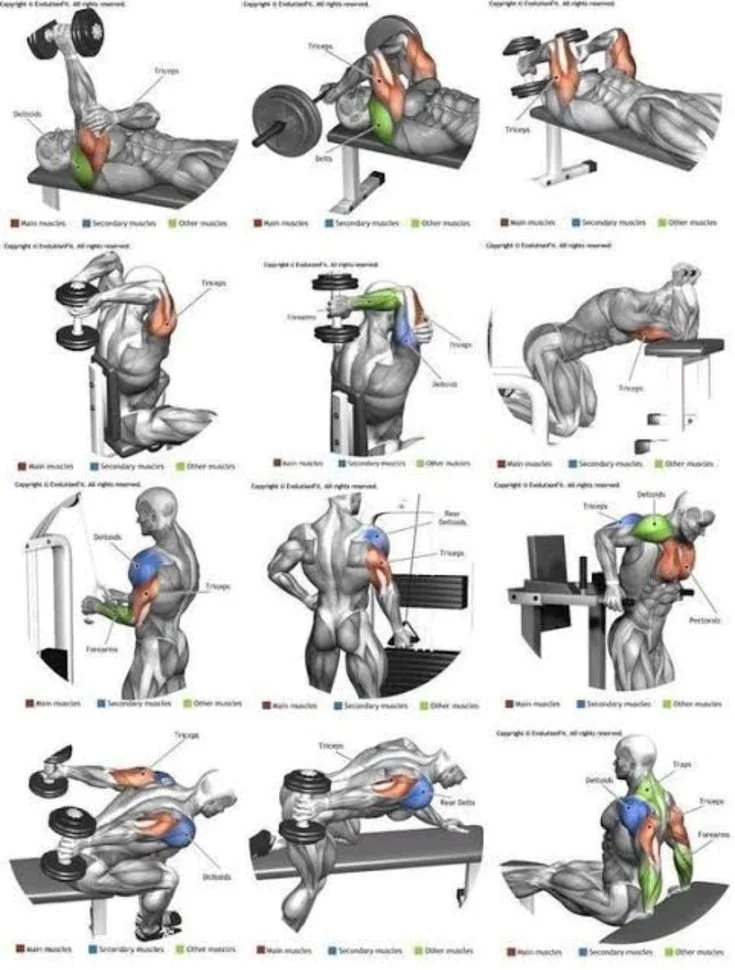
Tri-Force Triceps
The triceps are the unsung heroes of upper-arm strength — they make up about two-thirds of your arm’s mass and are essential for pressing movements, arm definition, and functional strength. Whether you’re training for aesthetics or performance, a focused triceps workout can boost overall upper-body power and endurance. If you’re short on time, pair these triceps moves with 10-minute workouts at home to maintain consistency and progress between gym sessions.
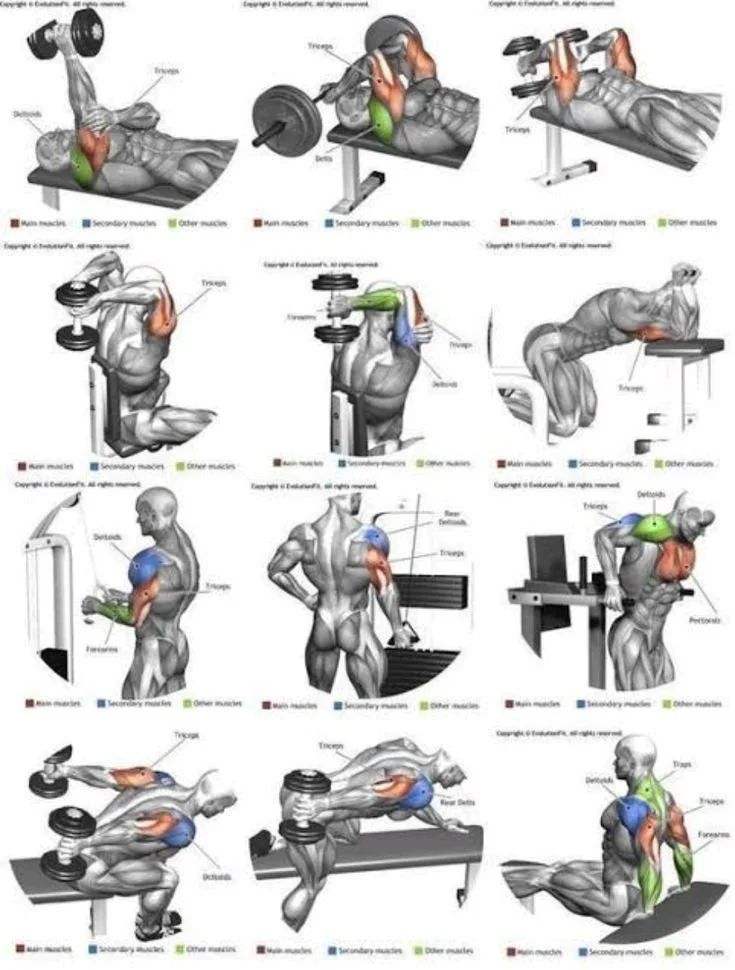
Why train the triceps?
- Strength: Strong triceps improve pressing strength in bench presses and overhead work.
- Balance: Targeting the triceps helps prevent muscle imbalances between the front and back of the arm.
- Shape: Well-developed triceps create the defined, horseshoe look many seek for arm aesthetics.
Key triceps moves (no-nonsense selections)
- Close-grip bench press — A compound lift that loads the triceps while still allowing heavy resistance.
- Overhead triceps extension — Excellent for hitting the long head and improving extension strength.
- Triceps pushdown (rope or bar) — Great for high-rep finishers and isolating the lateral head.
- Skull crushers (lying triceps extension) — Pinpoints the long and lateral heads; control the negative.
- Diamond push-ups — Bodyweight option that’s accessible and effective for metabolic sets.
Sample triceps workout (intermediate)
- Warm-up: 5–10 minutes of light cardio and arm mobility.
- Close-grip bench press: 4 sets of 6–8 reps (heavy)
- Overhead dumbbell extension: 3 sets of 8–12 reps (controlled)
- Rope pushdowns: 3 sets of 12–15 reps (squeeze at the bottom)
- Skull crushers: 2 sets of 10–12 reps (focus on full range)
- Finisher: Diamond push-ups to failure (2 sets)
Programming tips
- Frequency: Train triceps directly 1–3 times per week depending on recovery and overall volume.
- Variety: Rotate between compound pressing and isolation movements to target all triceps heads.
- Tempo: Slow negatives (2–3 seconds) increase time under tension and stimulate growth.
- Progressive overload: Gradually increase weight, reps, or sets over time to keep making gains.
- Consistency: Following a plan improves results; learn more about the benefits of a structured workout program to stay on track.
Safety and recovery
- Use proper elbow positioning to avoid strain; avoid letting the elbows flare excessively on pressing movements.
- Prioritize full range of motion but avoid bouncing or using momentum.
- Allow 48–72 hours between intense triceps sessions for recovery, and ensure adequate protein intake and sleep.
Conclusion
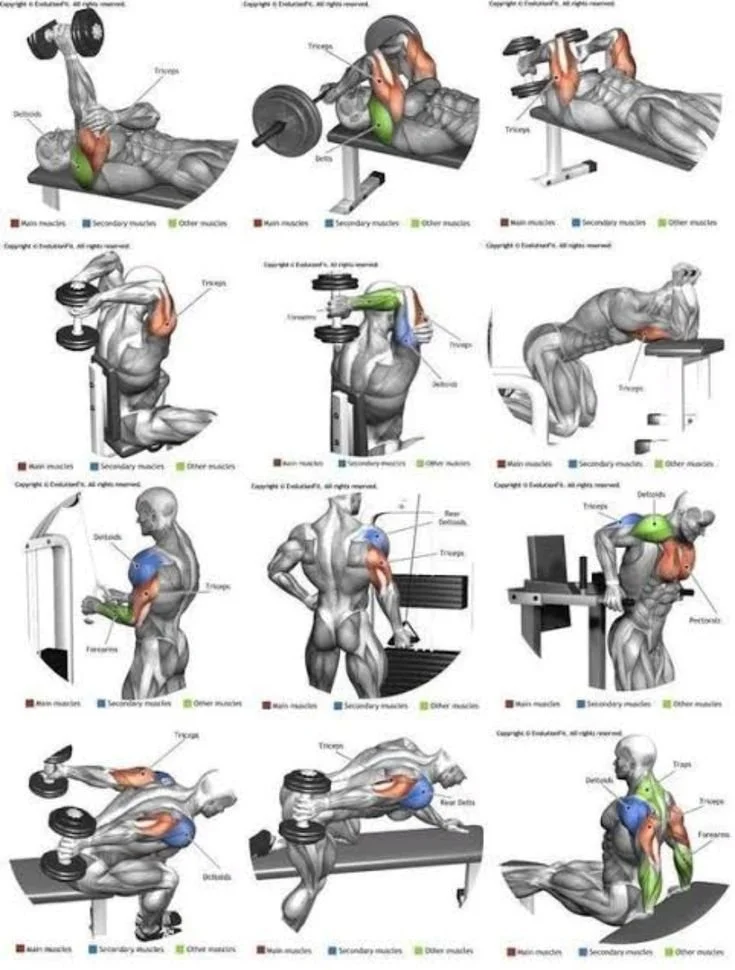
For a comprehensive catalog of triceps movements, variations, and technique tips, consult the Triceps Exercises – Muscle & Strength resource to expand your exercise selection and programming.


GIPHY App Key not set. Please check settings