

 amanda cohen
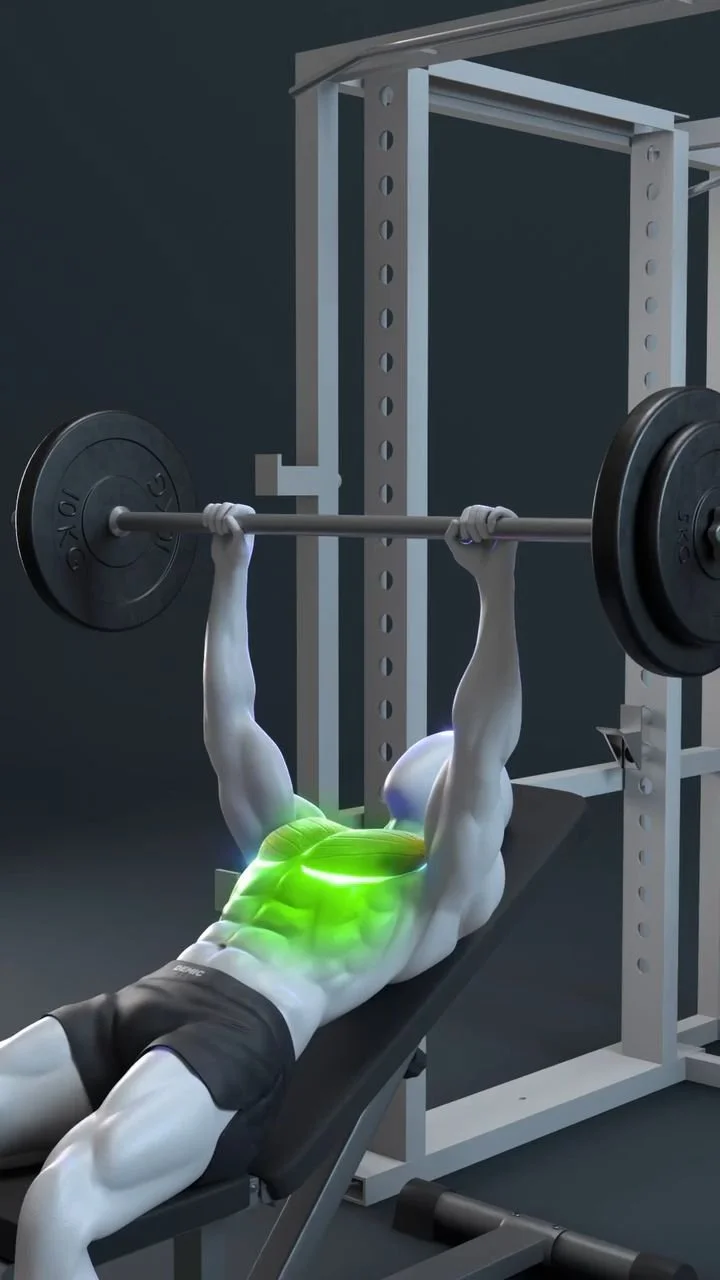
Perfect Incline Bench Press Form
The incline bench press is a staple for building upper-chest width, shoulder stability, and pressing power. Done correctly, it targets the clavicular head of the pectoralis major while reducing stress on the lower chest and shoulders. Before you start loading weight, prioritize technique, bracing, and a setup that lets you press safely and effectively. If you struggle with stability or underactive posterior chain muscles that affect your setup, check how to improve dormant glutes for better full-body tension.
This guide breaks down precise setup, execution, and troubleshooting cues so you can get the most from every rep.
Setup & Positioning
- Bench angle: 30–45 degrees. Lower angles (~30°) emphasize the upper chest without overworking the shoulders; higher angles (~45°) shift load toward the anterior deltoids.
- Foot placement: Feet flat on the floor, slightly wider than hip-width for stability. Drive your feet into the floor to create leg tension.
- Upper-back tightness: Retract and depress your shoulder blades so your upper back forms a stable base. This shortens the range of motion and protects the shoulder joint.
- Head and neck: Keep your head on the bench, neutral neck length. Avoid tucking or overextending the chin.
- Grip: Grip width should allow your forearms to be vertical at the bottom of the press. For most lifters this is slightly wider than shoulder width. Use a full grip (thumb wrapped around bar) for safety.
Bracing & Full-Body Tension
- Take a deep diaphragmatic breath and brace your core before unracking. Maintain that intra-abdominal pressure for the entire set.
- “Leg drive” matters: Think about pushing your feet through the floor and squeezing your glutes to transfer force into the bench. If your glutes aren’t contributing, your press will feel unstable—practicing glute activation drills can help. See practical drills to improve dormant glutes.
- Maintain a consistent arch in the thoracic spine—enough to engage the lats and upper back but not so much that your shoulders curl forward.
Bar Path & Range of Motion
- Unrack with controlled tension, moving the bar over your shoulders. Lower the bar to the upper chest/clavicle area—not to the sternum or lower ribs.
- Bar path: A slight arc is natural — from overhead at lockout, down and slightly toward the top of the chest, then back up. The bar should travel in a plane that keeps the forearms vertical at the bottom.
- Depth: Touch the bar lightly to the chest while maintaining tension; don’t bounce. Stopping short of the chest reduces range of motion and muscle stimulation.
Tempo & Breathing
- Recommended tempo for most sets: 2–3 seconds down (eccentric), brief pause/tension at the bottom, then a controlled but powerful concentric (1 second up).
- Exhale through the sticking point or as you press up to help maintain stability and help with force production.
Common Mistakes & Fixes
- Elbows flared at 90 degrees: This increases shoulder strain. Tuck elbows to about 45 degrees relative to your torso.
- Overgripping or wrist collapse: Keep wrists stacked over elbows; the bar should sit in the heel of your palm. Wrap your thumb around the bar for security.
- Lifting hips or sliding on the bench: Keep hips down and maintain foot drive; reposition feet if the bench angle causes you to slide.
- Using too much incline: If your anterior deltoids dominate and chest activation is low, lower the bench angle.
- Rushing setup: Always reset shoulder blades and brace before each rep.
Programming & Progression
- Reps and sets: 3–5 sets of 6–12 reps for hypertrophy; 3–6 sets of 3–6 reps for strength work with longer rest periods.
- Variation: Use dumbbells occasionally to correct unilateral imbalances and to explore slightly different muscle activation.
- Frequency: 1–3 times per week depending on recovery and priority. Rotate between heavier strength-focused sessions and lighter hypertrophy sessions.
Spotting & Safety
- Use a spotter or safety pins in a power rack when working heavy. A competent spotter can help with unracking and assist at the sticking point.
- Warm up thoroughly with unloaded bar and progressively heavier sets to prime the joints and nervous system.
Conclusion
Consistent attention to setup, bracing, and bar path turns the incline bench press into a powerful tool for upper-chest development and pressing strength. For an in-depth breakdown of technique and benefits, see this guide on Incline Bench Press: Proper Form & Benefits | Legion.


GIPHY App Key not set. Please check settings